Search the meaning,
not the filename.
Questions, examples, concepts and short explanations are indexed together—even when the wording is not exact.
39 published results for “Symbols of Mathematics”
Visual explanations 29
 PICTURE 1 / 16Why can one triangle describe three kinds of change?Functions, Calculus & Analysis · Vector Calculus · Nabla: One Operator, Three Questions
The operator nabla combines directional derivatives; attached to a scalar or vector field with no product, a dot product or a cross product, it produces gradient, divergence or curl.
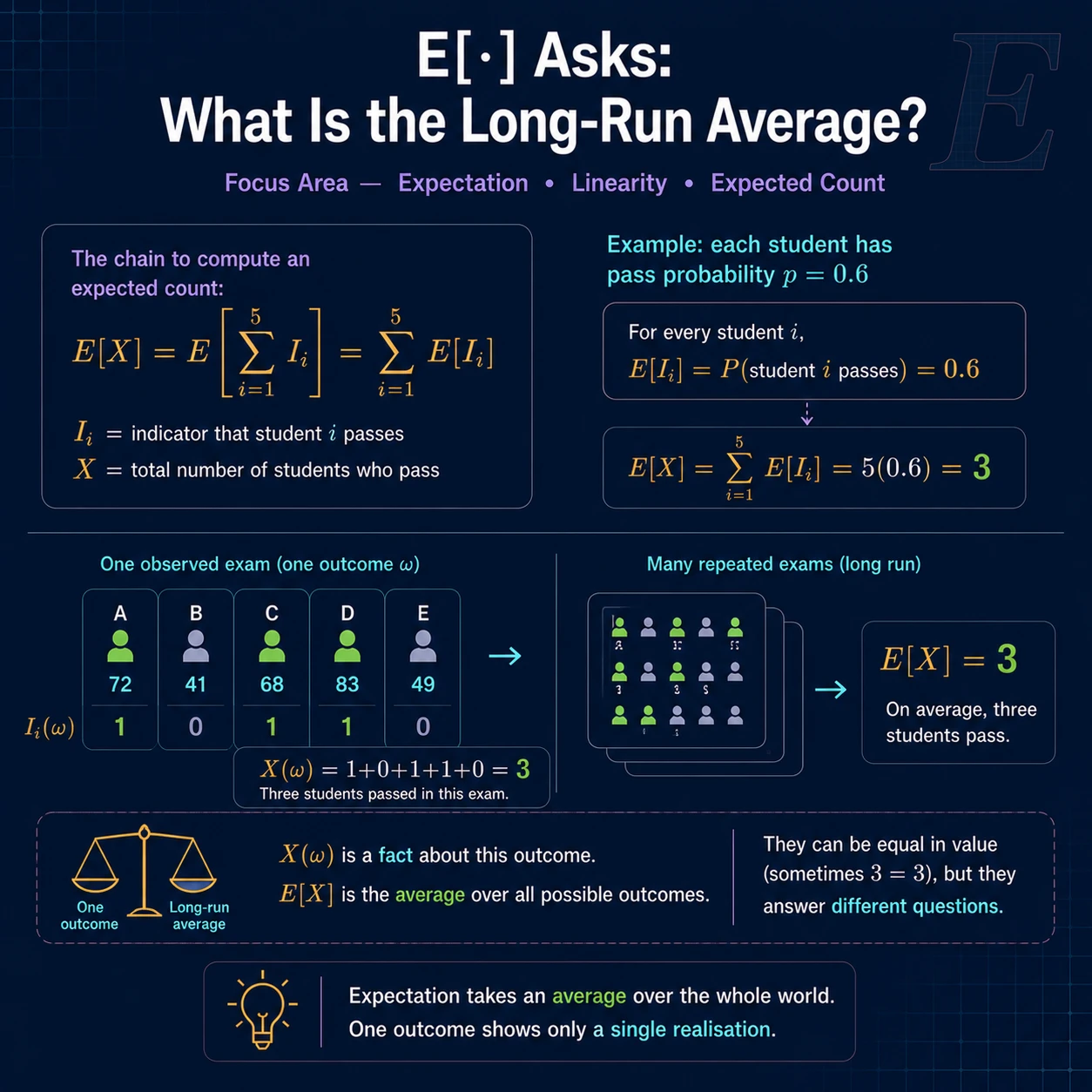 PICTURE 12 / 15What does E of an indicator mean?Probability & Random Processes · Probability & Distributions · Indicator Symbols II: From One Outcome to Probability
Expectation averages over possible outcomes according to their probabilities, not merely across the entries of one observed row.
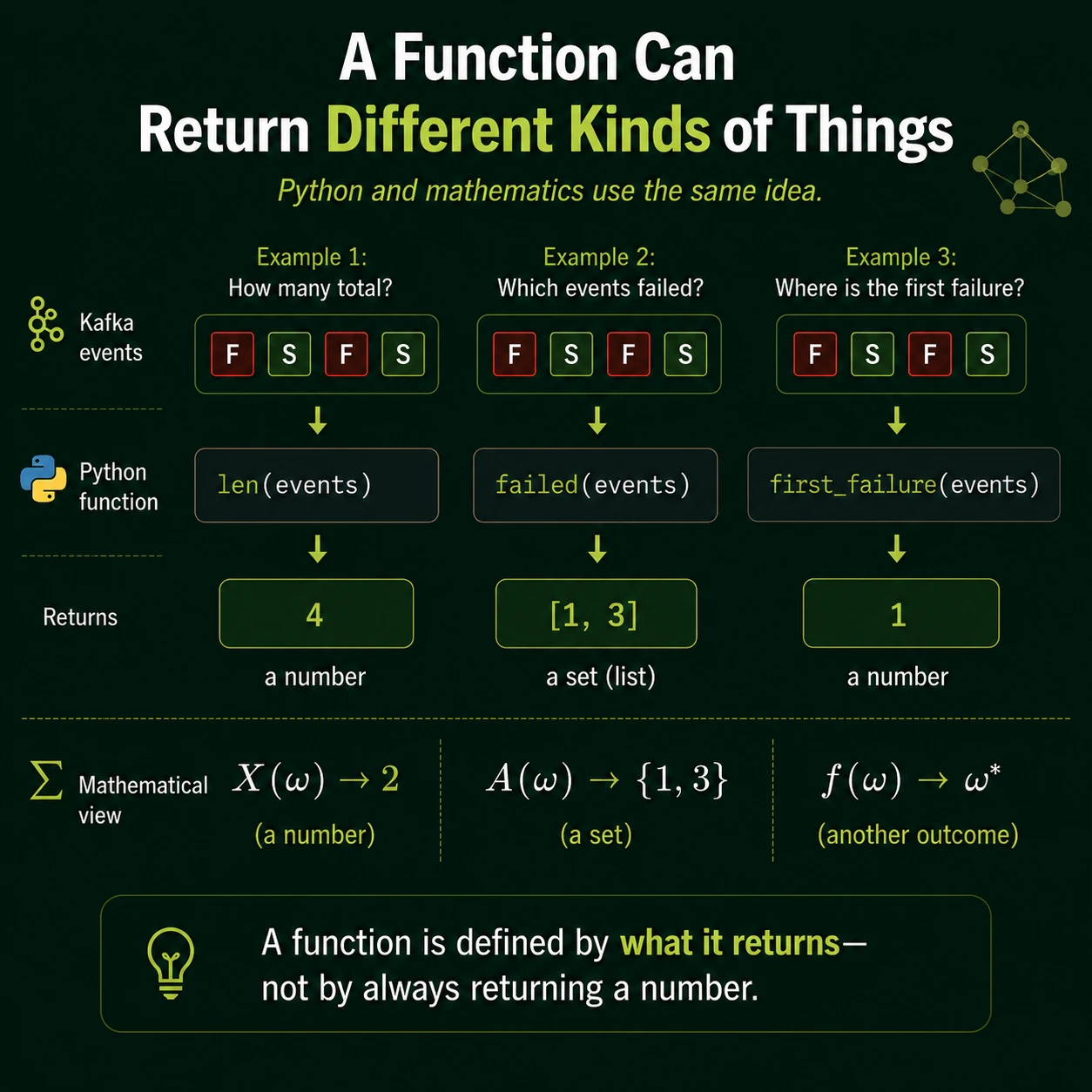 PICTURE 15 / 20What kind of thing does this function return?Probability & Random Processes · Probability & Distributions · Indicator Symbols: From Conditions to Counts
A function is defined by its input and output. An indicator returns 0 or 1, a counting function returns a number, and a selection function may return a set or list.
 PICTURE 1 / 5Why does maths use letters?Foundations & Discrete Mathematics · Mathematical Language · Variables, Constants, and Expressions
Letters express a repeated numerical pattern with one reusable rule.
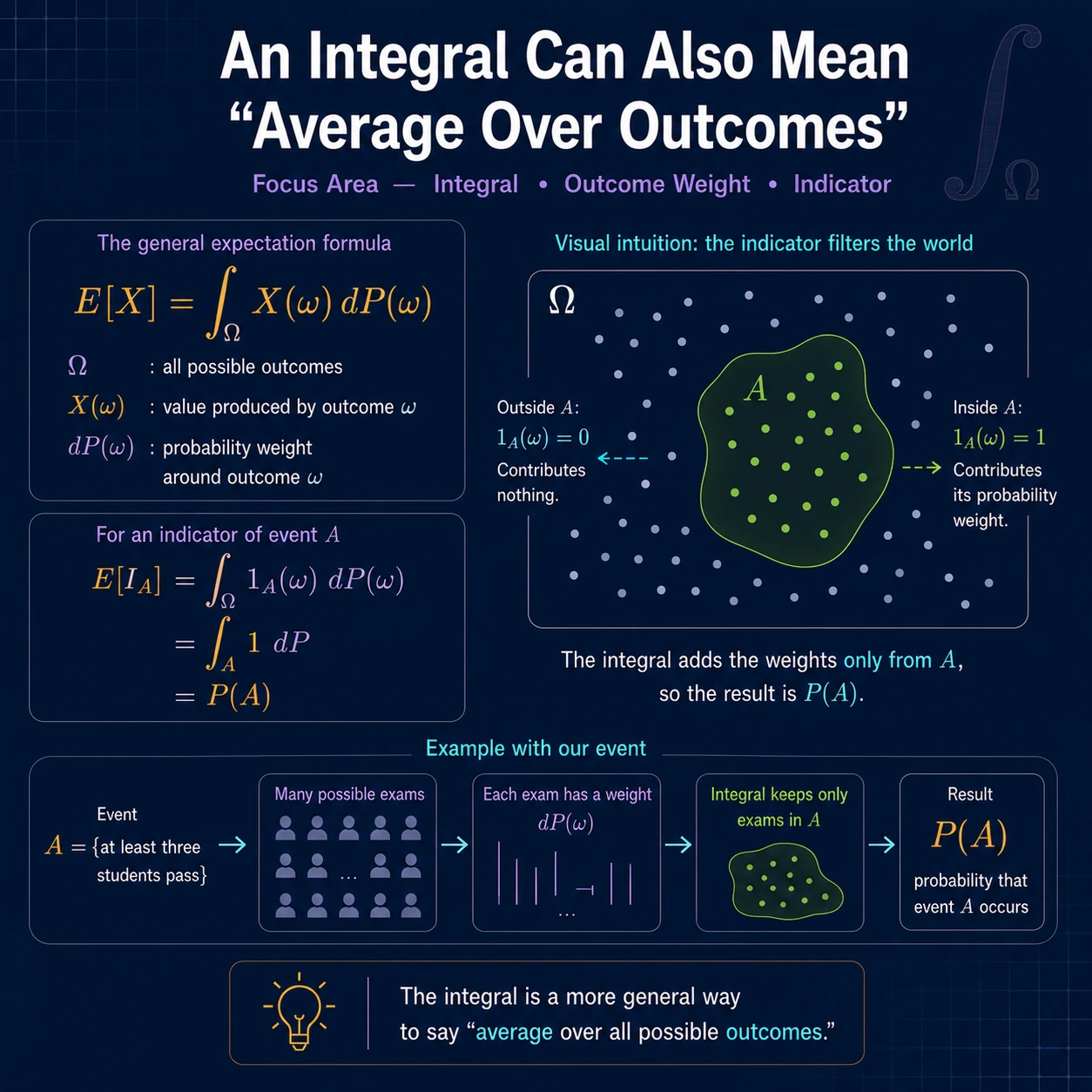 PICTURE 14 / 15How does expectation work in a continuous world?Probability & Random Processes · Probability & Distributions · Indicator Symbols II: From One Outcome to Probability
The integral of X(omega) with respect to probability combines values across outcomes with their probability weight.
 PICTURE 1 / 1Which mathematical world are we in?Foundations & Discrete Mathematics · Mathematical Language · Three Mathematical Meanings of Pi
The circle constant pi, permutation notation such as nPr, and sampling inclusion probability pi_i reuse related symbols but mean different objects; surrounding notation determines the meaning.
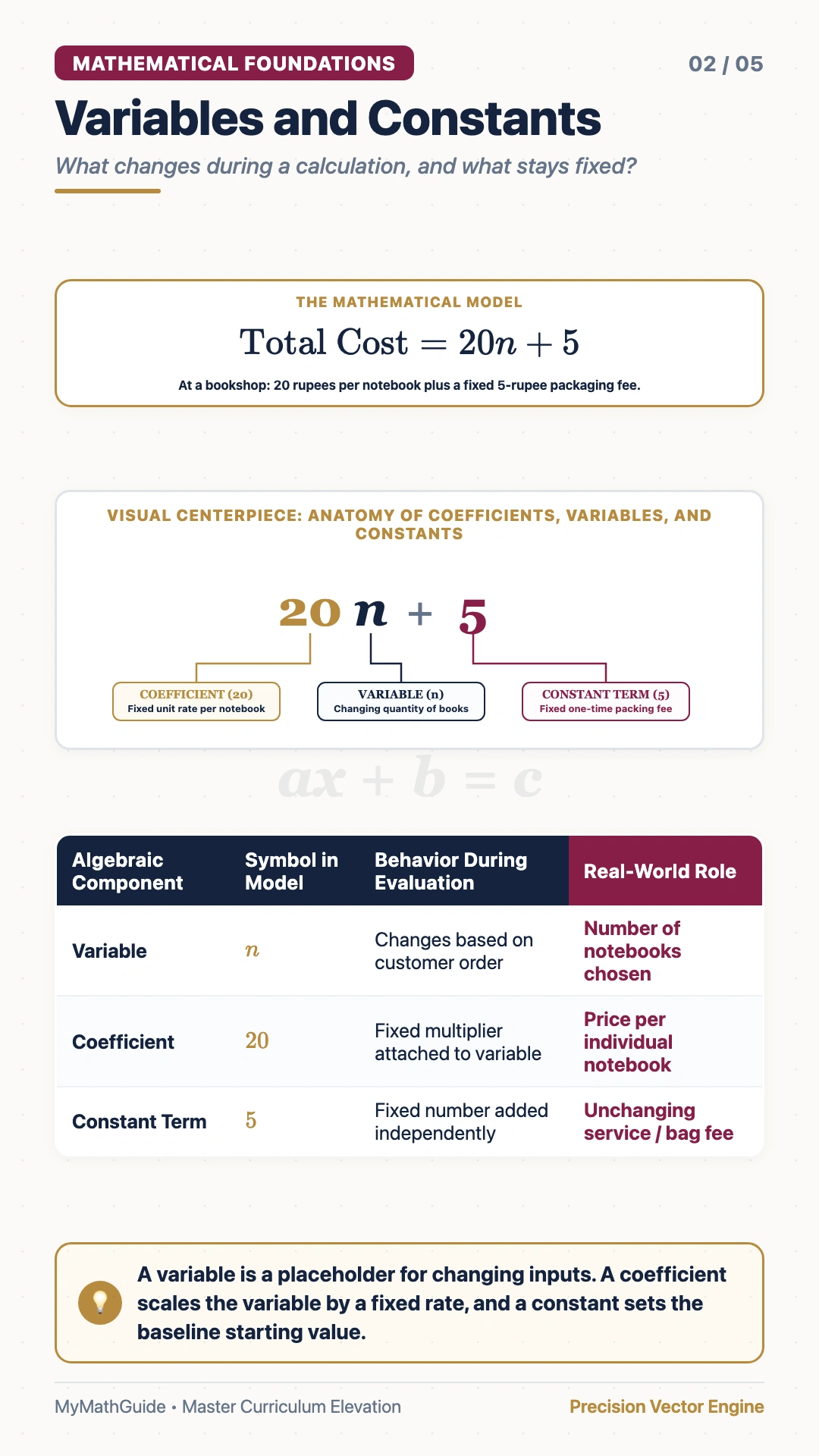 PICTURE 2 / 5What changes, and what stays fixed?Foundations & Discrete Mathematics · Mathematical Language · Variables, Constants, and Expressions
In 20n + 5, n is a variable, 20 is a constant coefficient, and 5 is a constant term.
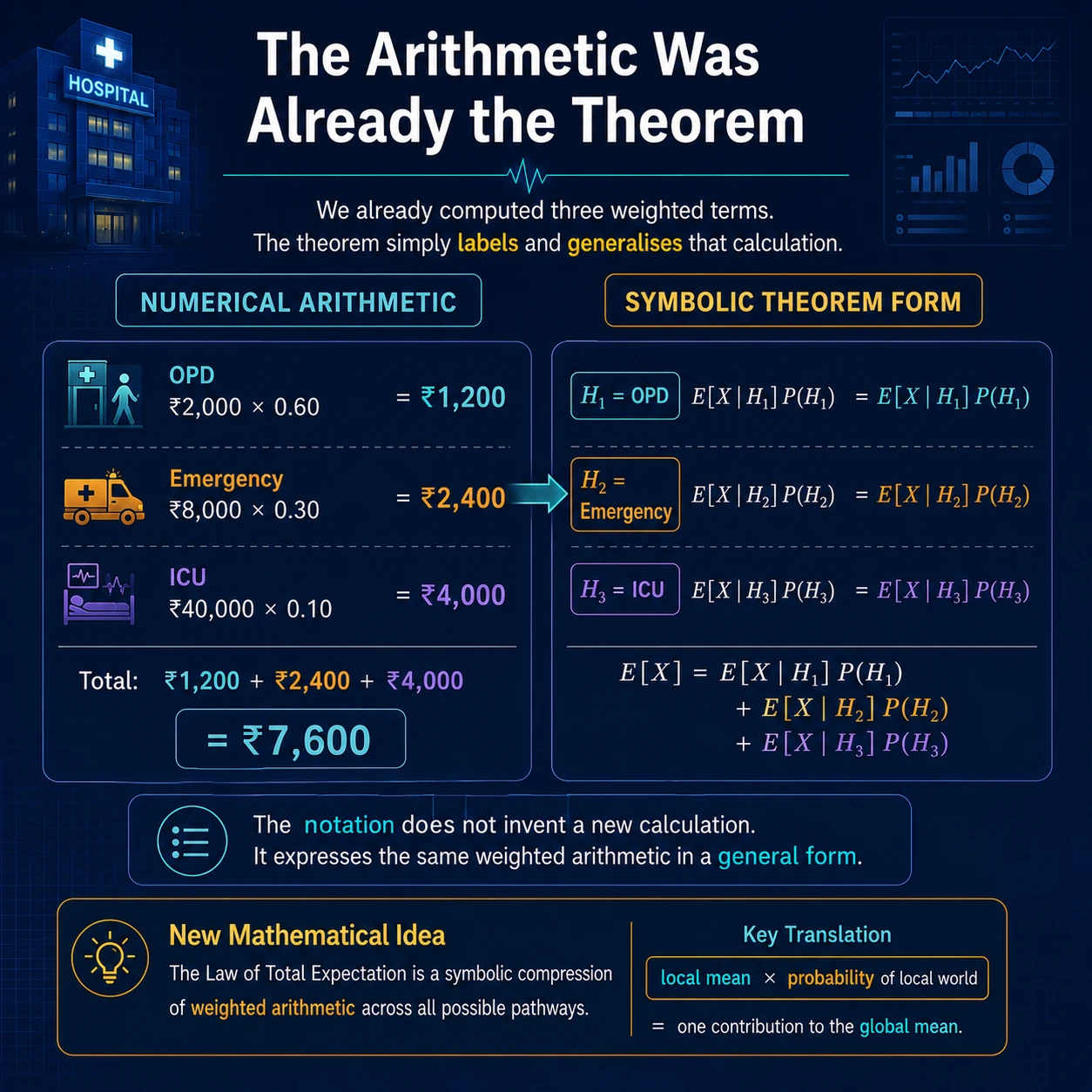 PICTURE 14 / 16Where was the theorem hiding in the calculation?Probability & Random Processes · Probability & Distributions · Foreshadowing the Law of Total Expectation
The three products 2000(0.60), 8000(0.30) and 40000(0.10) are exactly the terms E[X given H_j]P(H_j) in the symbolic theorem.
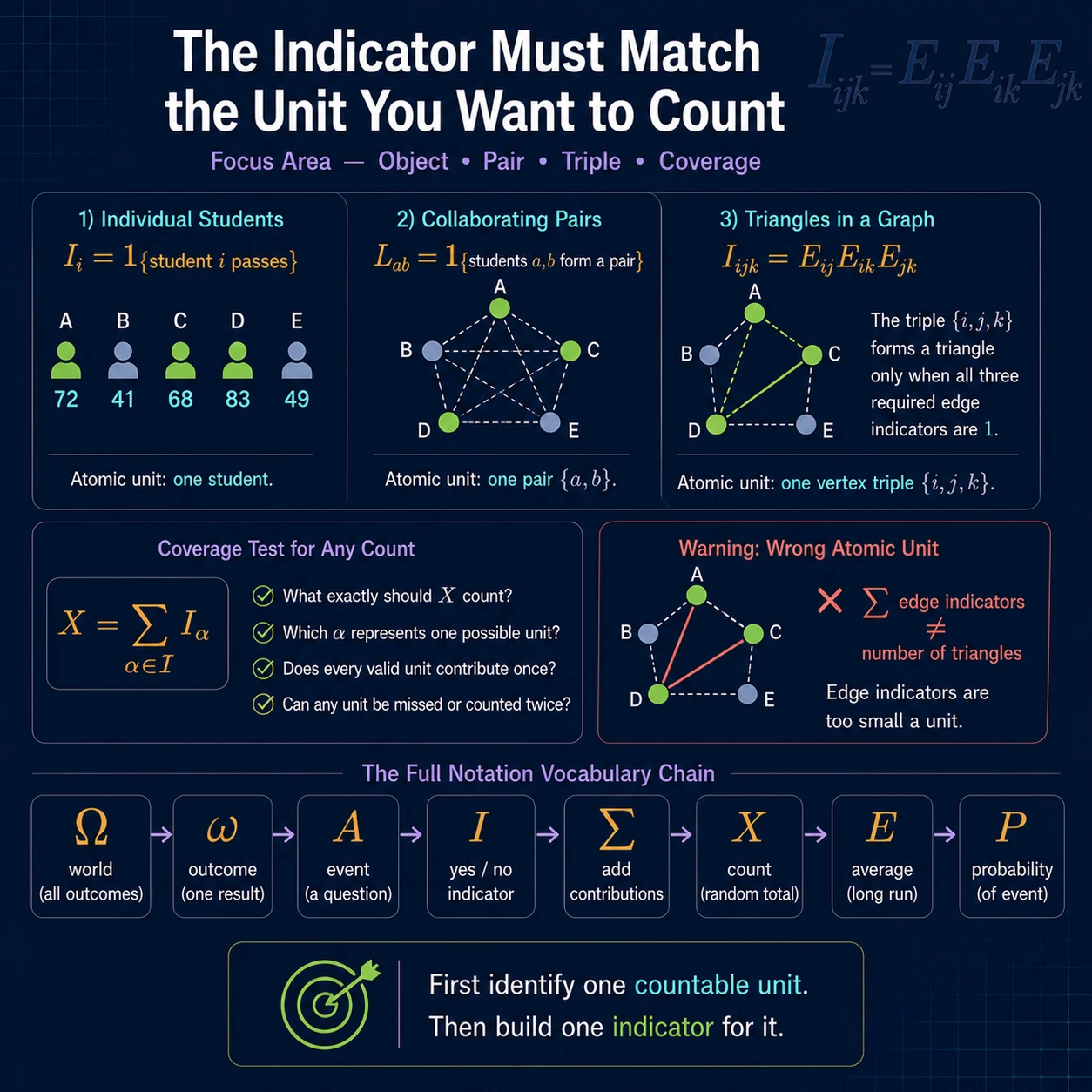 PICTURE 1 / 15What exactly contributes one?Probability & Random Processes · Probability & Distributions · Indicator Symbols II: From One Outcome to Probability
A student, pair, triple or region needs its own atomic indicator; the index structure must match the object being counted.
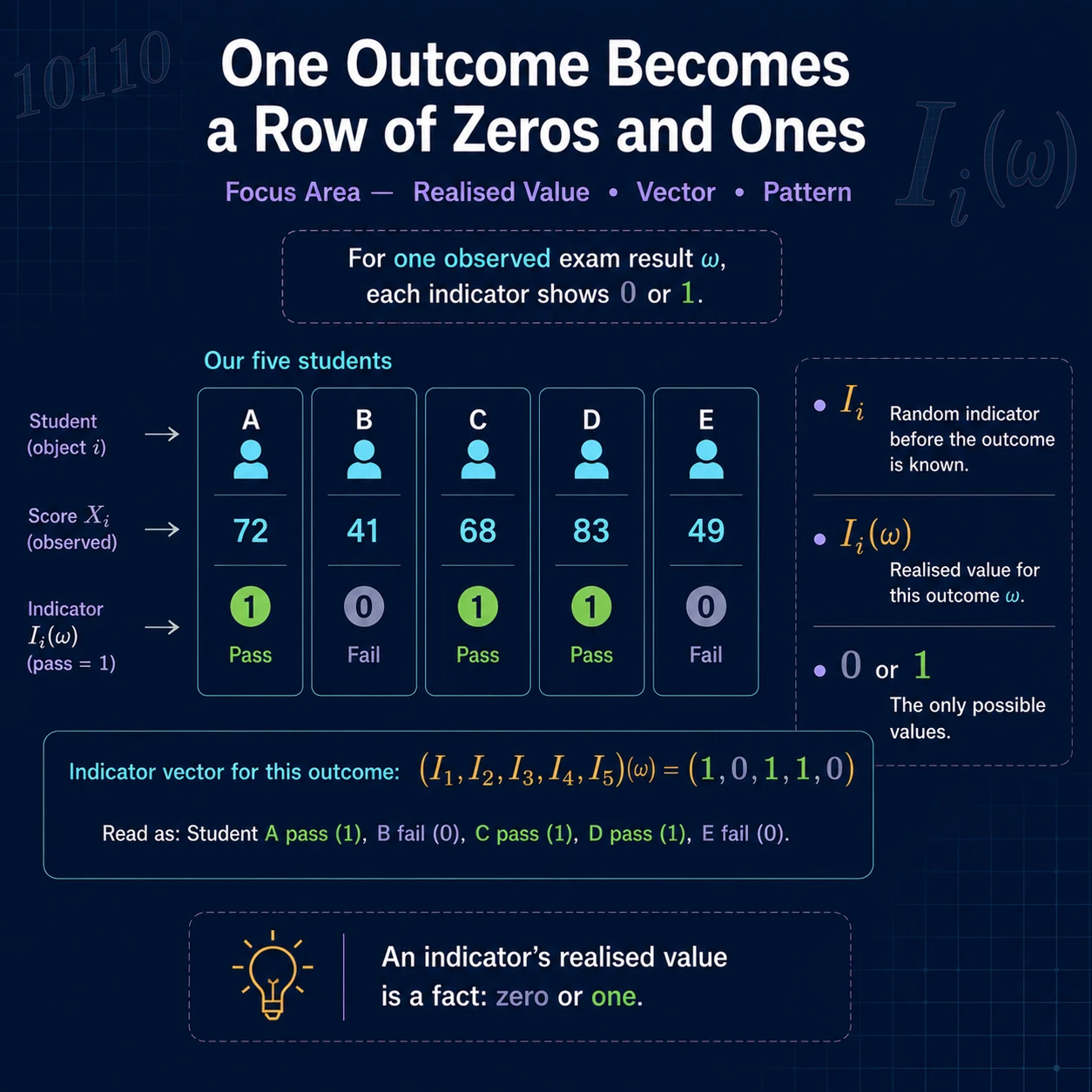 PICTURE 2 / 15What does an indicator show after the outcome is known?Probability & Random Processes · Probability & Distributions · Indicator Symbols II: From One Outcome to Probability
For one realized exam result, each student-specific indicator is a factual zero or one.
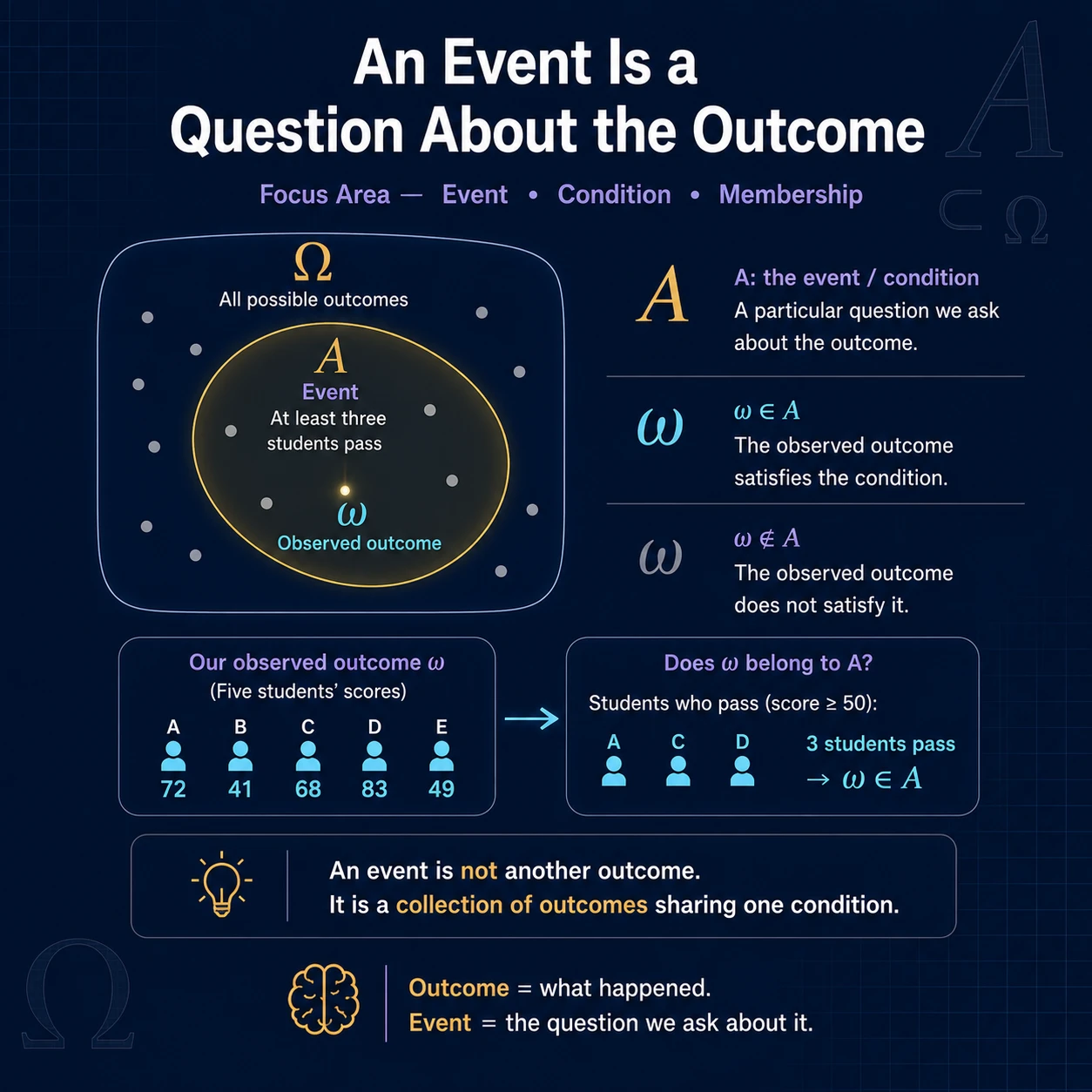 PICTURE 3 / 15How are an event and an outcome different?Probability & Random Processes · Probability & Distributions · Indicator Symbols II: From One Outcome to Probability
The outcome is what happened; an event is a set of outcomes sharing a condition we want to test.
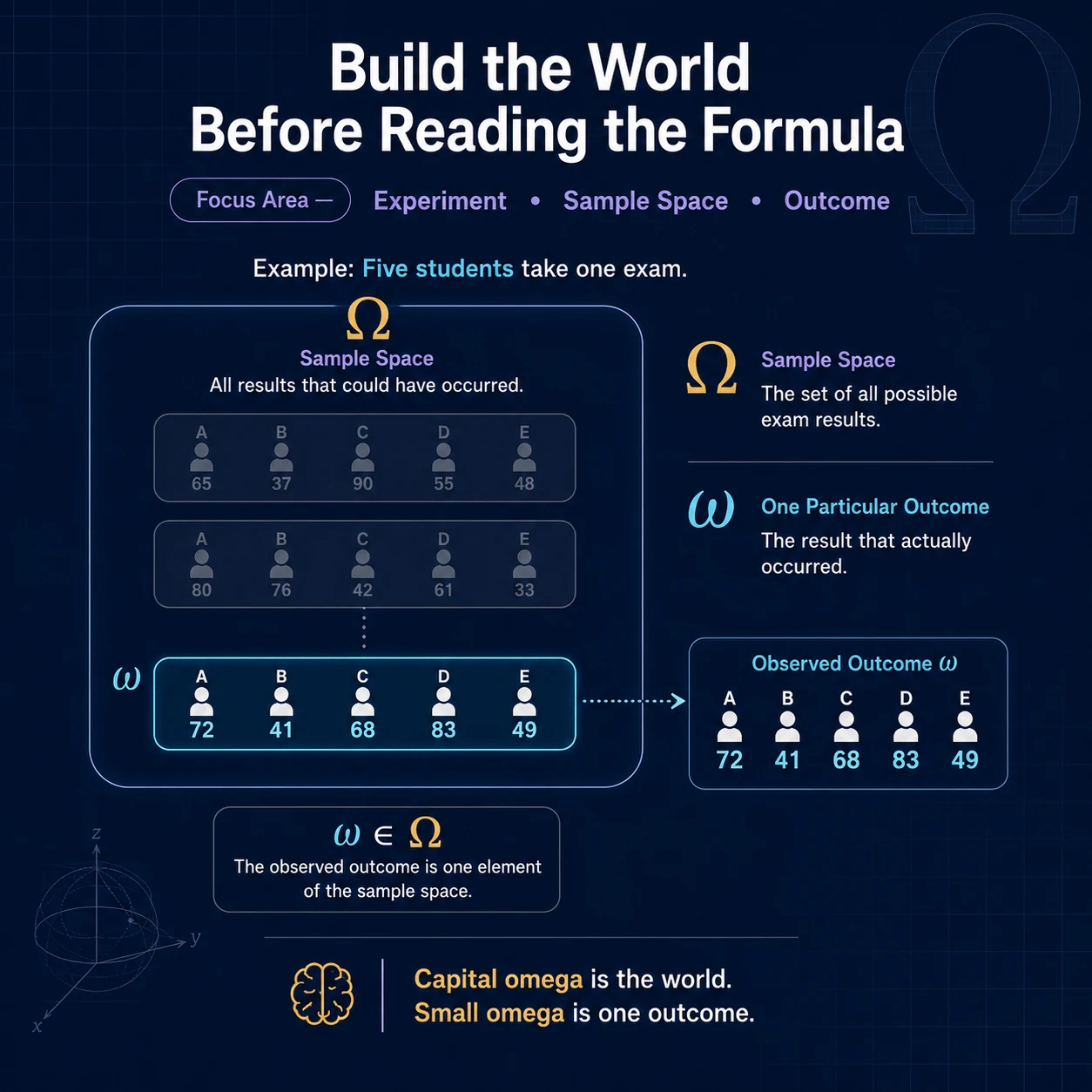 PICTURE 4 / 15What do capital Omega and small omega mean?Probability & Random Processes · Probability & Distributions · Indicator Symbols II: From One Outcome to Probability
Omega is the sample space of possible outcomes; omega is one realized outcome inside it.
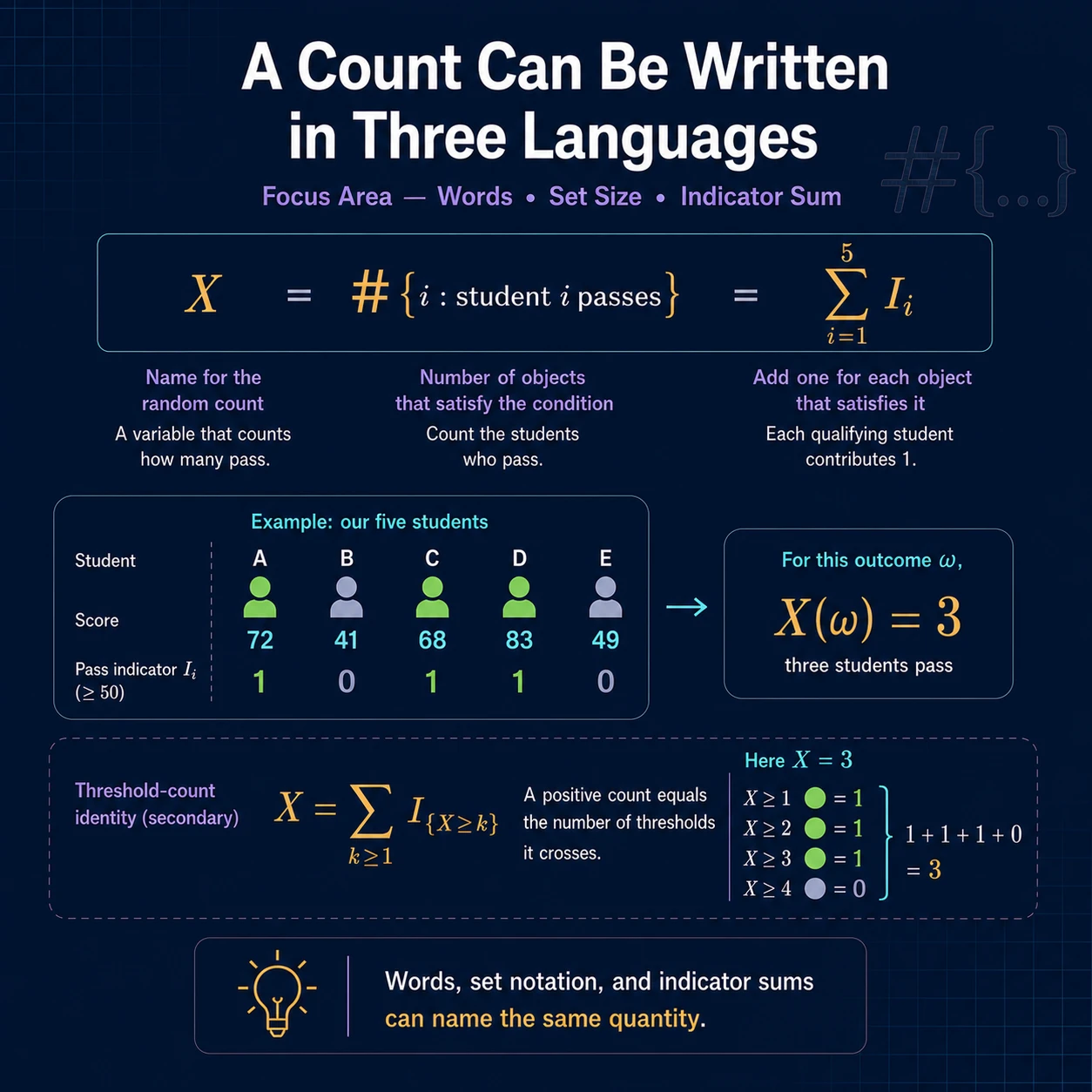 PICTURE 9 / 15How do words, set size and indicator sums agree?Probability & Random Processes · Probability & Distributions · Indicator Symbols II: From One Outcome to Probability
A verbal count, the cardinality of a selected set, and a sum of zero-one indicators can name the same quantity.
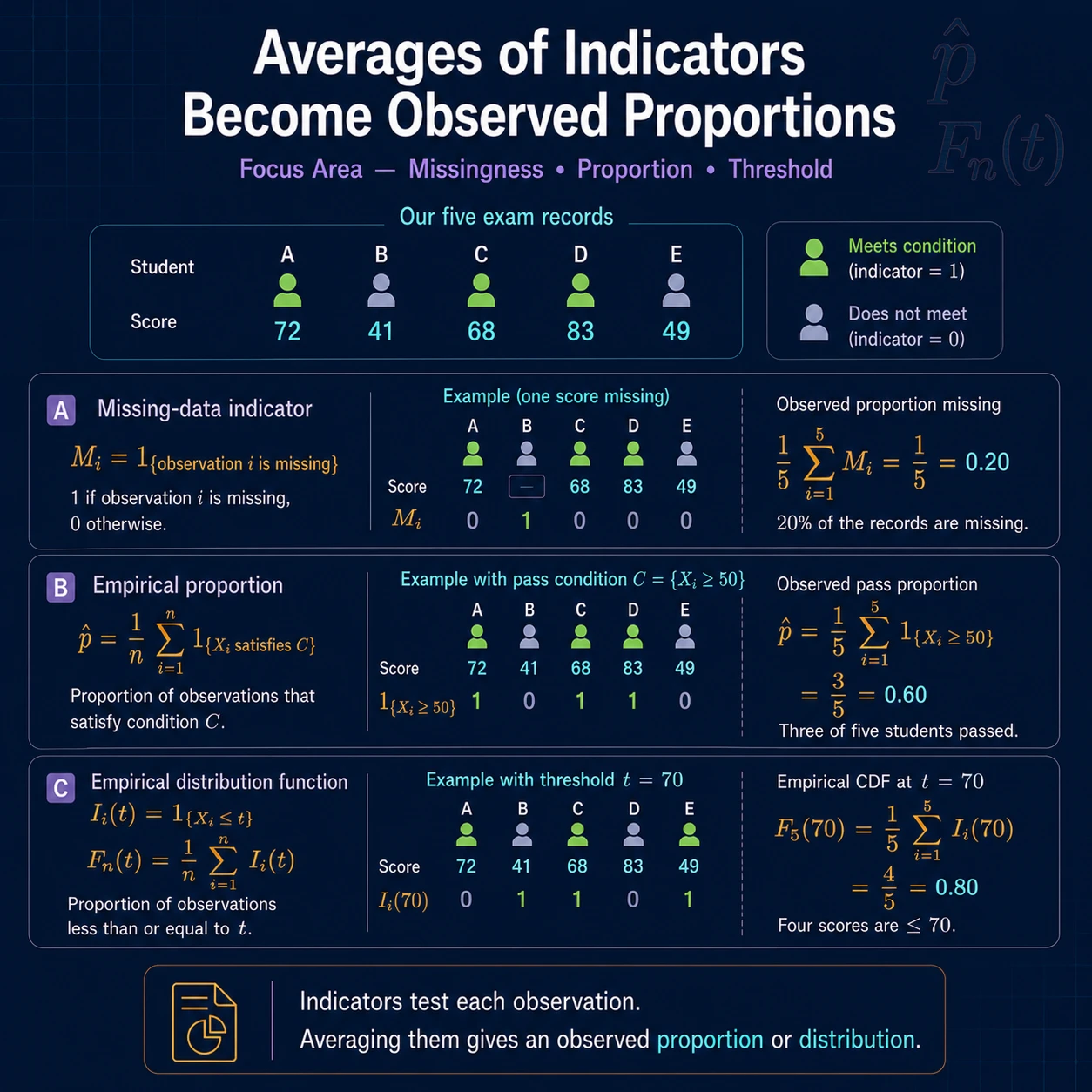 PICTURE 10 / 15How does a count become a sample proportion?Probability & Random Processes · Probability & Distributions · Indicator Symbols II: From One Outcome to Probability
Dividing the indicator sum by n produces the fraction of observed units satisfying the event.
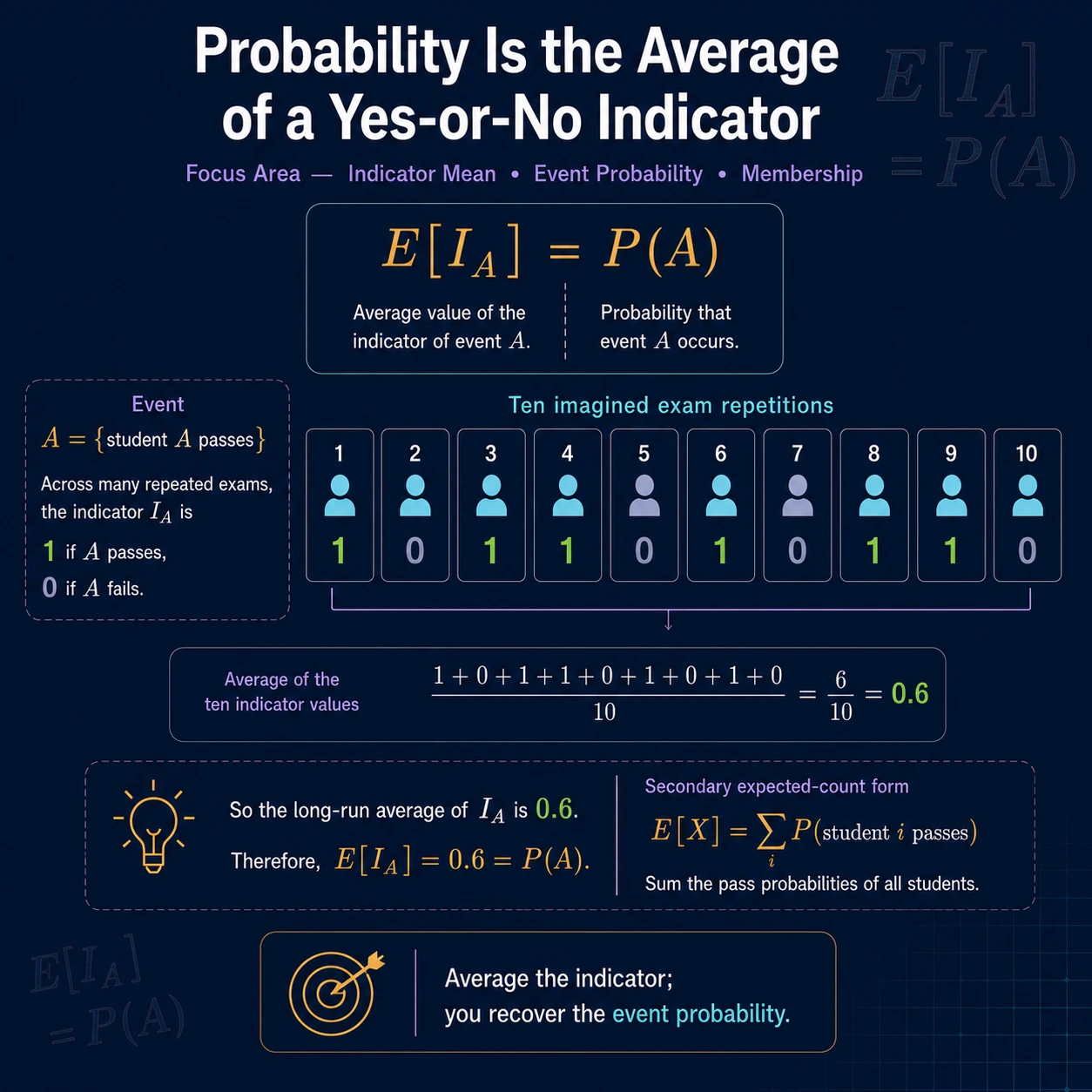 PICTURE 11 / 15Why does expected zero-one value equal probability?Probability & Random Processes · Probability & Distributions · Indicator Symbols II: From One Outcome to Probability
Because the indicator is one exactly on event A, its expectation is P(A).
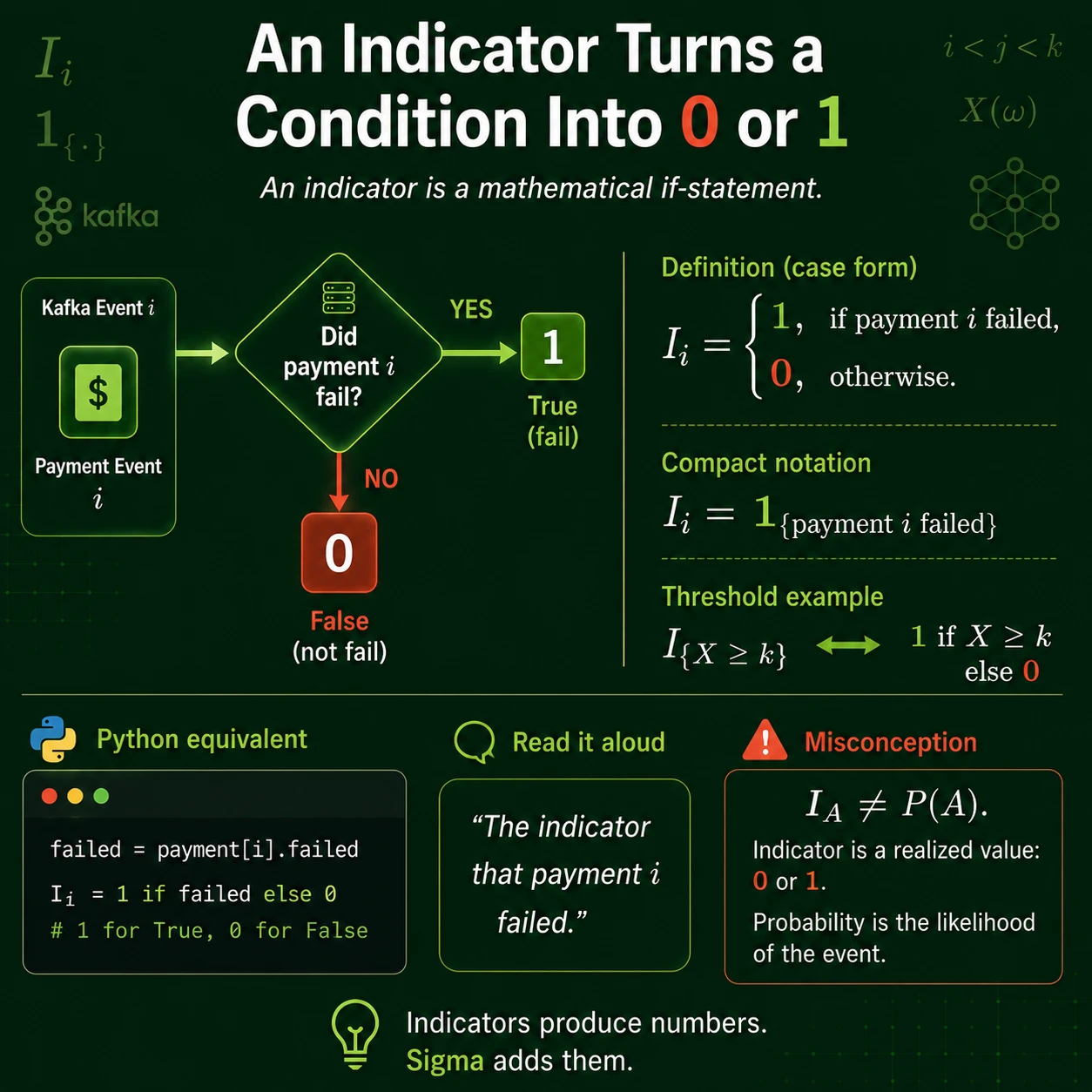 PICTURE 1 / 20How can a condition become a number?Probability & Random Processes · Probability & Distributions · Indicator Symbols: From Conditions to Counts
For an event A, the indicator 1_A equals 1 when A occurs and 0 otherwise. It is a random variable, so logical statements can enter arithmetic without losing their meaning.
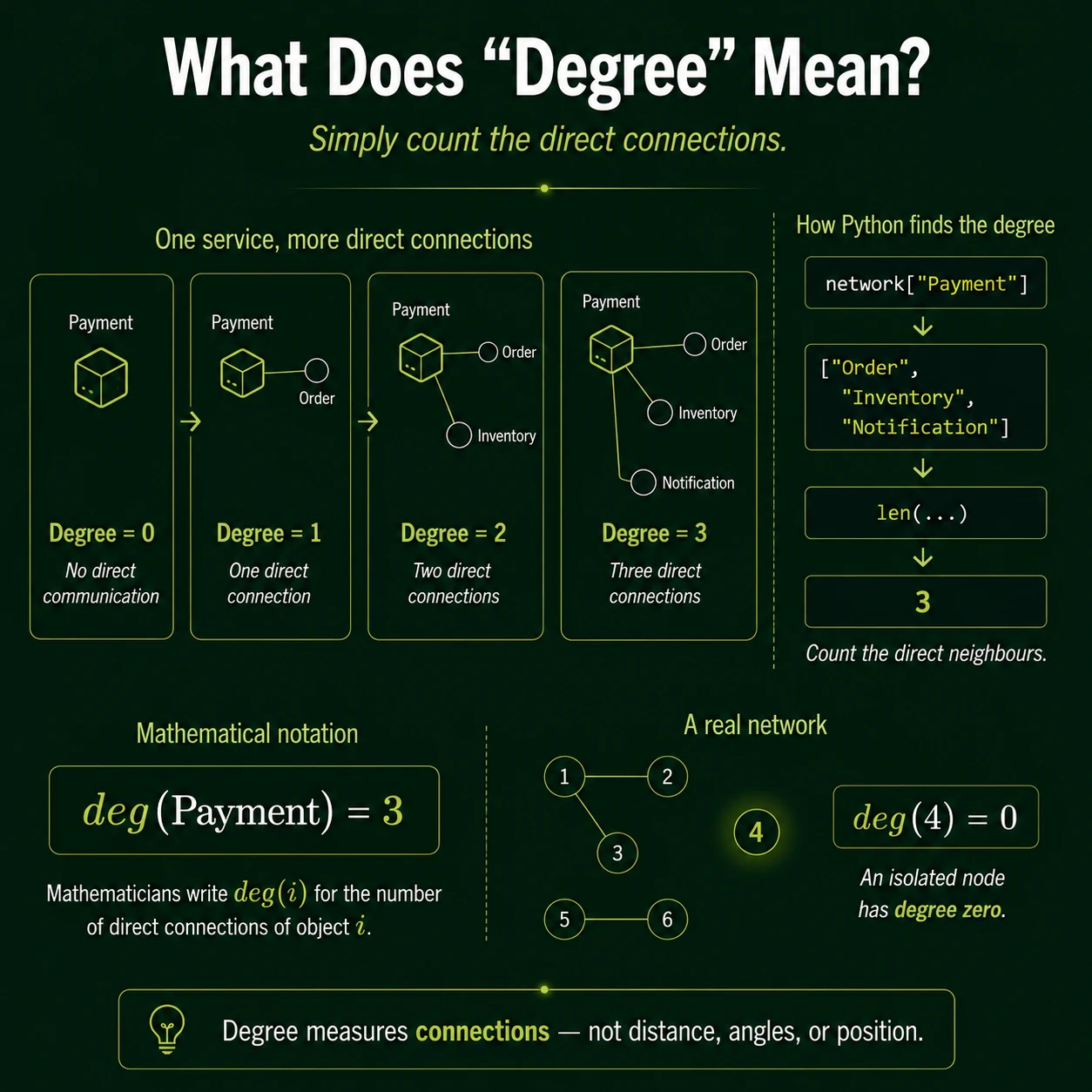 PICTURE 3 / 20What does the subscript tell you?Probability & Random Processes · Probability & Distributions · Indicator Symbols: From Conditions to Counts
An indexed indicator I_i asks the same yes-or-no question about object i. The index may identify a customer, machine, trial, edge, time, or sample position.
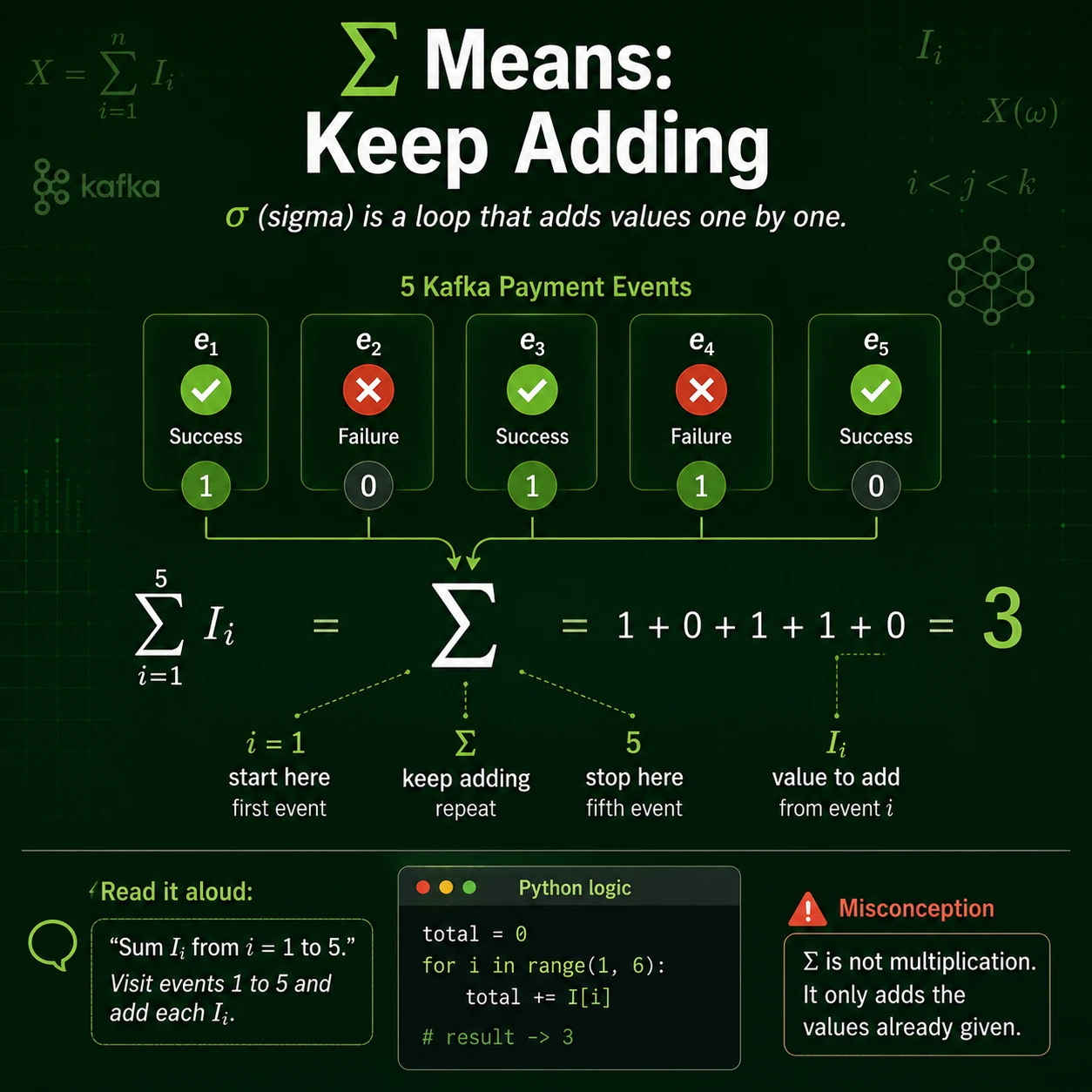 PICTURE 4 / 20Why does adding zeros and ones count?Probability & Random Processes · Probability & Distributions · Indicator Symbols: From Conditions to Counts
Every qualifying object contributes 1 and every non-qualifying object contributes 0. Therefore the sum of indicators equals the number of objects that satisfy the condition.
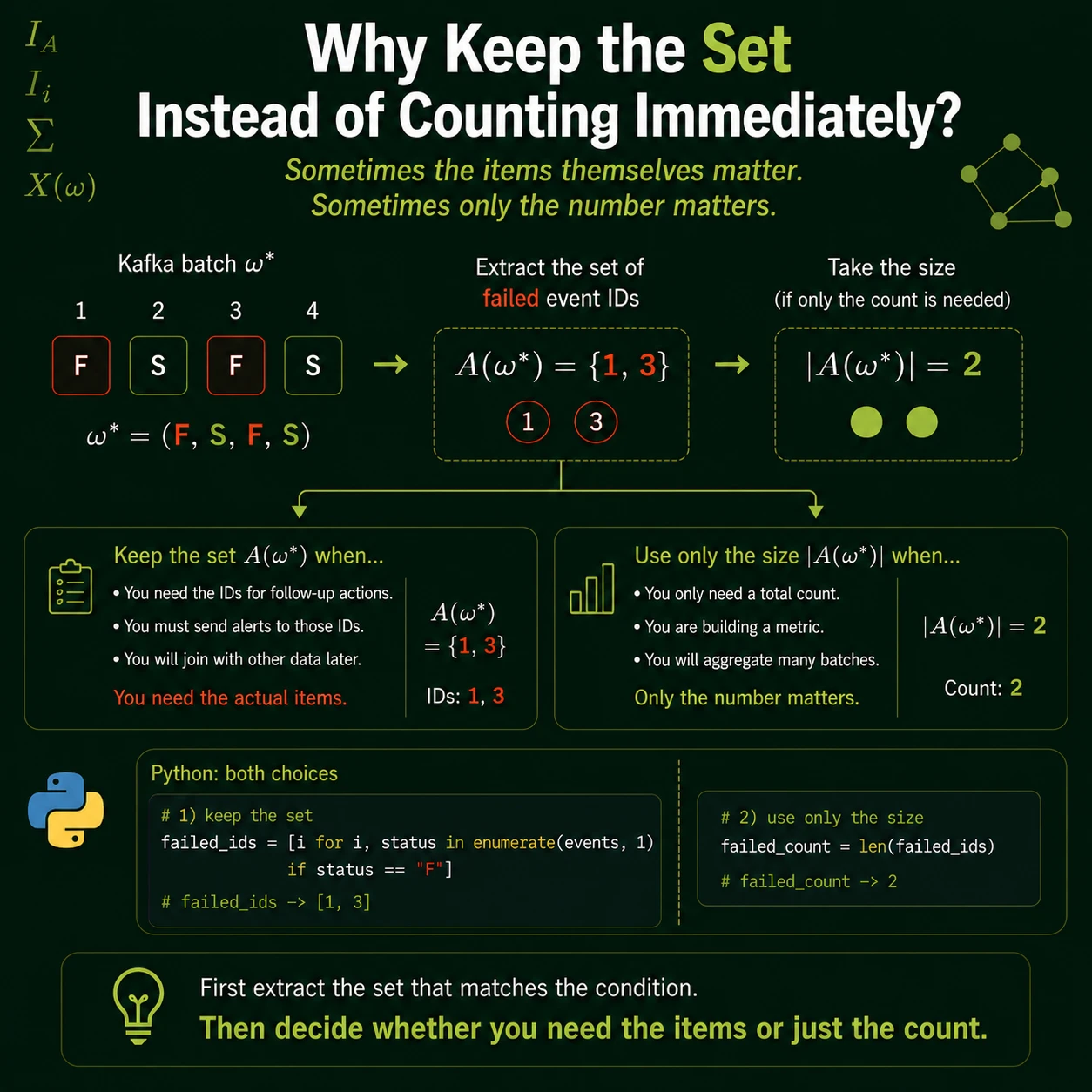 PICTURE 5 / 20Do you need the items or only their number?Probability & Random Processes · Probability & Distributions · Indicator Symbols: From Conditions to Counts
Set-builder notation returns the matching objects; a sum of indicators returns how many match. Choose the expression that has the same output type as the question.
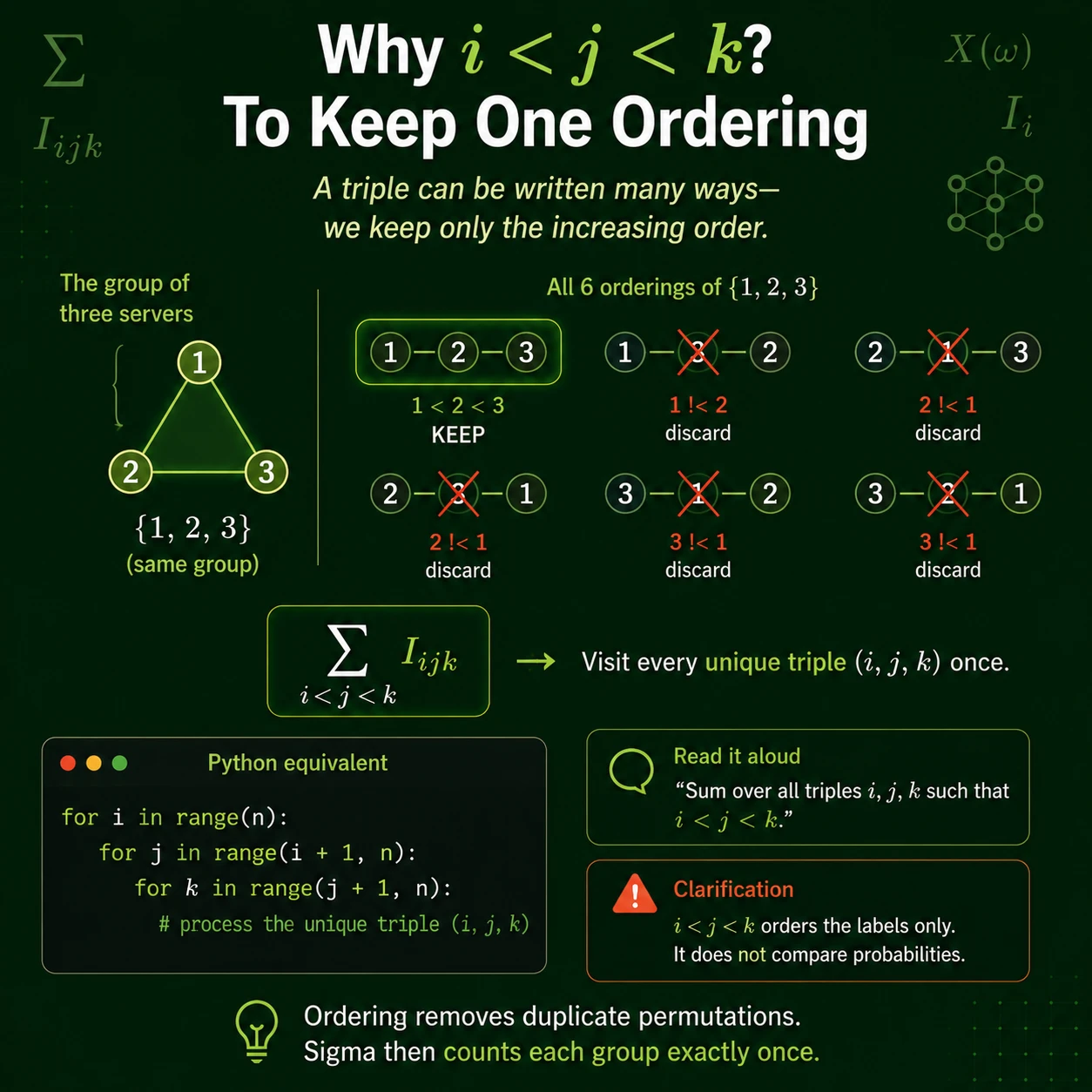 PICTURE 7 / 20Why write i < j < k?Probability & Random Processes · Probability & Distributions · Indicator Symbols: From Conditions to Counts
The rule i < j < k keeps only increasing triples. It selects one canonical ordering for each three-element choice, avoiding all six permutations of the same set.
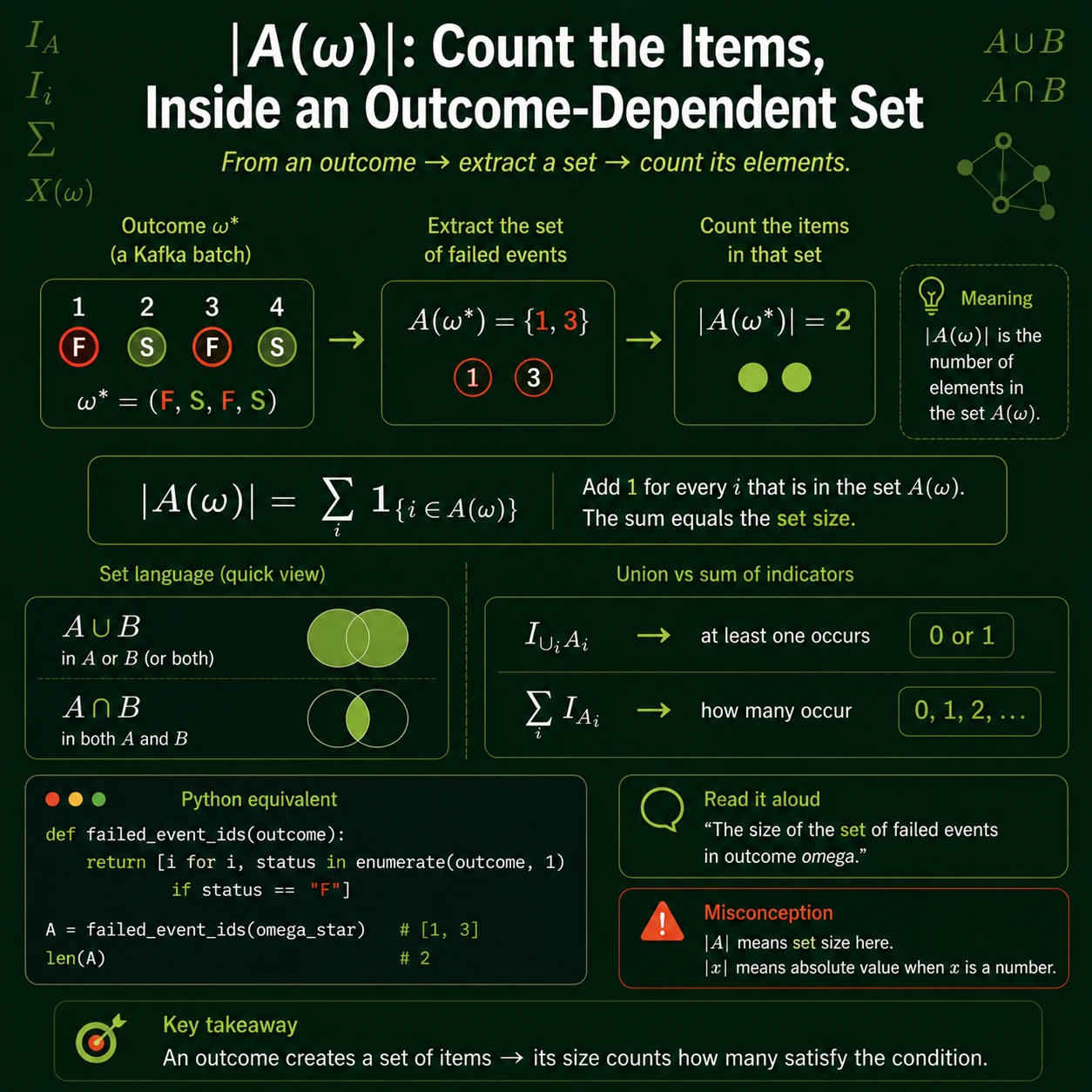 PICTURE 12 / 20How does set size match an indicator sum?Probability & Random Processes · Probability & Distributions · Indicator Symbols: From Conditions to Counts
If A(omega) is the set of failed events in outcome omega, then its cardinality |A(omega)| equals the sum of failure indicators over all events.
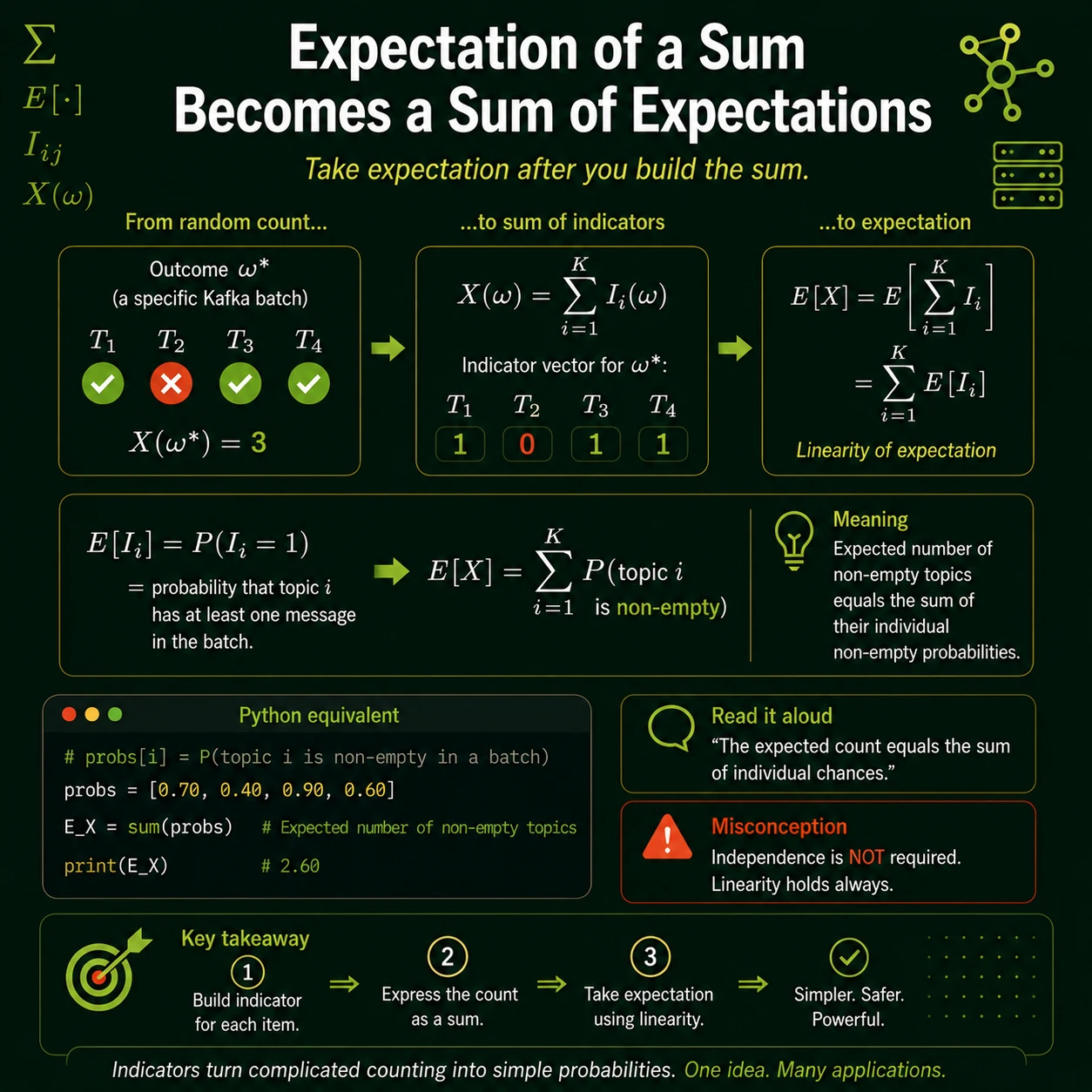 PICTURE 13 / 20How do we find the expected count?Probability & Random Processes · Probability & Distributions · Indicator Symbols: From Conditions to Counts
Linearity of expectation gives E[sum I_i] = sum E[I_i] even when the indicators are dependent. Since E[I_i] = P(A_i), expected count is the sum of event probabilities.
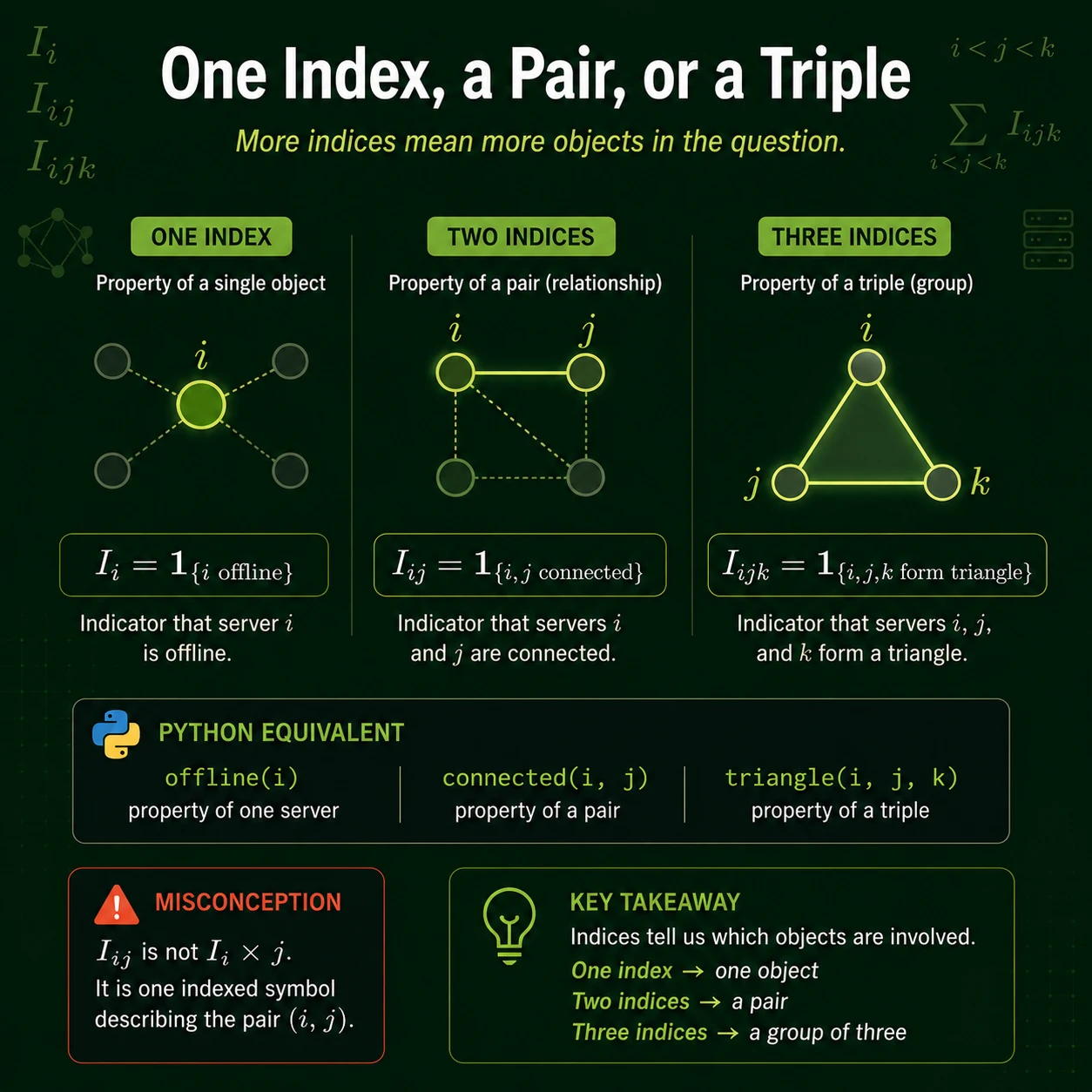 PICTURE 14 / 20How do pair and triple indicators differ?Probability & Random Processes · Probability & Distributions · Indicator Symbols: From Conditions to Counts
I_ij describes a property of a pair; I_ijk describes a property of a triple. More indices mean more objects participate in the local condition, not a larger numerical value.
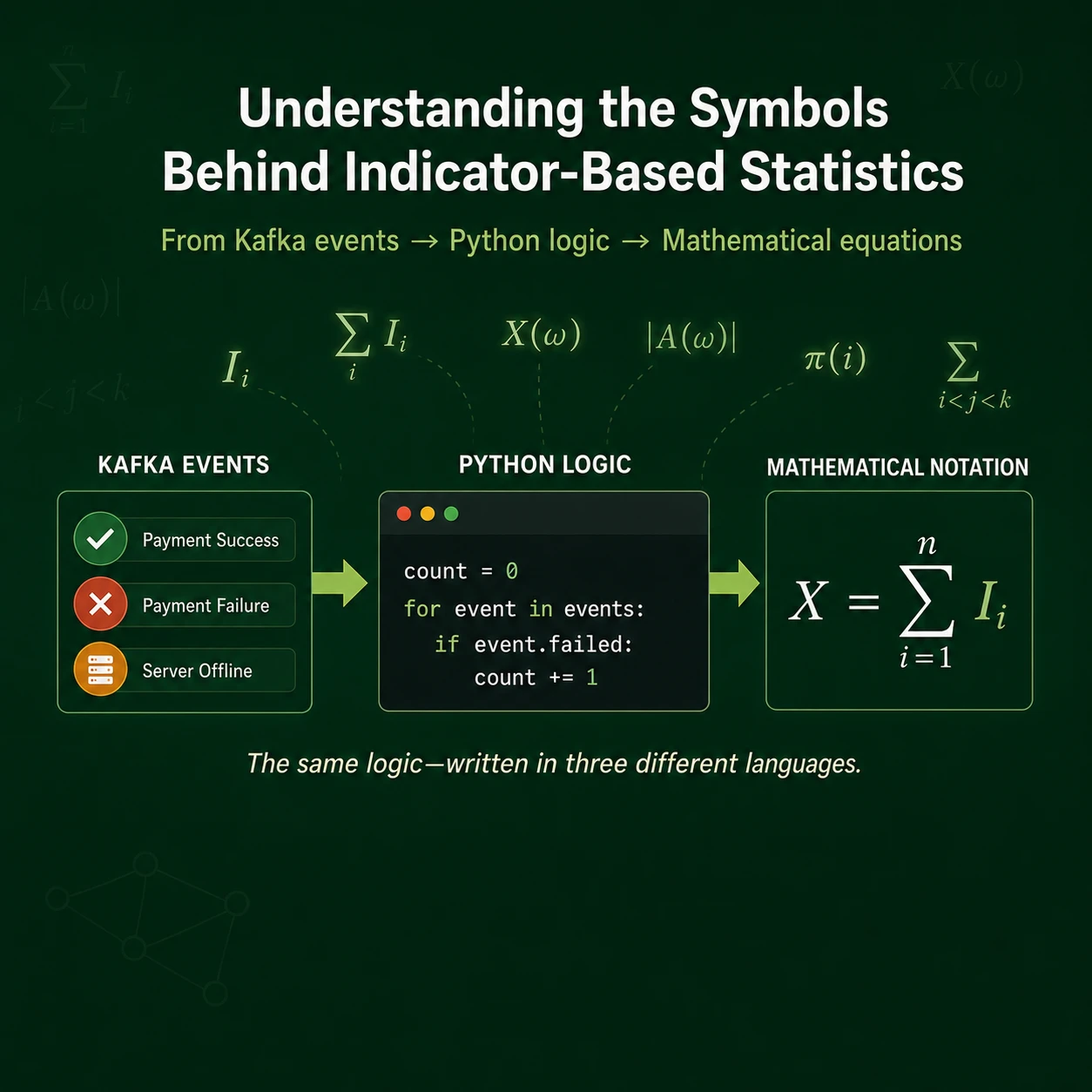 PICTURE 18 / 20How do words, code, and notation connect?Probability & Random Processes · Probability & Distributions · Indicator Symbols: From Conditions to Counts
A counting statement, a program loop, and a sum of indicators can encode the same procedure. Translating among them is a strong check that the indices and condition are correct.
Lessons 9
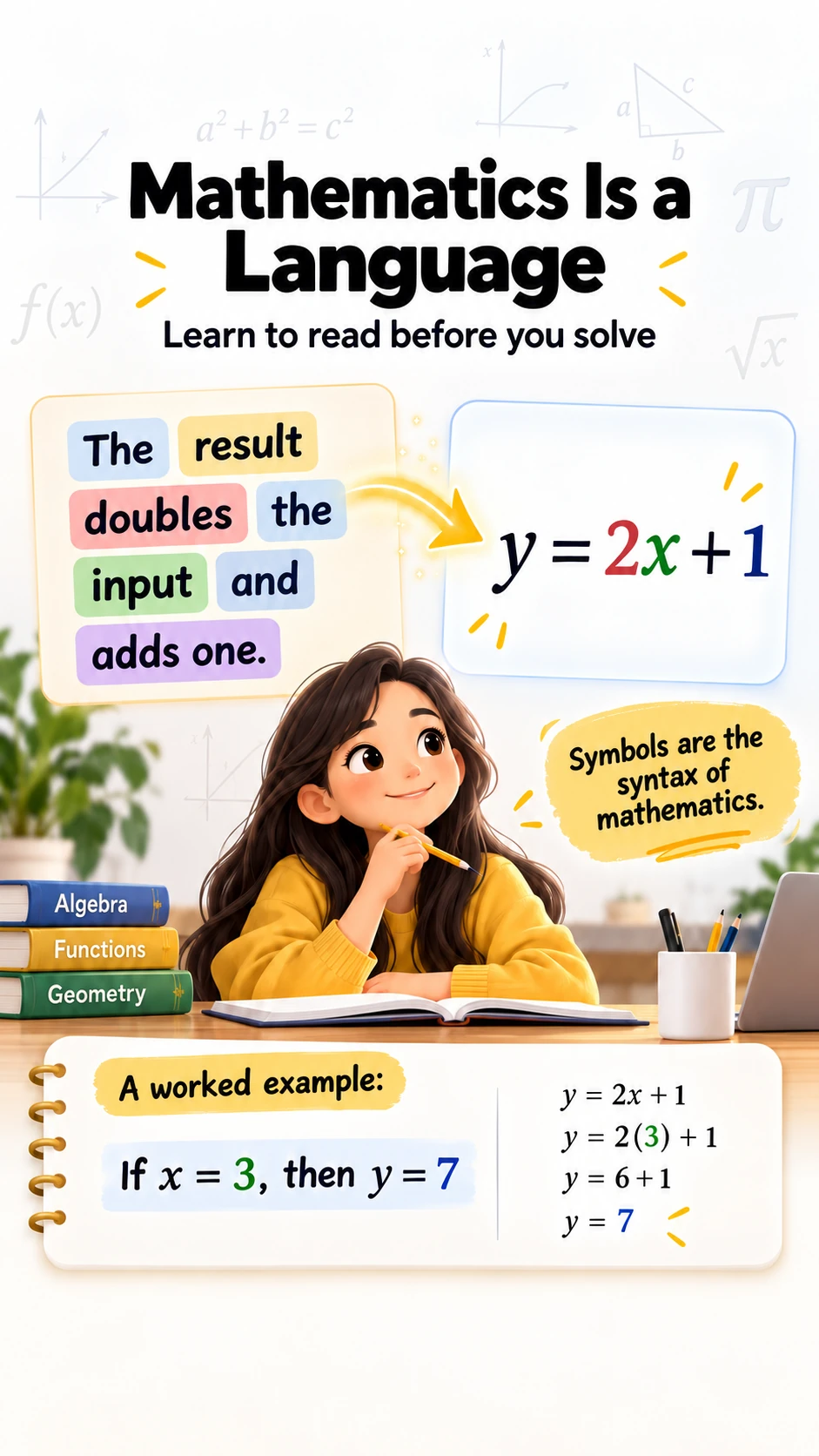 LESSONSymbols of Mathematics: Reading the LanguageSymbols of Mathematics · Reading Mathematical Language
Why do mathematicians use symbols instead of words, and how do you read them?
LESSONThree Mathematical Meanings of PiFoundations & Discrete Mathematics · Mathematical LanguageHow can the same Greek letter represent different mathematical objects?
LESSONIndicator Symbols II: From One Outcome to ProbabilityProbability & Random Processes · Probability & DistributionsHow do events, outcomes, indicators, sums, expectations and conditional notation fit into one readable language?
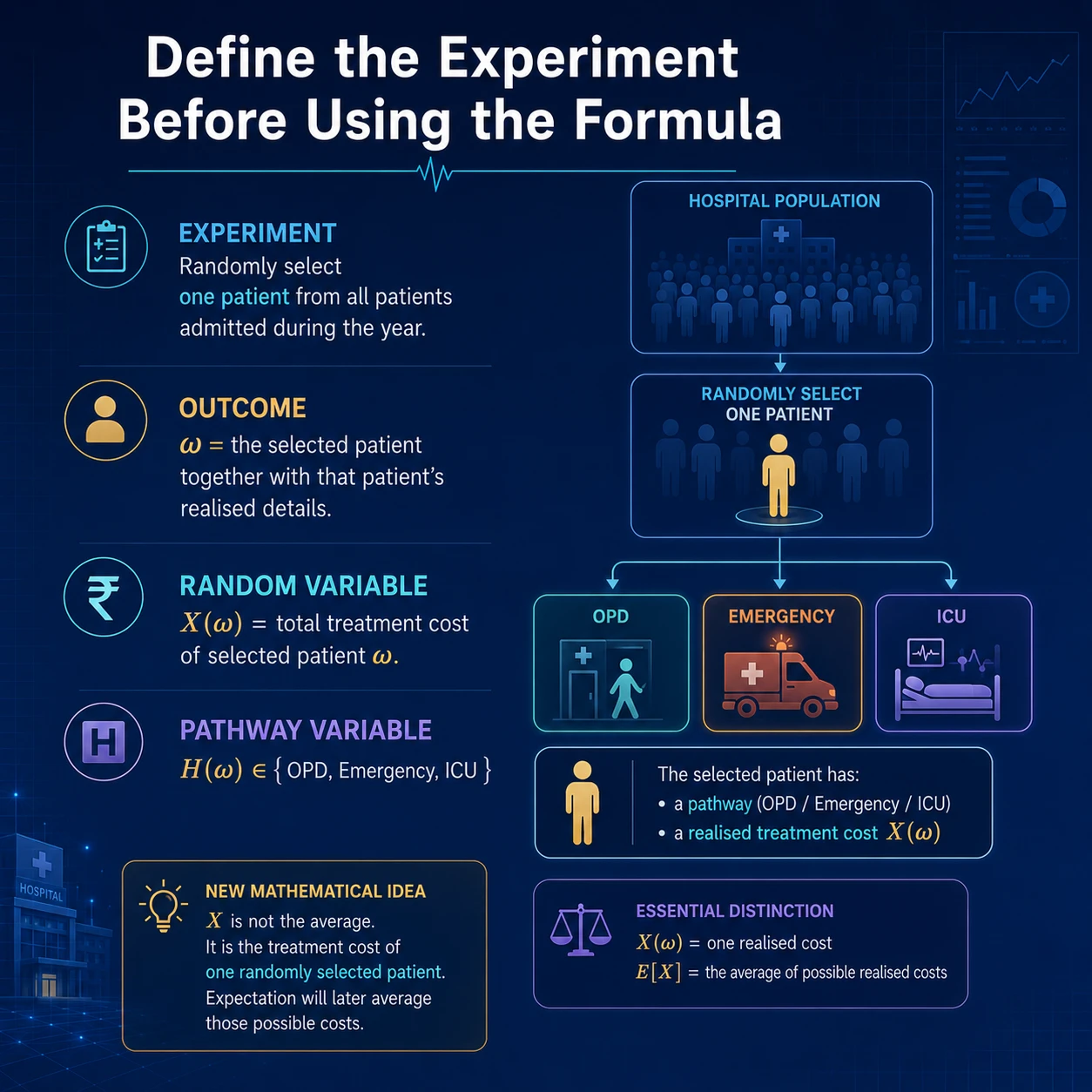 LESSONForeshadowing the Law of Total ExpectationProbability & Random Processes · Probability & Distributions
How do local averages inside pathways combine into one correct population average?
LESSONIndicator Symbols: From Conditions to CountsProbability & Random Processes · Probability & DistributionsHow do indicator symbols turn logical conditions into exact sums, expectations, and variance calculations?
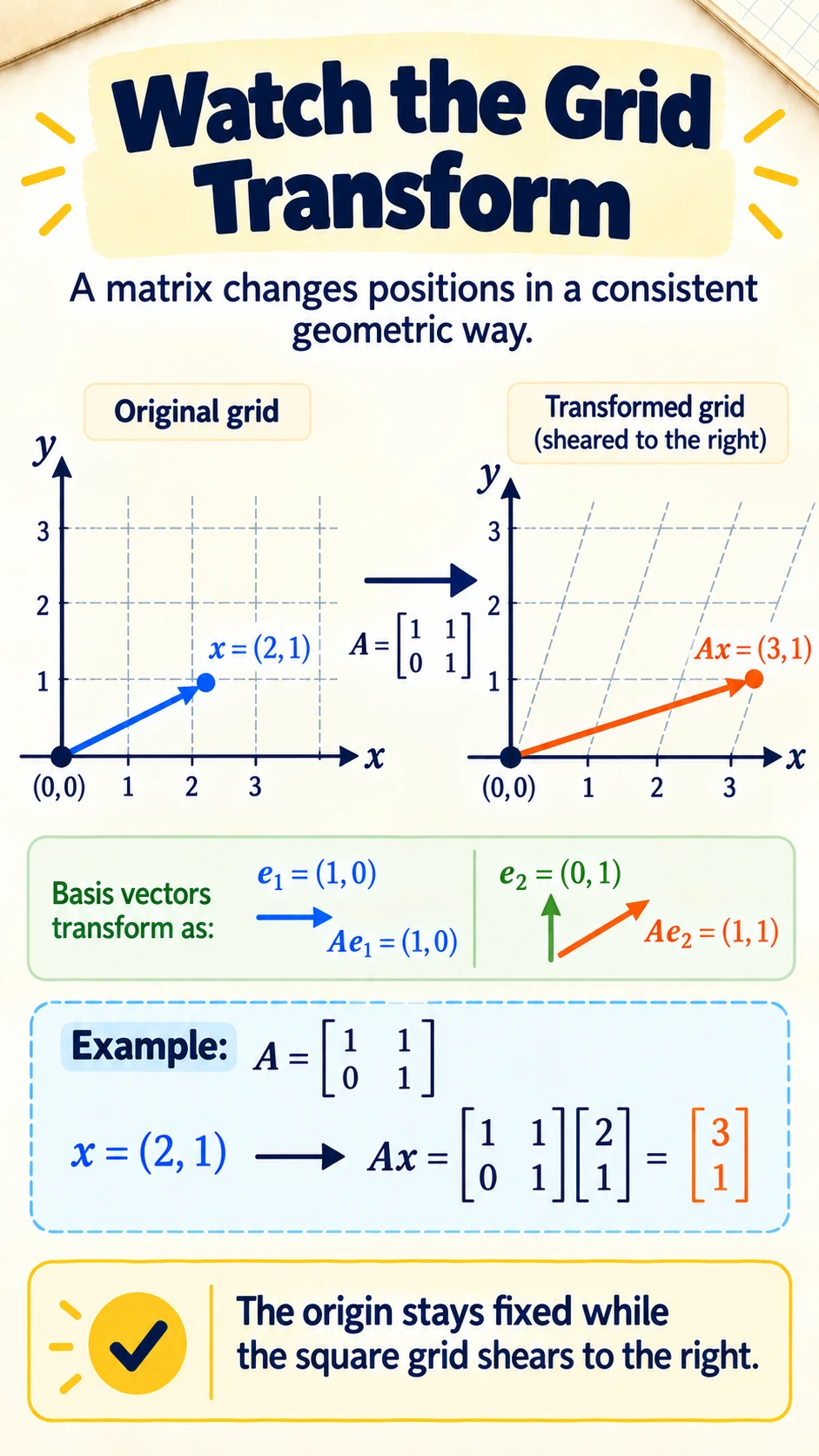 LESSONLinear Algebra: Transformations, Spaces & ProjectionsLinear Algebra · Transformations & Geometry
How do matrices transform geometric space, and how do projections find optimal solutions in high dimensions?
 LESSONSets and Logic: From Grouping to ProbabilityFoundations & Discrete Mathematics · Mathematical Language
How do grouping rules become a language for logic, counting, and probability?
LESSONVariables, Constants, and ExpressionsFoundations & Discrete Mathematics · Mathematical LanguageHow do symbols turn a numerical pattern into an expression, equation, and function rule?
 LESSONByte Pair Encoding: Learning Reusable Text PiecesMathematics of AI · Language, Tokens & Representations
How can repeated neighbouring symbols become a reusable vocabulary for new text?