Search the meaning,
not the filename.
Questions, examples, concepts and short explanations are indexed together—even when the wording is not exact.
80 published results for “Build Neural Network From Scratch”
Visual explanations 45
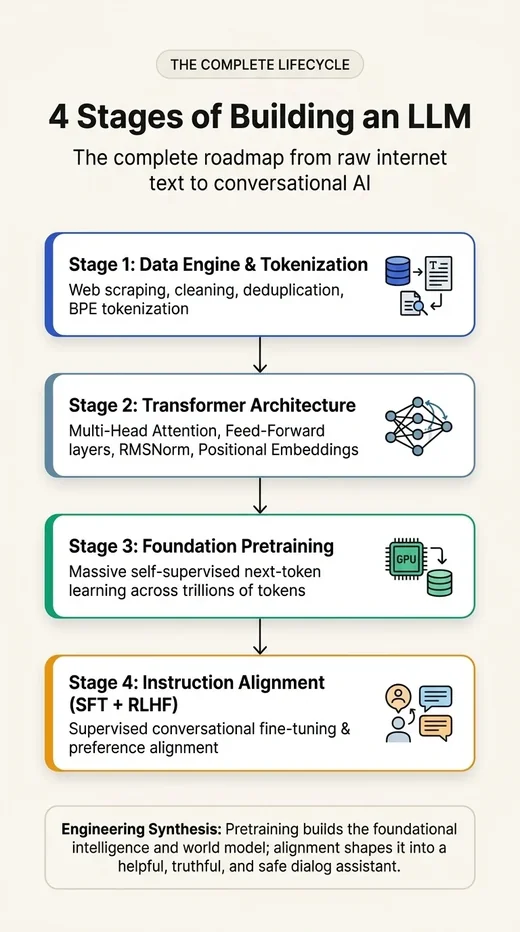 PICTURE 1 / 3What are the four architectural and computational phases required to build a conversational LLM from scratch?Build LLM From Scratch · Four Stages Of Building LLM
Synthesize the four pillars of LLM construction: Data Engineering, Base Pretraining, Supervised Fine-Tuning, and Preference Alignment.
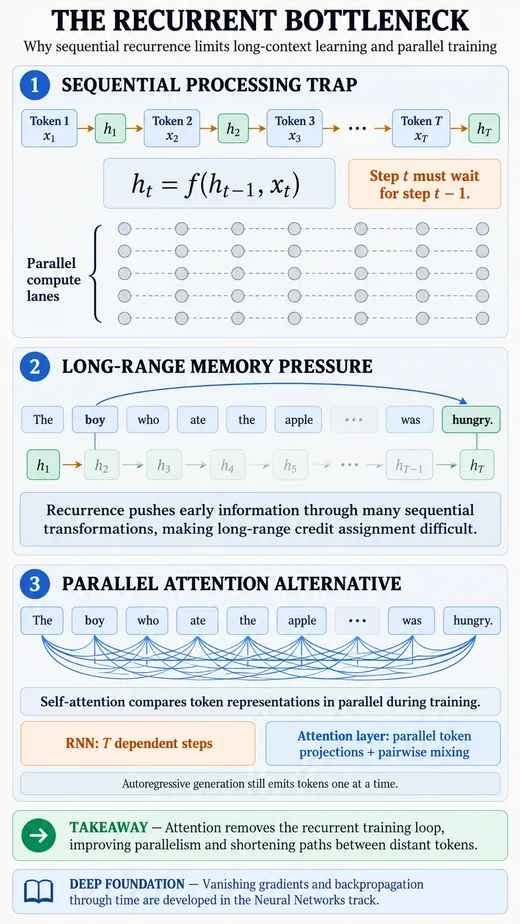 PICTURE 7 / 7Why do recurrent neural networks suffer from an information and gradient bottleneck over long sequences, and how did this failure necessitate the transformer?Build LLM From Scratch · Pretraining vs Finetuning
Recurrent networks serialize computation through a single fixed-size hidden state h_t, causing early context to be overwritten and gradients prod(W_hh) to exponentially vanish or explode.
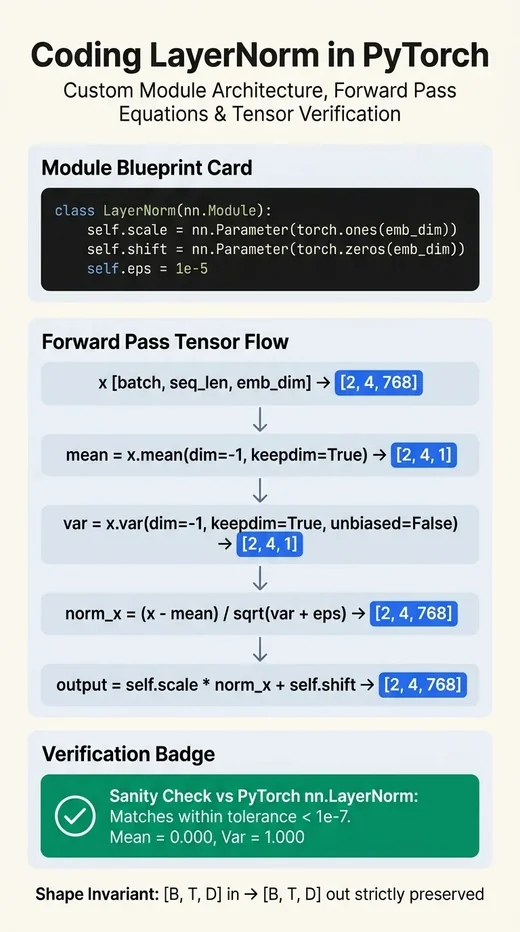 PICTURE 6 / 11How do you implement LayerNorm from scratch in PyTorch matching nn.LayerNorm behavior?Build LLM From Scratch · Layer Normalization
Write a custom PyTorch module with learnable gamma and beta parameters, computing mean and variance across dim=-1 with keepdim=True.
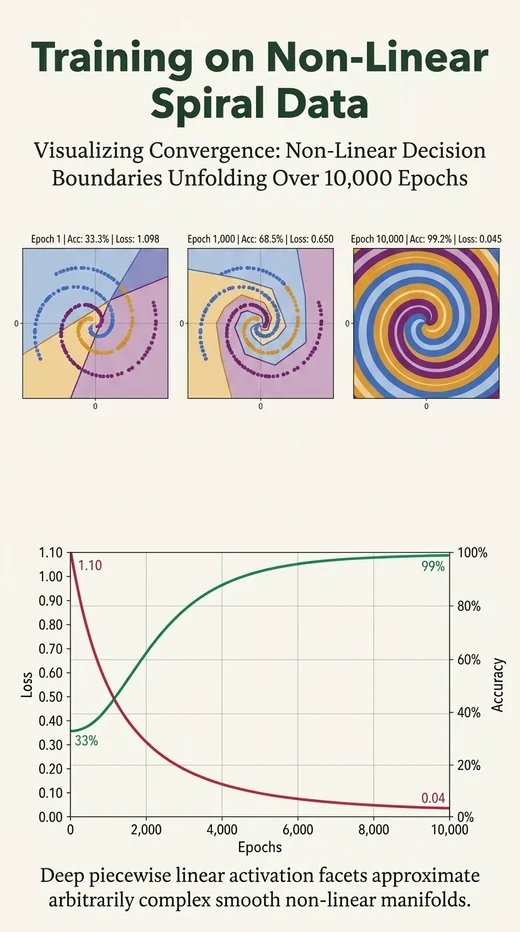 PICTURE 4 / 4How does an end-to-end neural network learn to twist non-linear decision boundaries around the intertwined 3-class spiral dataset?Build Neural Network From Scratch · Stochastic Gradient Descent (SGD): Hyperparameter Dynamics & Mini-Batching
Train a 2-layer neural network on non-linearly separable spiral data, demonstrating loss decrease from 1.09 to 0.10 and accuracy rise to >98%.
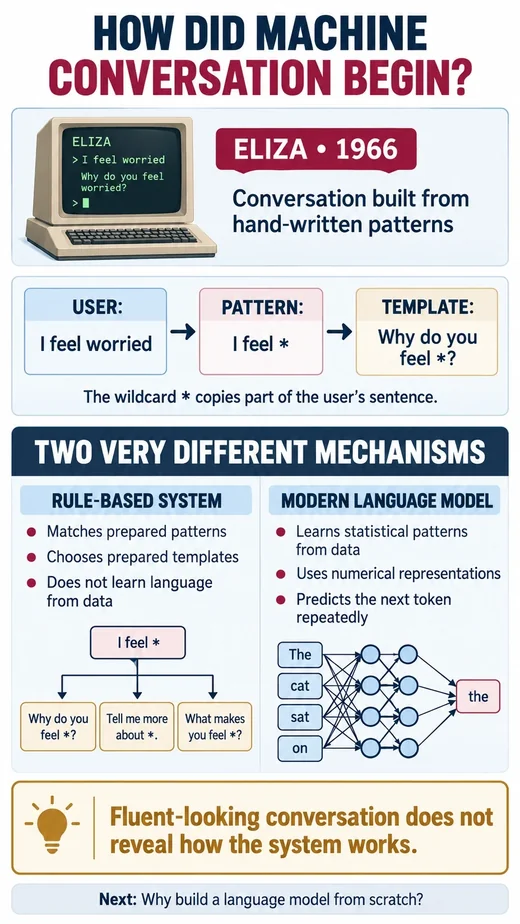 PICTURE 1 / 12How did early conversational systems like ELIZA operate compared to modern probabilistic neural language models?Build LLM From Scratch · Preface
Contrast early rule-based pattern matching (ELIZA) with probabilistic autoregressive token prediction over continuous vector spaces.
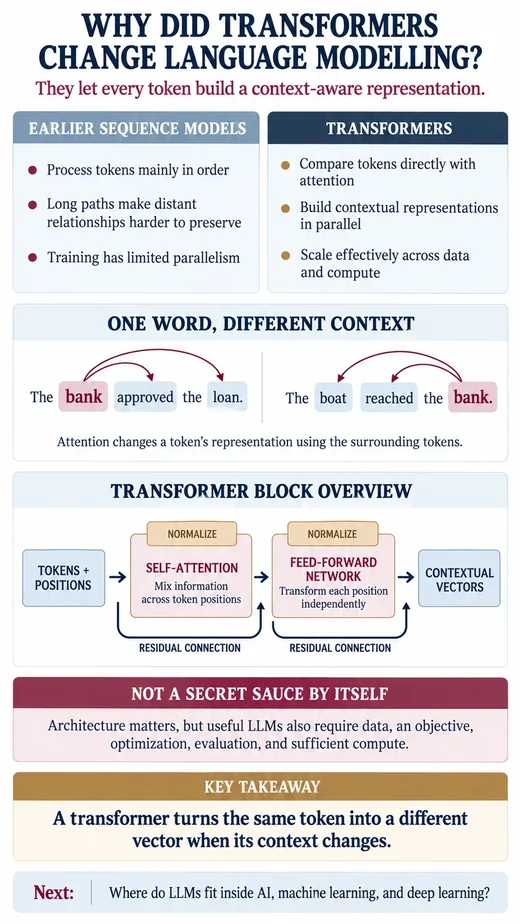 PICTURE 8 / 12Why did the Transformer architecture replace Recurrent Neural Networks (RNNs and LSTMs) as the foundation of modern NLP?Build LLM From Scratch · Preface
Compare the $O(T)$ sequential compute bottleneck of RNNs with the $O(1)$ parallelizable attention path of Transformers.
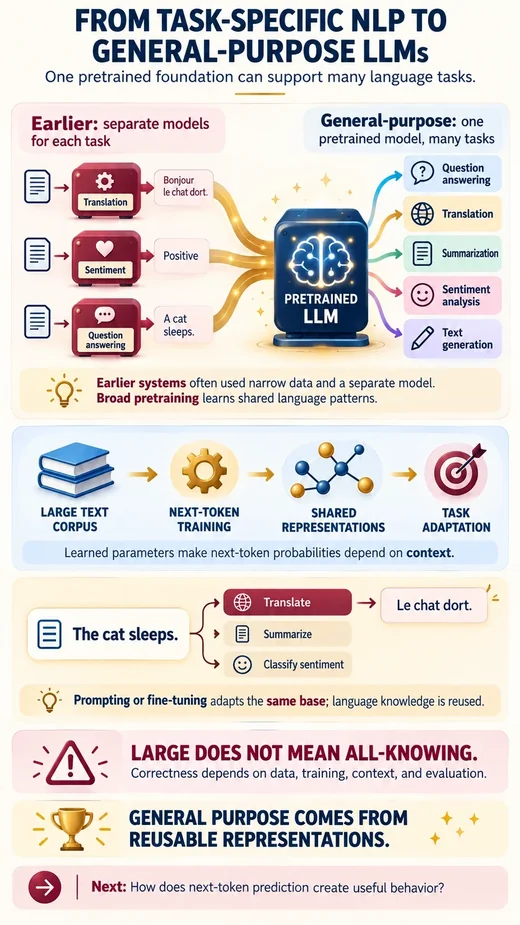 PICTURE 1 / 16How did natural language processing transition from isolated, task-specific pipelines to unified general-purpose foundation models?Build LLM From Scratch · Intro to LLM
Examine the paradigm shift from handcrafted per-task architectures to a single autoregressive transformer trained on web-scale data.
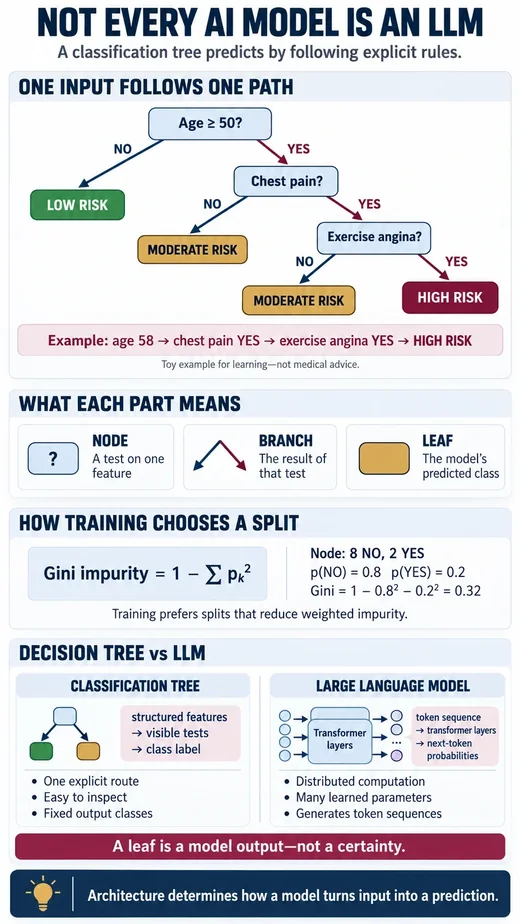 PICTURE 13 / 16How do Large Language Models differ algorithmically and structurally from other foundational AI architectures like CNNs, GNNs, and Diffusion models?Build LLM From Scratch · Intro to LLM
Distinguish autoregressive LLMs from vision classifiers, graph neural networks, and continuous diffusion systems.
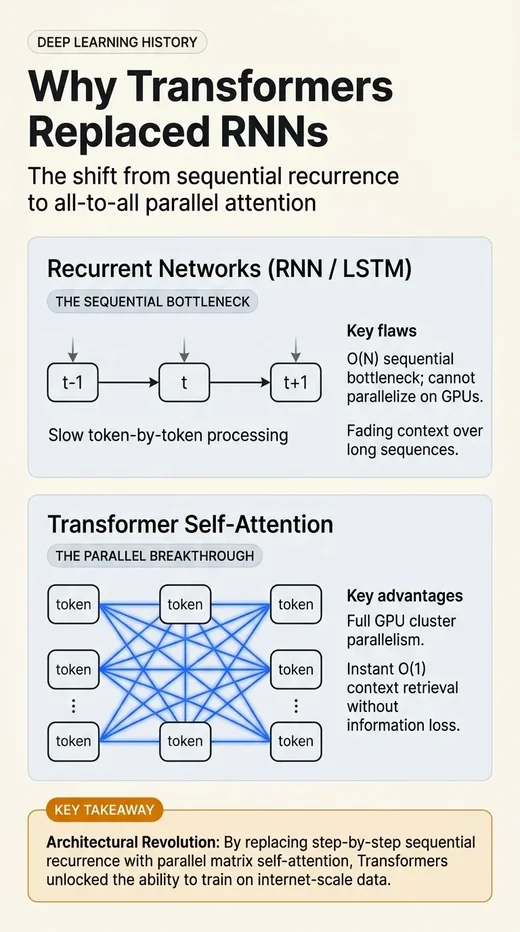 PICTURE 5 / 5What fundamental mathematical and hardware constraints made Recurrent Neural Networks obsolete for large-scale language modeling?Build LLM From Scratch · Basics Of Transformers
Evaluate why the sequential dependency graph of RNNs caused gradient degradation and prevented GPU parallelization.
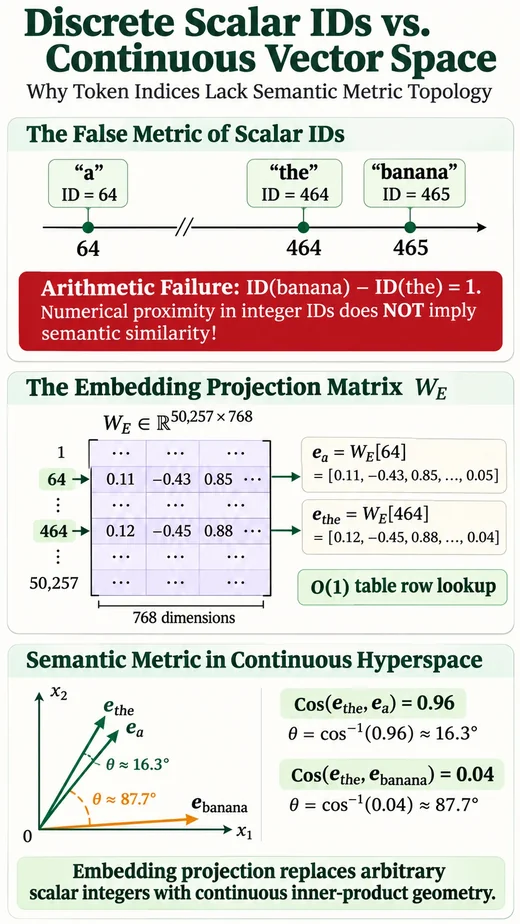 PICTURE 1 / 13Why can neural networks not perform gradient-based arithmetic on raw integer token IDs, requiring continuous embedding representations?Build LLM From Scratch · Token Embedding
Demonstrate why discrete scalar token IDs possess no meaningful Euclidean distance metric or gradient flow.
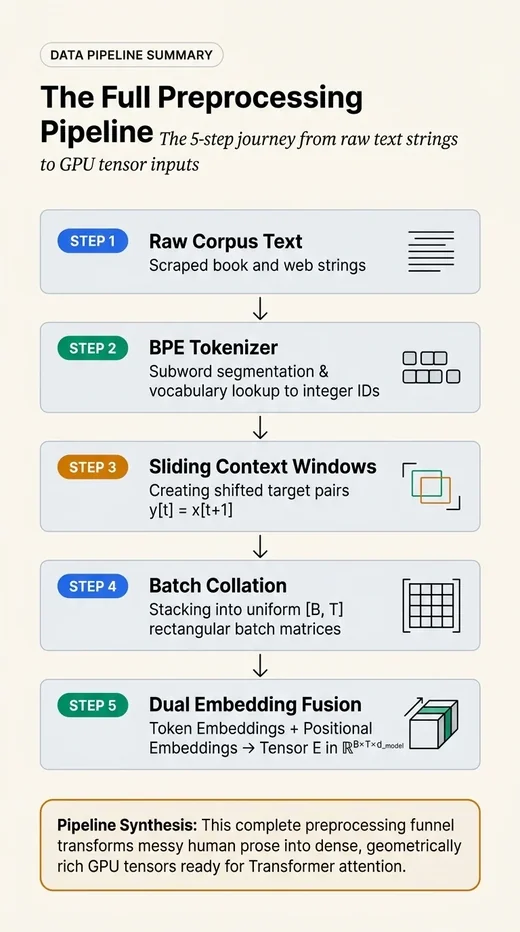 PICTURE 1 / 3What is the complete end-to-end data processing journey from raw text strings to GPU tensor inputs ready for Layer 1?Build LLM From Scratch · Preprocessing Summary
Synthesize the entire data preprocessing pipeline: Unicode text -> BPE tokenization -> integer IDs -> sliding window Dataset -> DataLoader batching -> token and positional embedding addition.
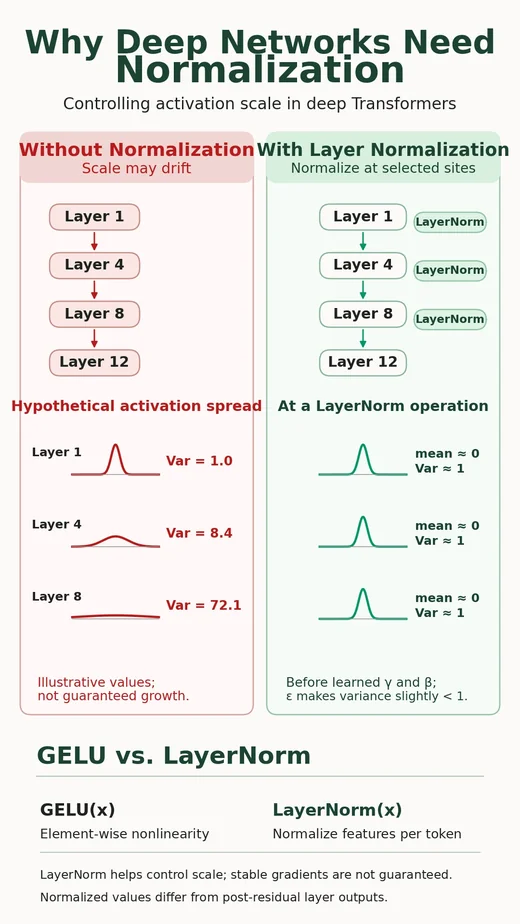 PICTURE 1 / 11Why do deep transformer networks suffer from internal covariate shift and exploding/vanishing gradients without normalization?Build LLM From Scratch · Layer Normalization
Stacked linear and non-linear layers cause activation scales to drift and compound exponentially, destabilizing backpropagation gradients.
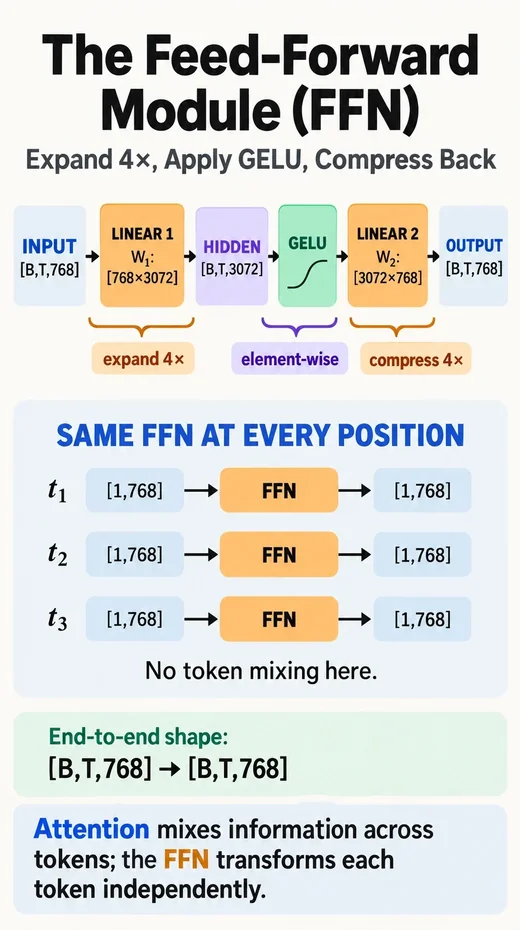 PICTURE 4 / 6How does the two-layer Feed-Forward Network expand and project token representations with GELU activation?Build LLM From Scratch · Gelu Activation
The FFN projects tokens into a 4x wider intermediate dimension where GELU filters features, before projecting back to d_model, acting as an associative key-value memory.
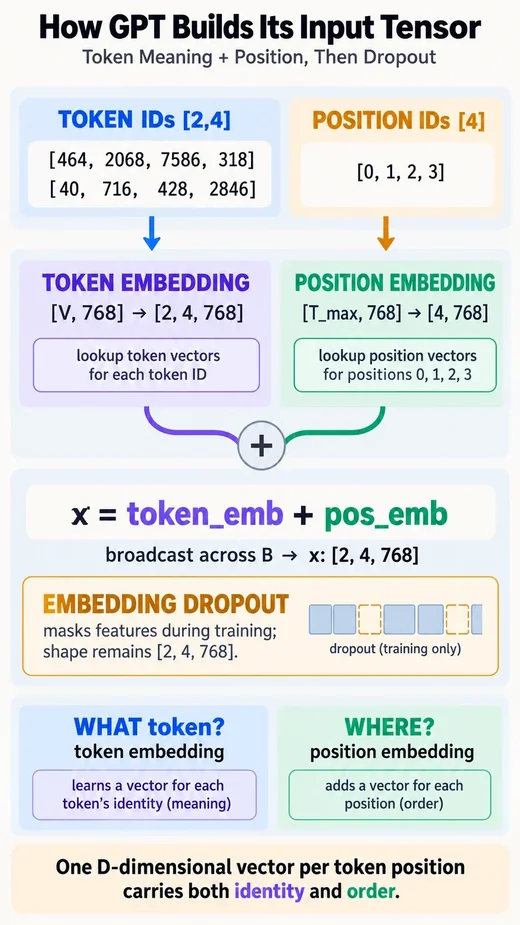 PICTURE 1 / 8How does GPT-2 (124M) construct its unified input tensor from discrete token IDs and positional embeddings?Build LLM From Scratch · GPT-2 (124M)
GPT-2 sums discrete token embeddings from matrix W_E with learned positional embeddings from matrix W_P to produce an input tensor of shape (B, T, 768).
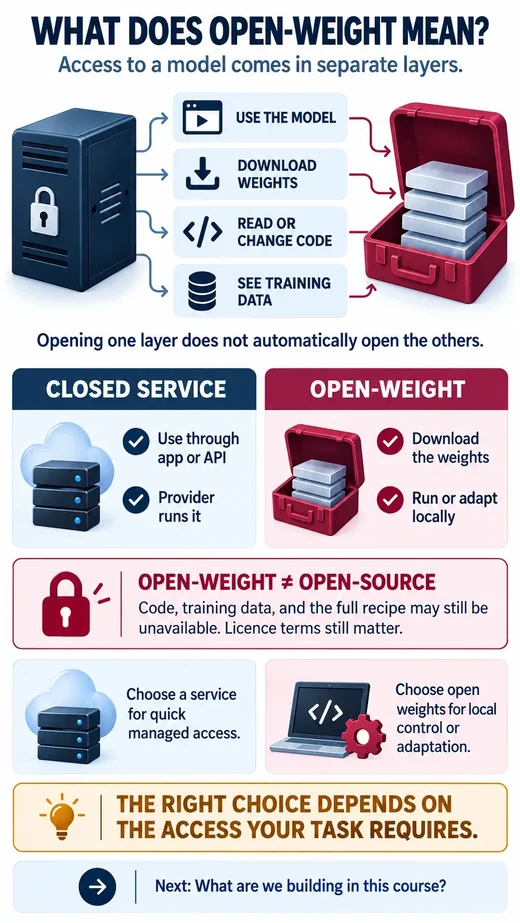 PICTURE 2 / 12What is the technical distinction between open-weight models, open-source AI, and proprietary black-box APIs?Build LLM From Scratch · Preface
Distinguish between proprietary API endpoints, open-weight model checkpoints, and fully open-source AI systems.
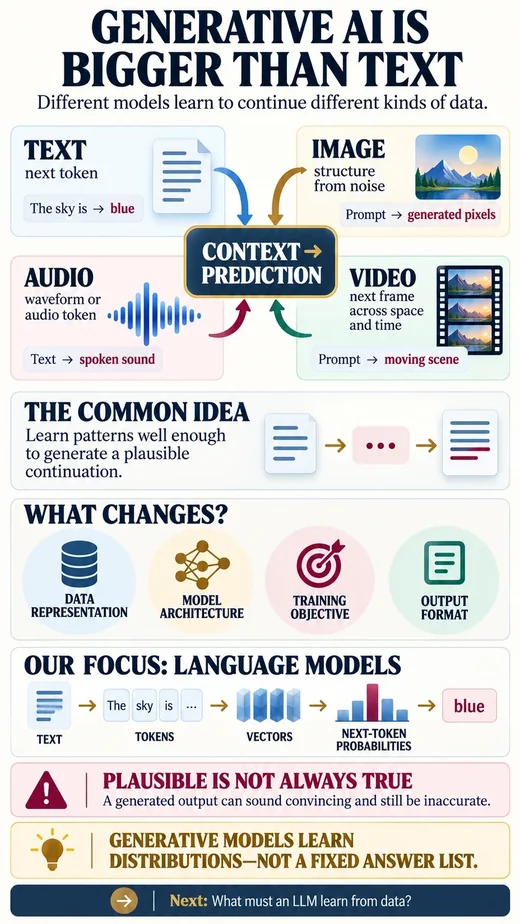 PICTURE 3 / 12How does the autoregressive sequence-modelling paradigm generalize beyond natural language to images, audio, and biological sequences?Build LLM From Scratch · Preface
Understand how the sequence-to-sequence paradigm maps across modalities by casting all discrete information into token streams.
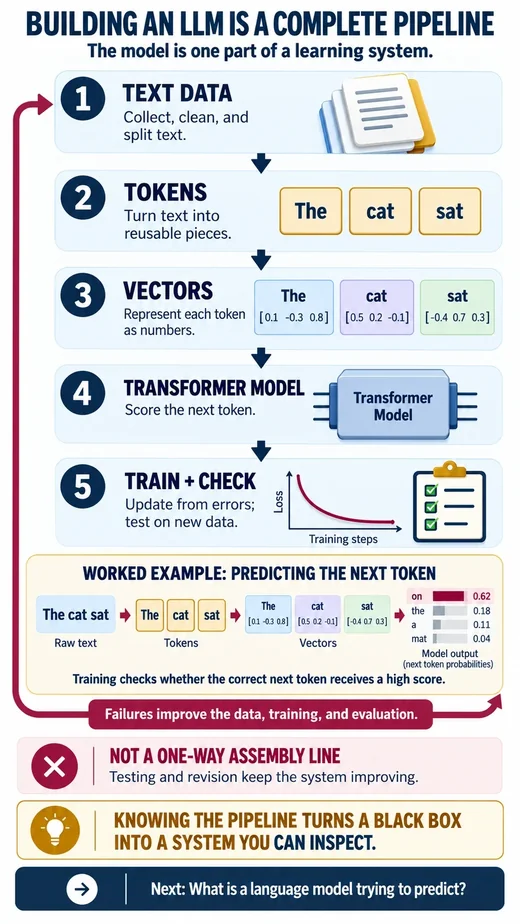 PICTURE 4 / 12What are the sequential stages required to transform raw uncurated internet data into a production-ready conversational assistant?Build LLM From Scratch · Preface
Trace the end-to-end lifecycle of an LLM across data preprocessing, pretraining, fine-tuning, and alignment.
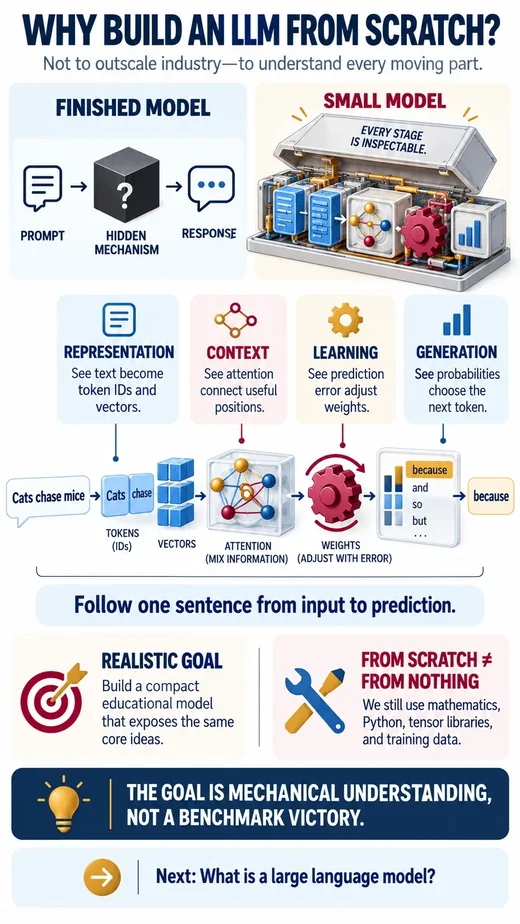 PICTURE 5 / 12Why is implementing an LLM line-by-line in pure PyTorch essential for deep engineering competence?Build LLM From Scratch · Preface
Demystify high-level framework abstractions by implementing tensor operations, attention heads, and backprop directly.
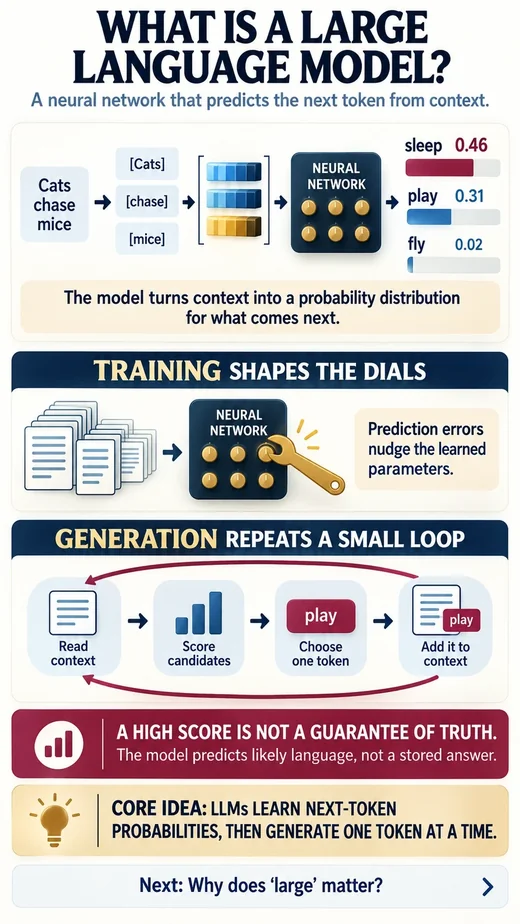 PICTURE 6 / 12What is the formal mathematical definition of an autoregressive language model?Build LLM From Scratch · Preface
Formalize an LLM as a parameterized probability estimator over sequences of discrete tokens.
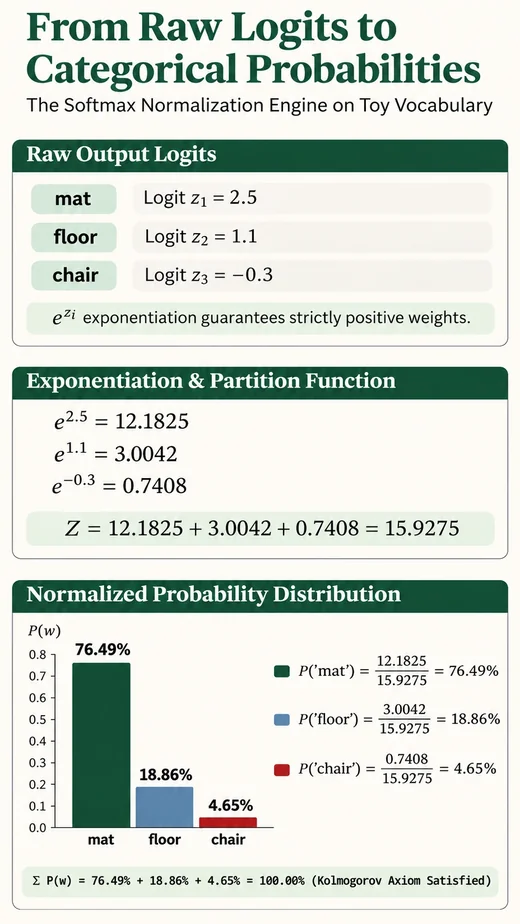 PICTURE 7 / 12What mathematical and empirical thresholds in parameter count, dataset volume, and compute define a 'large' language model?Build LLM From Scratch · Preface
Quantify model scale across parameter counts, training token volumes, and empirical scaling law transitions.
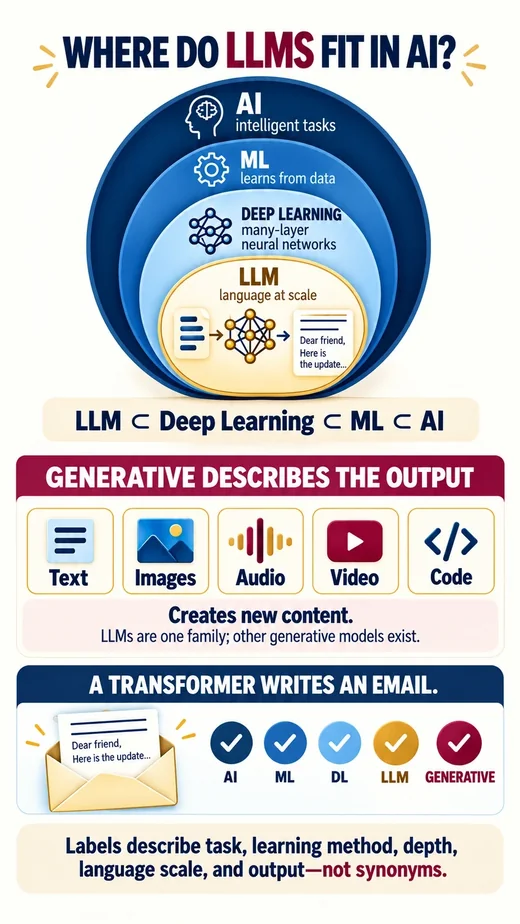 PICTURE 9 / 12How are the nested hierarchical paradigms of AI, Machine Learning, Deep Learning, Generative AI, and LLMs technically structured?Build LLM From Scratch · Preface
Map the technical taxonomy from broad Artificial Intelligence down to specialized Large Language Models.
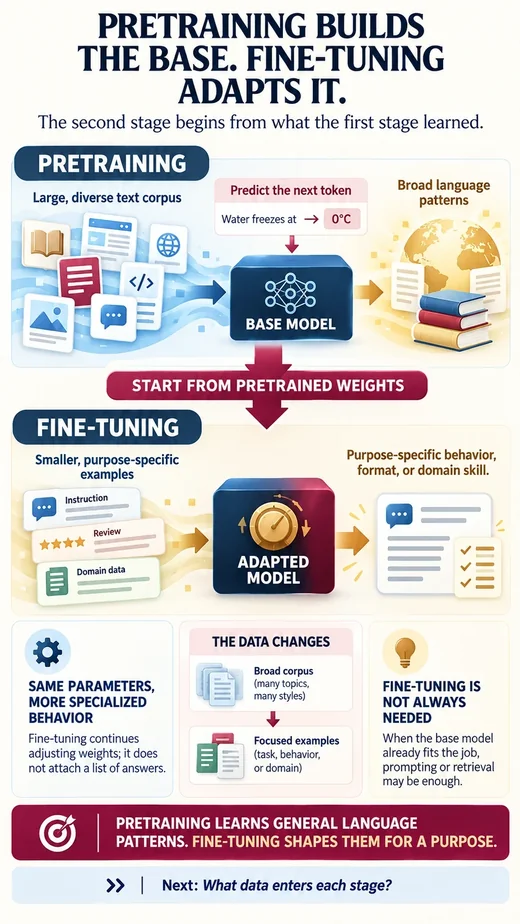 PICTURE 10 / 12Why is training an LLM divided into pretraining on raw corpora followed by fine-tuning on targeted instructions?Build LLM From Scratch · Preface
Analyze the functional division of labor between self-supervised foundation pretraining and supervised post-training adaptation.
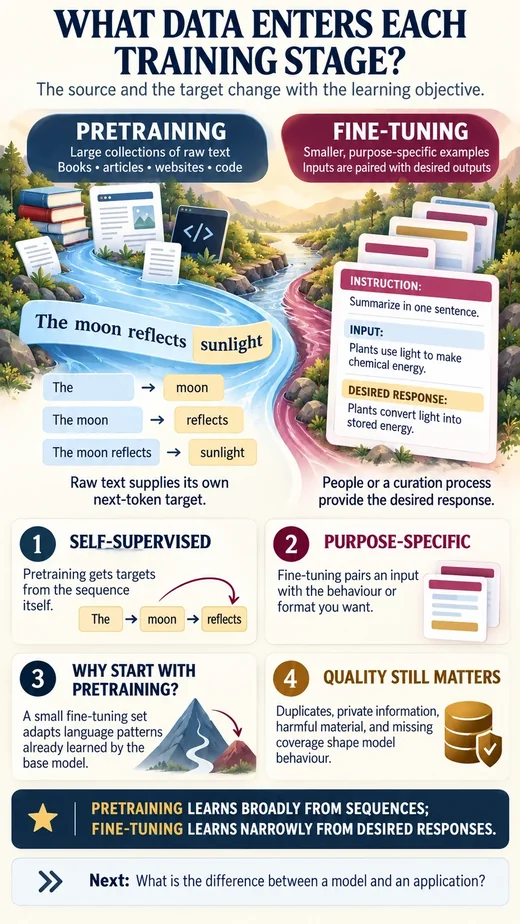 PICTURE 11 / 12How do the volume, curation standards, and formatting of training data differ across the LLM development lifecycle?Build LLM From Scratch · Preface
Examine the composition, filtering pipelines, and dataset structures used in pretraining versus post-training.
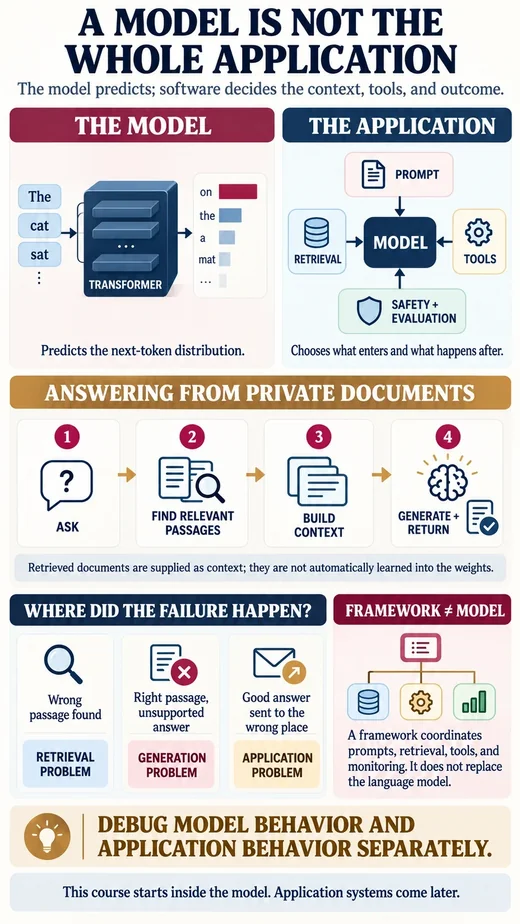 PICTURE 12 / 12What software architecture and system components are required to bridge raw model weights into a robust production AI system?Build LLM From Scratch · Preface
Identify the end-to-end production software stack encompassing the core LLM engine.
Lessons 33
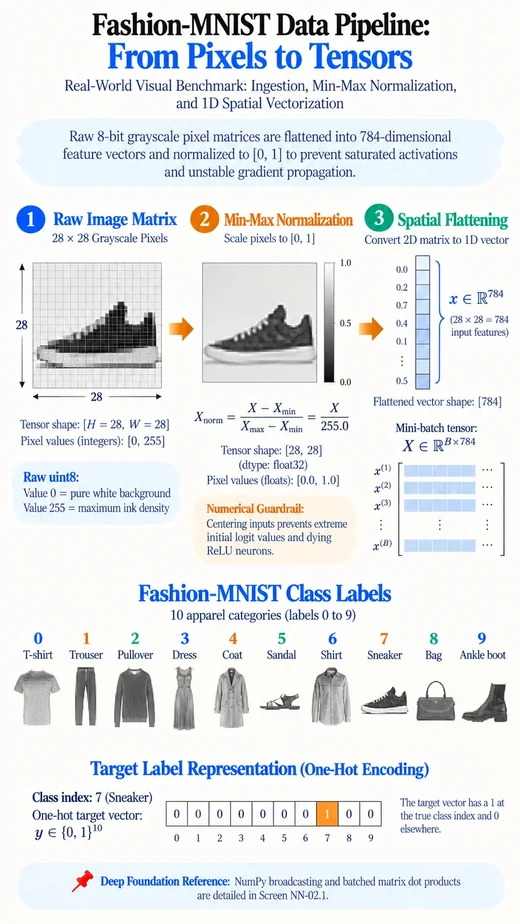 LESSONCapstone 1: Fashion-MNIST Classification Engine From ScratchBuild Neural Network From Scratch
How do data normalization, multi-layer forward propagation, cross-entropy backpropagation, and Adam optimization unite to classify complex real-world clothing images?
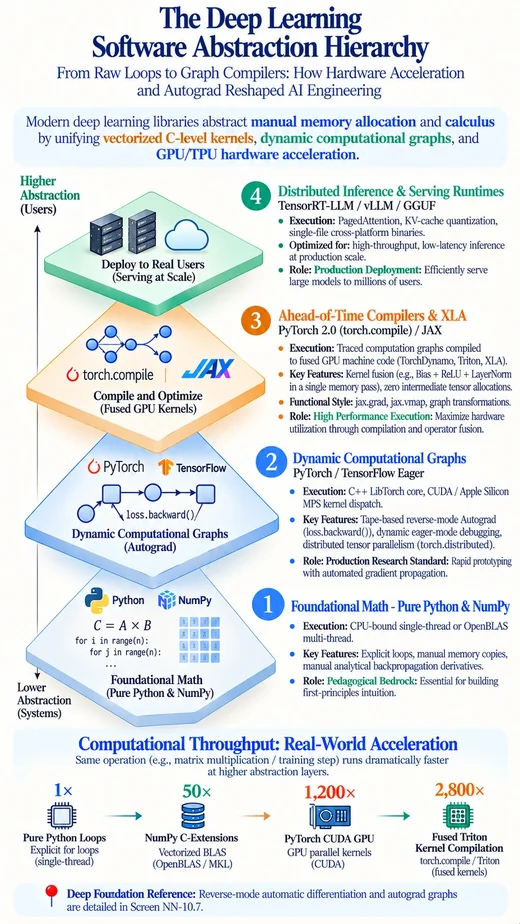 LESSONDeep Learning Software Ecosystem: From Pure NumPy to PyTorchBuild Neural Network From Scratch
How do hardware abstraction layers, dynamic computational graphs, and GPU CUDA kernels elevate deep learning from pure Python to scalable production systems?
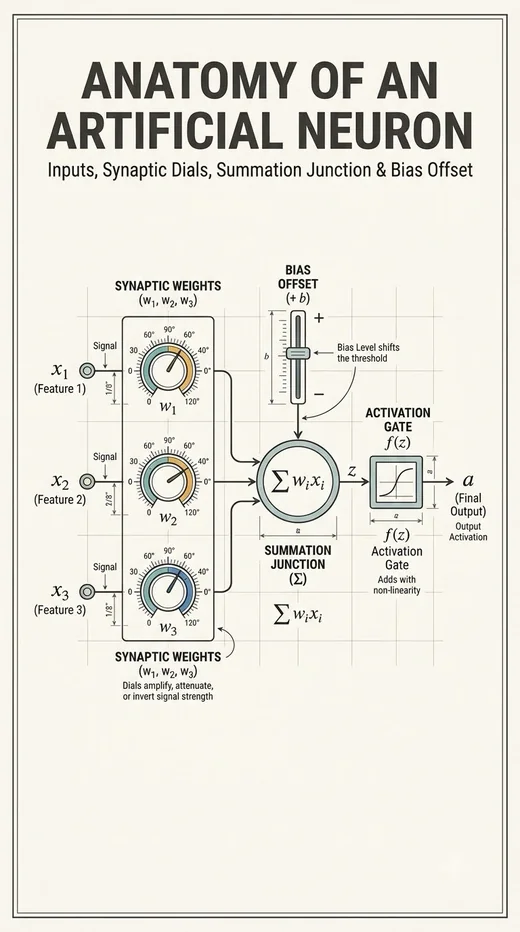 LESSONCoding NeuronsBuild Neural Network From Scratch
How does a single artificial neuron convert an input vector into an activated scalar output?
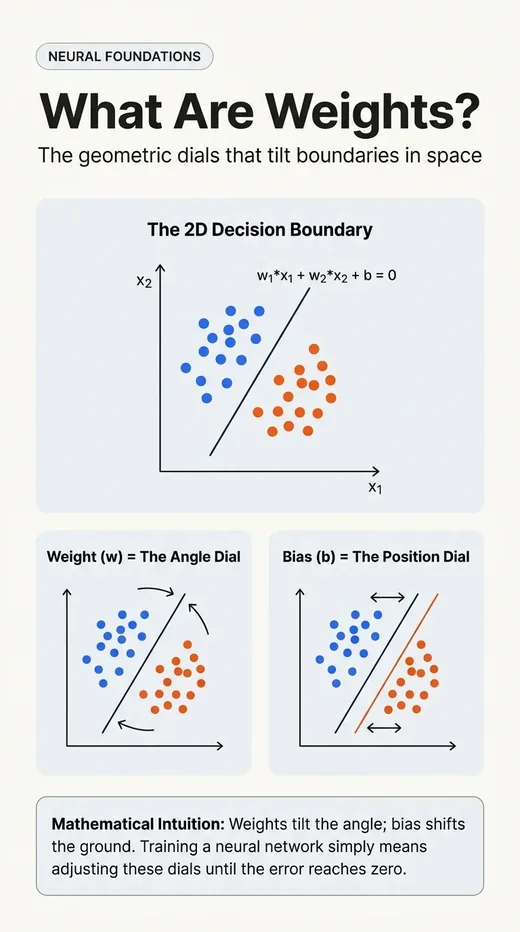 LESSONWhat Are WeightsBuild Neural Network From Scratch
What actually is a weight, and why does changing it rotate a decision boundary in space?
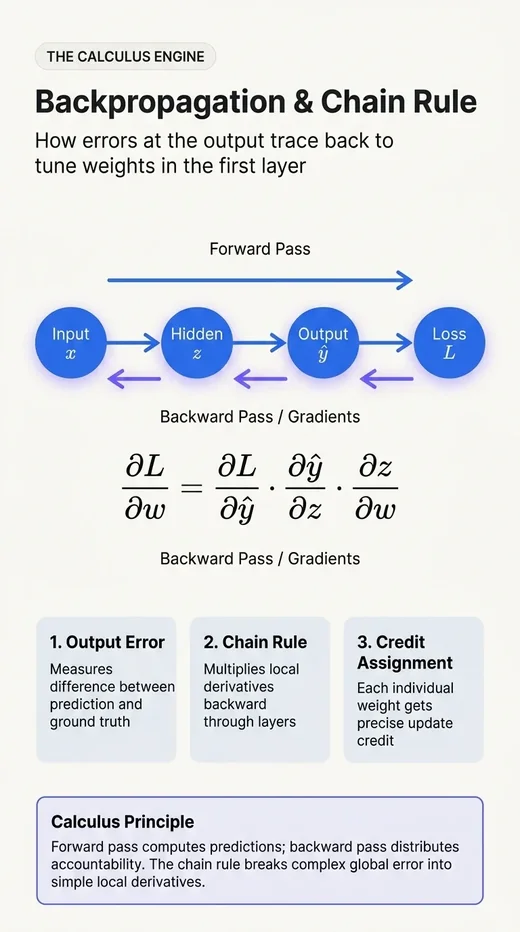 LESSONCalculus BackpropBuild Neural Network From Scratch
How does an error at the final output know which specific weight in the first layer caused the mistake?
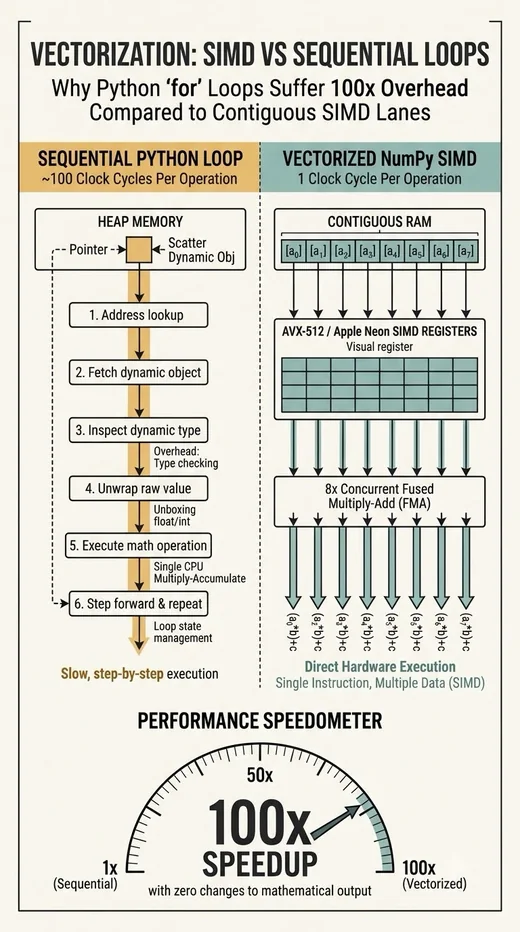 LESSONNumpy Dot ProductBuild Neural Network From Scratch
Why is `np.dot` orders of magnitude faster than a Python `for` loop, and what hardware mechanics make it possible?
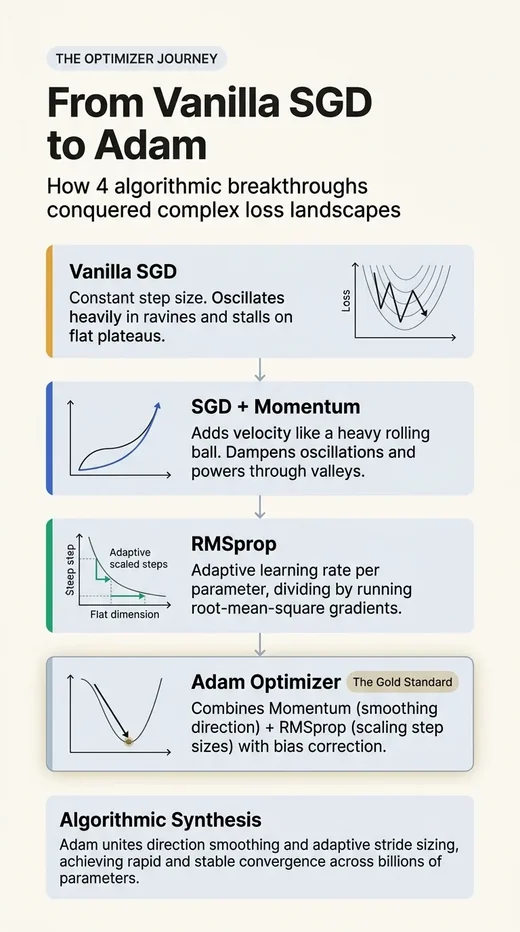 LESSONOptimizer JourneyBuild Neural Network From Scratch
Why did simple gradient descent fail on deep landscapes, and how did Adam solve it?
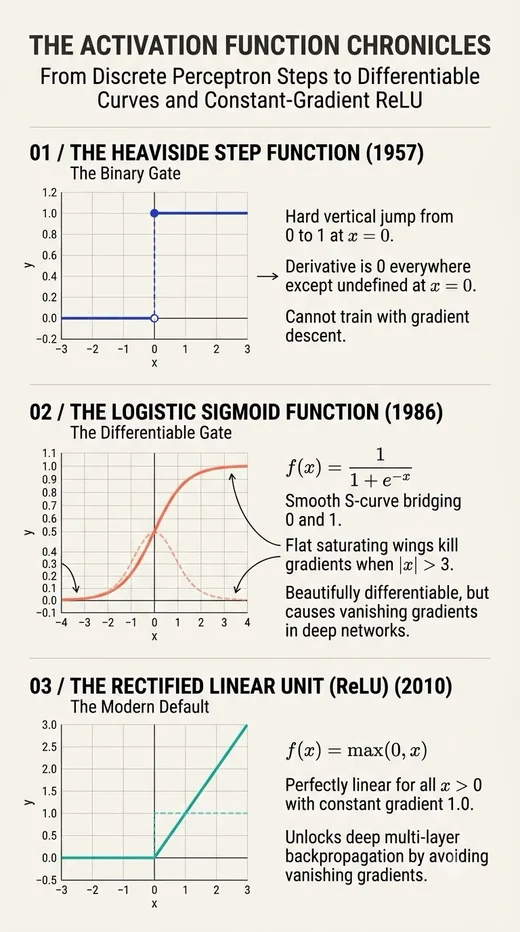 LESSONActivation Functions: Non-Linearity, ReLU & Space BendingBuild Neural Network From Scratch
Why do stacks of pure linear layers collapse into a single trivial matrix multiplication, and how do non-linear activations warp vector space to solve non-linear problems?
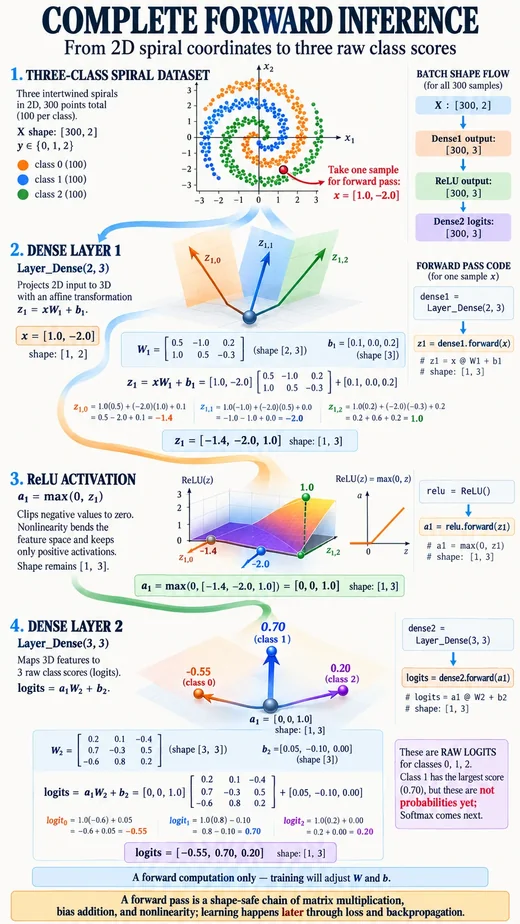 LESSONForward Inference Engine: Tensor Propagation & Layer StackingBuild Neural Network From Scratch
How do input feature vectors propagate forward through multi-layer parameter matrices and non-linearities to produce calibrated output scores?
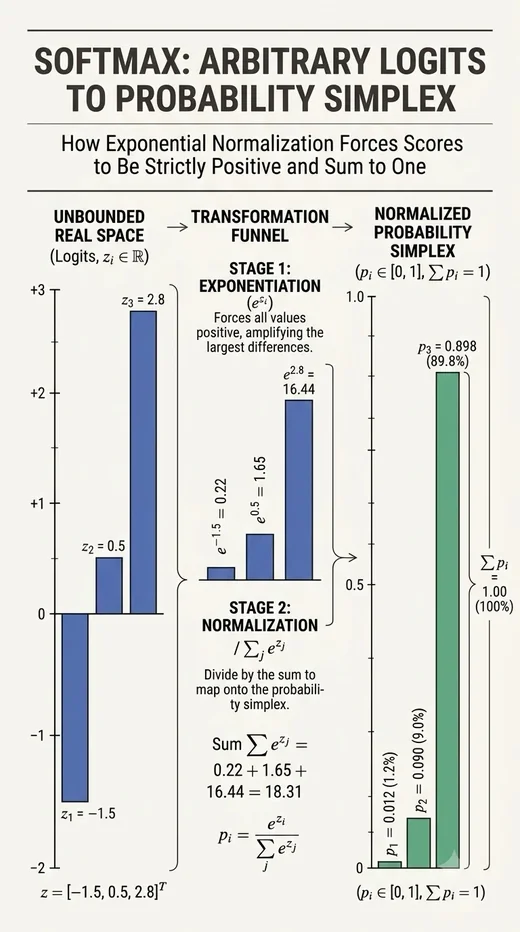 LESSONLoss Functions: Softmax, Cross-Entropy & Numerical StabilityBuild Neural Network From Scratch
How do unconstrained scalar outputs get converted into calibrated probability distributions, and why does categorical cross-entropy provide the optimal loss surface for classification?
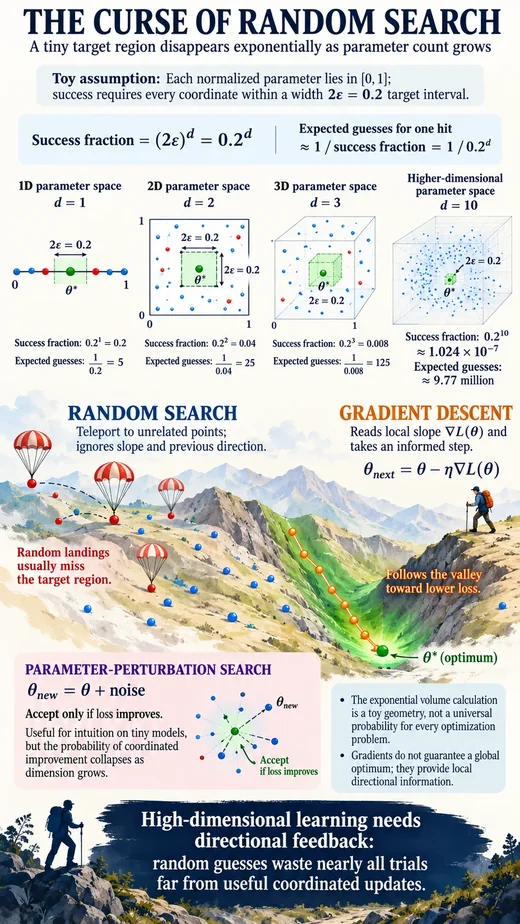 LESSONOptimization Foundations: Gradients, Learning Rates & RavinesBuild Neural Network From Scratch
How do partial derivatives combine into gradient vectors that navigate high-dimensional non-convex loss surfaces, and why is gradient descent infinitely superior to random search?
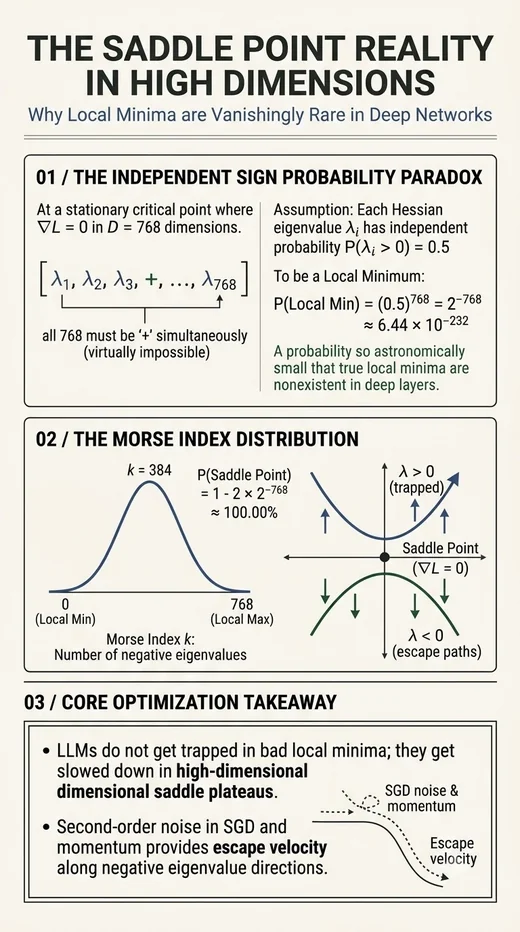 LESSONHigh-Dimensional Loss Landscapes & Morse TheoryBuild Neural Network From Scratch
Why do high-dimensional error surfaces dominate with saddle points and ill-conditioned ravines rather than isolated local minima?