Search the meaning,
not the filename.
Questions, examples, concepts and short explanations are indexed together—even when the wording is not exact.
80 published results for “AI Governance and Interview Preparation”
Visual explanations 64
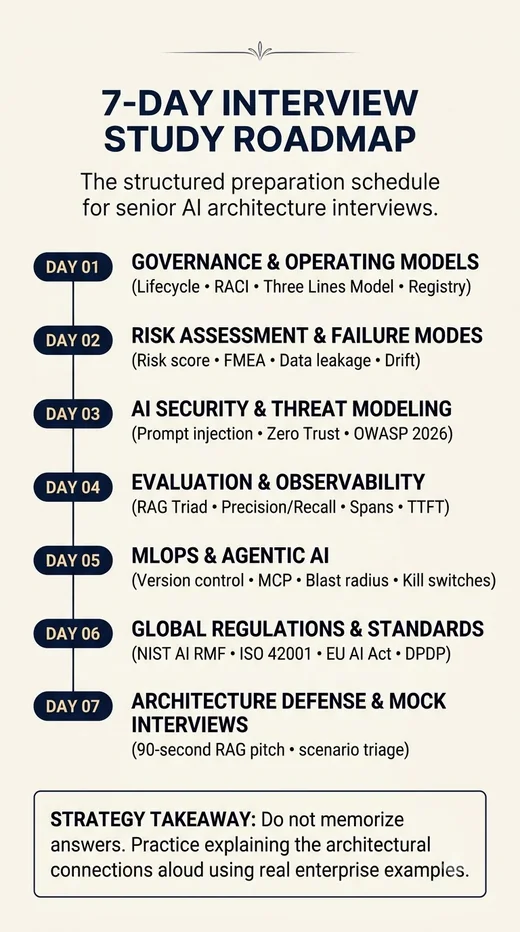 PICTURE 18 / 20How should a candidate structure a 7-day preparation schedule to master executive AI architecture and governance interviews?AI Governance and Interview Preparation · AI Governance, Risk & Observability · Privacy Compliance, Scenario Defense & Executive Interview Guide
Structured 7-day preparation schedule equipping AI Architects to defend end-to-end governance, security, evaluation, and system design under executive interview scrutiny. Focuses on systems thinking, operational trade-offs, and verbal architectural articulation.
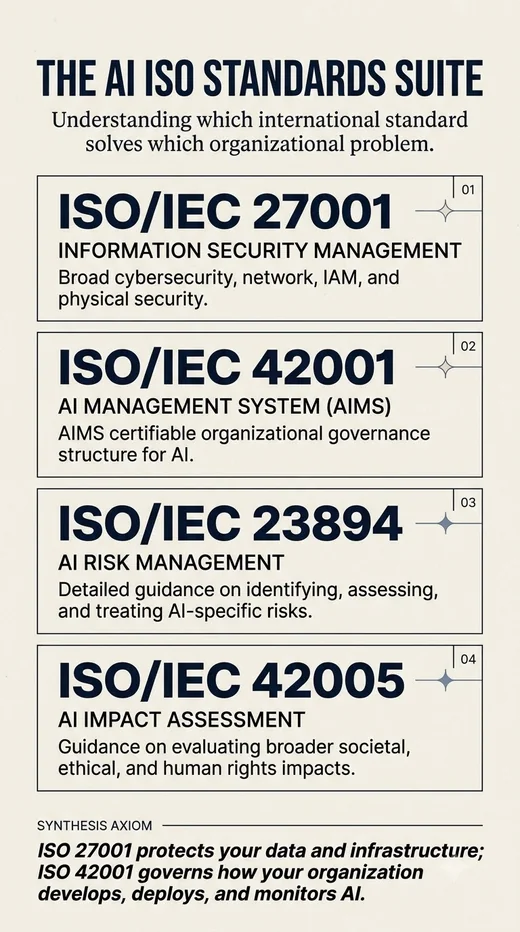 PICTURE 4 / 8What are the distinct scopes of ISO 42001, ISO 27001, ISO 23894, and ISO 42005, and how do they integrate into an enterprise AI governance stack?AI Governance and Interview Preparation · AI Governance, Risk & Observability · Global AI Standards & EU AI Act Compliance
Differentiates the core AI ISO standards: ISO 27001 secures infrastructure, ISO 42001 certifies organizational AI governance, ISO 23894 guides risk management, and ISO 42005 structures impact assessments.
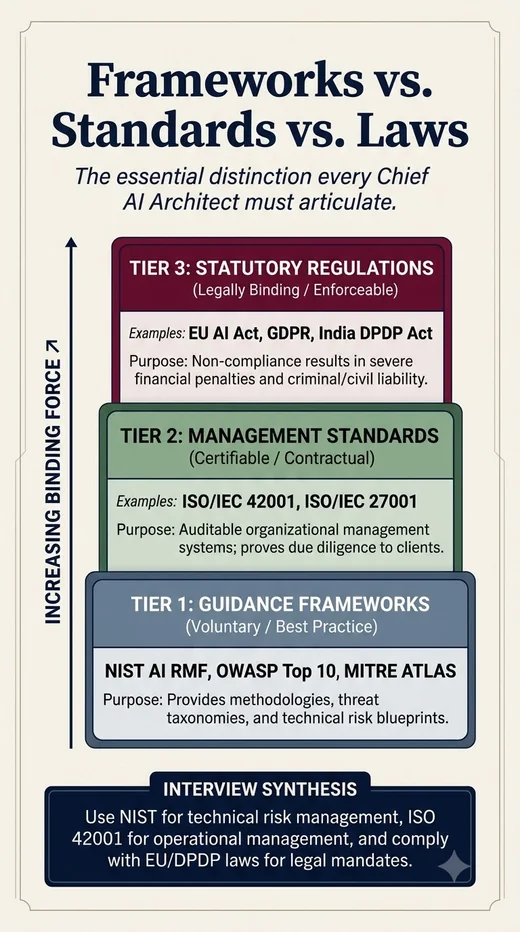 PICTURE 8 / 8How do enterprise AI architects synthesize voluntary frameworks, certifiable standards, and statutory laws into an integrated governance architecture?AI Governance and Interview Preparation · AI Governance, Risk & Observability · Global AI Standards & EU AI Act Compliance
Synthesizes the governance hierarchy across voluntary Guidance Frameworks (NIST, OWASP), certifiable Management Standards (ISO 42001, ISO 27001), and legally binding Statutory Regulations (EU AI Act, DPDP).
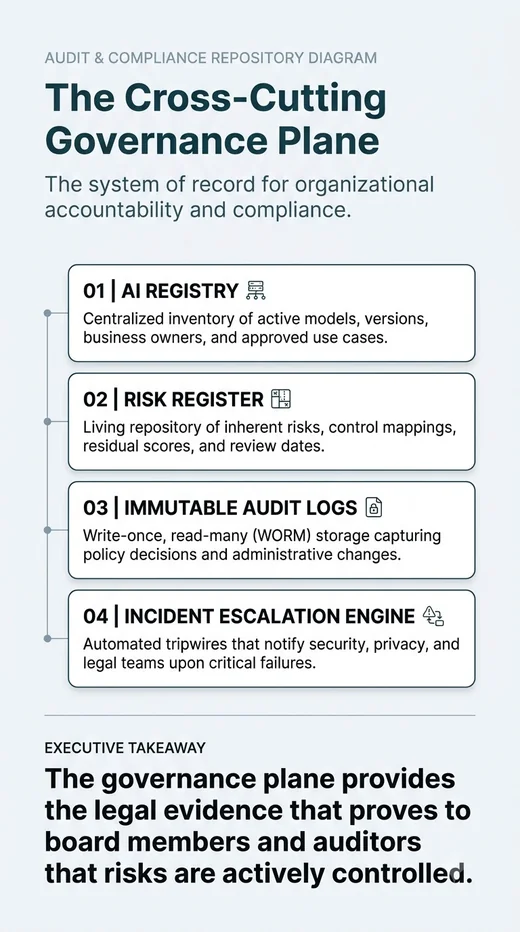 PICTURE 6 / 6What infrastructure components make up the enterprise AI governance plane to satisfy regulatory audits and corporate risk policies?AI Governance and Interview Preparation · AI Governance, Risk & Observability · Governed Enterprise RAG Reference Blueprint
The cross-cutting governance plane establishes an authoritative system of record for organizational accountability across four core pillars: AI Registry, Risk Register, Immutable WORM Audit Logs, and an Incident Escalation Engine. It supplies tamper-proof legal evidence to auditors that operational AI risks are continuously controlled.
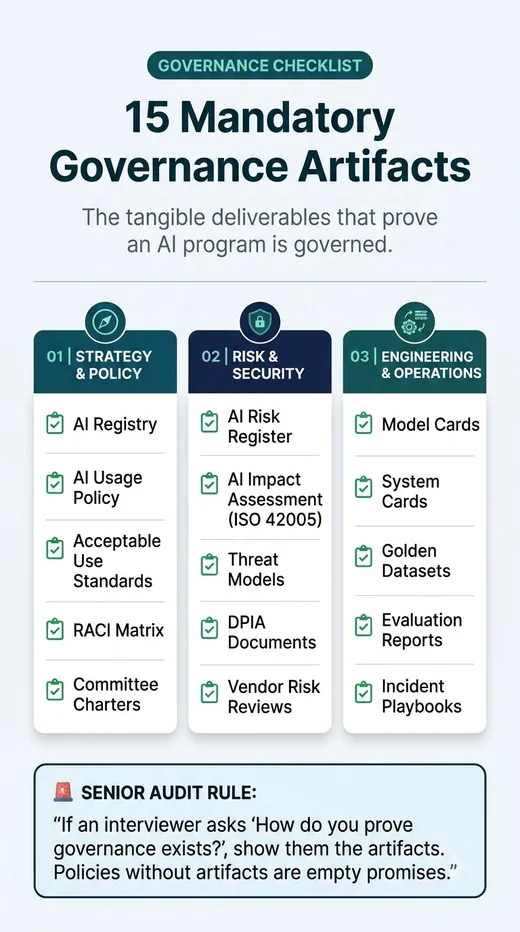 PICTURE 9 / 10What are the 15 mandatory engineering and policy artifacts required to prove AI governance maturity?AI Governance and Interview Preparation · AI Governance, Risk & Observability · Senior AI Incident Response & Architectural Trade-offs
Governance is proven through 15 tangible artifacts spanning strategy, security, and MLOps; policies without inspectable code, cards, and incident runbooks are empty promises.
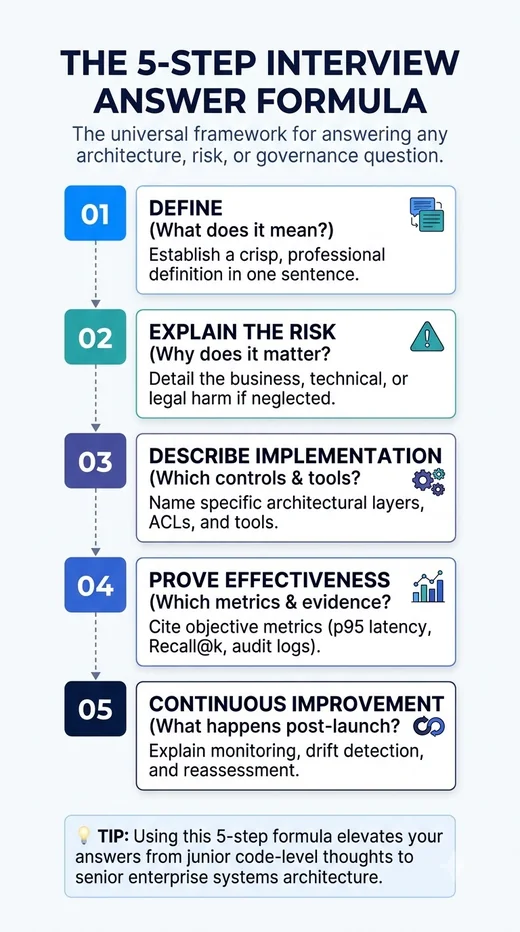 PICTURE 1 / 15How do you systematically structure an executive-level architectural answer for AI governance and systems design?AI Governance and Interview Preparation · AI Governance, Risk & Observability · Advanced Ranking Math & Statistical Drift Metrics
The 5-Step Interview Answer Formula structures technical responses through Definition, Risk, Implementation, Metrics, and Continuous Improvement. This structural flow elevates answers from tactical code snippets to enterprise systems architecture.
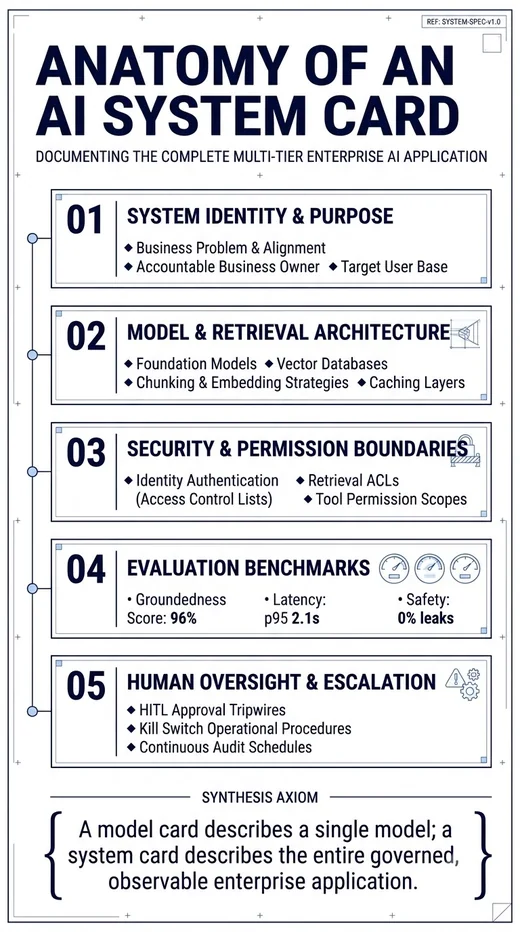 PICTURE 13 / 20What architectural components and governance boundaries must an Enterprise AI System Card document?AI Governance and Interview Preparation · AI Governance, Risk & Observability · Privacy Compliance, Scenario Defense & Executive Interview Guide
Comprehensive architectural specification standard documenting end-to-end enterprise generative AI systems beyond standalone model weights. Captures identity, retrieval pipelines, security permission boundaries, evaluation benchmarks, and oversight tripwires.
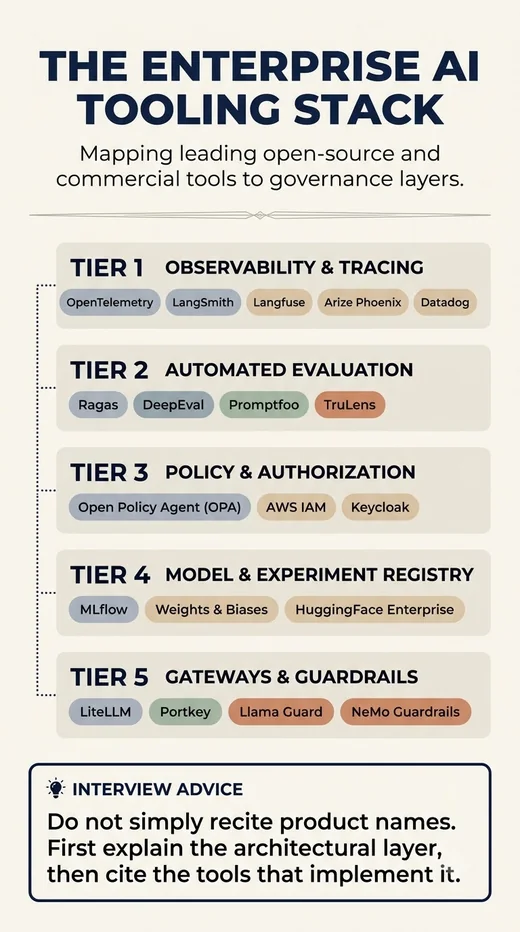 PICTURE 15 / 20How do leading commercial and open-source tools map into a coherent 5-tier enterprise AI governance architecture?AI Governance and Interview Preparation · AI Governance, Risk & Observability · Privacy Compliance, Scenario Defense & Executive Interview Guide
Comprehensive architectural taxonomy mapping industry tooling across five critical governance and operational tiers. Translates enterprise requirements into concrete implementations spanning observability, automated evaluation, authorization, registries, and gateways.
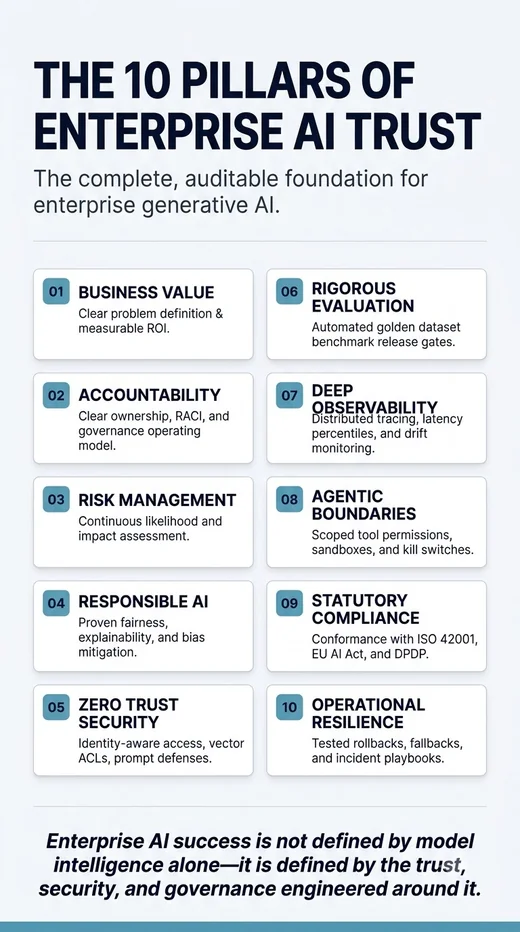 PICTURE 20 / 20What ten architectural and governance pillars form the foundation of enterprise AI trust and production readiness?AI Governance and Interview Preparation · AI Governance, Risk & Observability · Privacy Compliance, Scenario Defense & Executive Interview Guide
The definitive architectural synthesis defining the ten indispensable pillars required for enterprise generative AI production readiness. Proves that enterprise AI success is governed not by raw model intelligence, but by the trust, security, and accountability engineered around it.
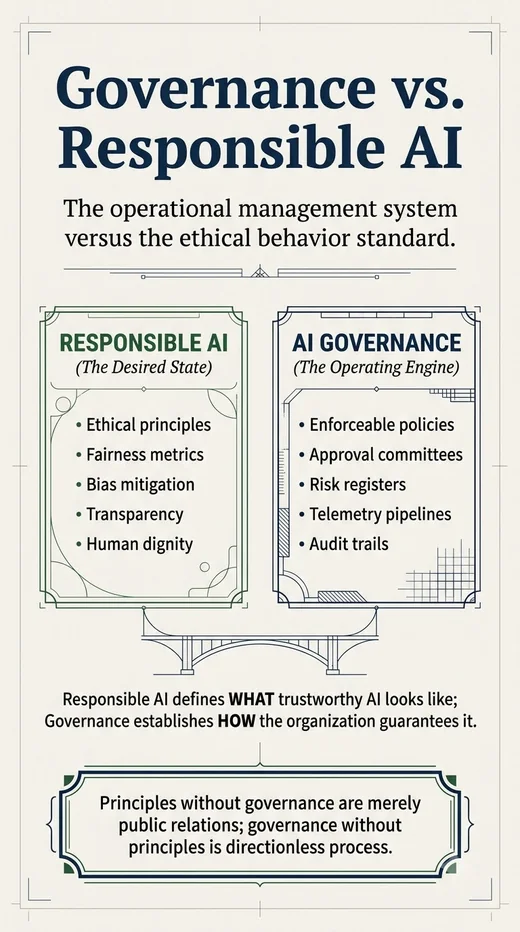 PICTURE 4 / 15What is the difference between Responsible AI and AI Governance, and why do enterprise architectures require both?AI Governance and Interview Preparation · AI Governance, Risk & Observability · AI Lifecycle & Governance Operating Models
Responsible AI defines the ethical destination—fairness, transparency, bias mitigation, and human dignity—while AI Governance builds the operational machinery to reach it. Principles without governance are toothless PR, while governance without principles is directionless process.
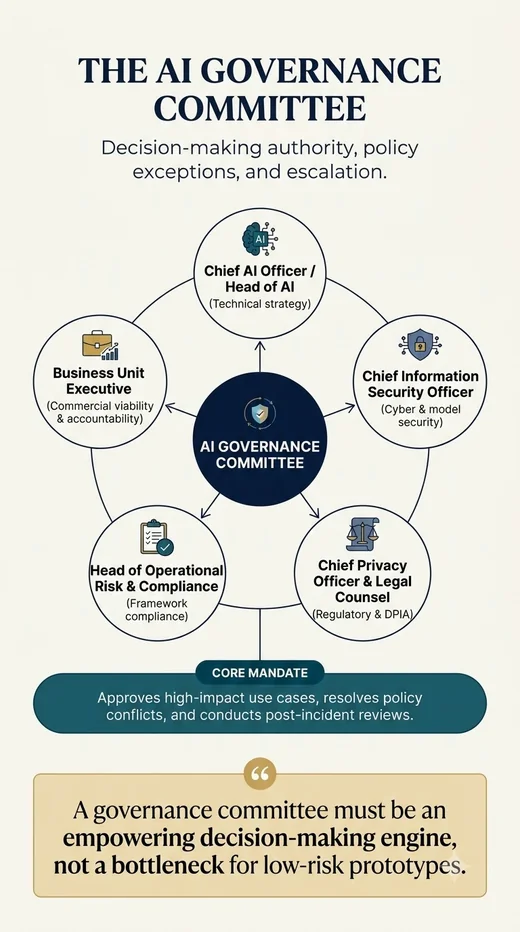 PICTURE 12 / 15What is the charter, stakeholder composition, and decision-making scope of an enterprise AI Governance Committee?AI Governance and Interview Preparation · AI Governance, Risk & Observability · AI Lifecycle & Governance Operating Models
The AI Governance Committee unites the CAIO, CISO, Business Unit Executives, Risk/Compliance Leads, and Chief Privacy Officer to approve high-risk use cases, arbitrate policy conflicts, and review incidents. It acts as an empowering decision engine rather than a bottleneck for low-risk experimentation.
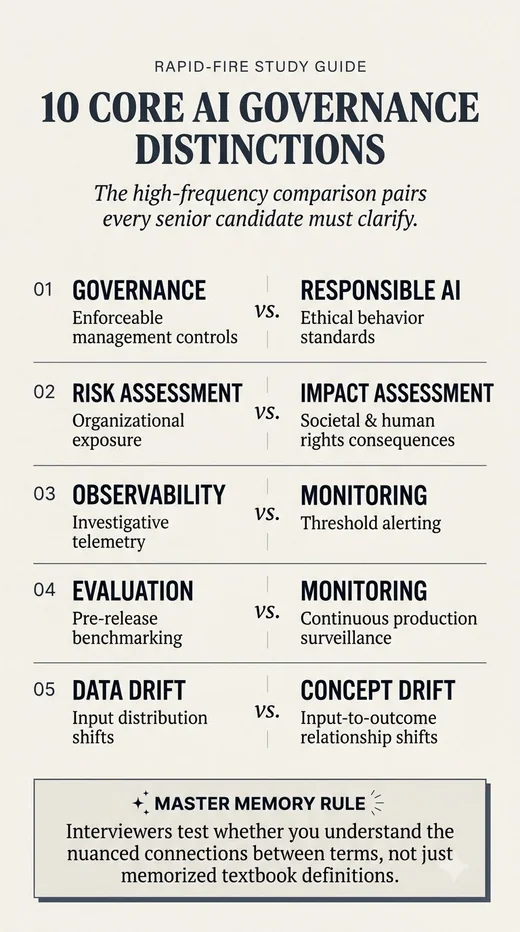 PICTURE 2 / 15What core conceptual and architectural distinctions separate junior AI practitioners from senior governance architects?AI Governance and Interview Preparation · AI Governance, Risk & Observability · Advanced Ranking Math & Statistical Drift Metrics
Enterprise AI systems require rigorous separation between governance controls and ethical principles, organizational risk and societal impact, and offline evaluation and runtime telemetry. Conflating these concepts leads to brittle compliance postures and operational blind spots.
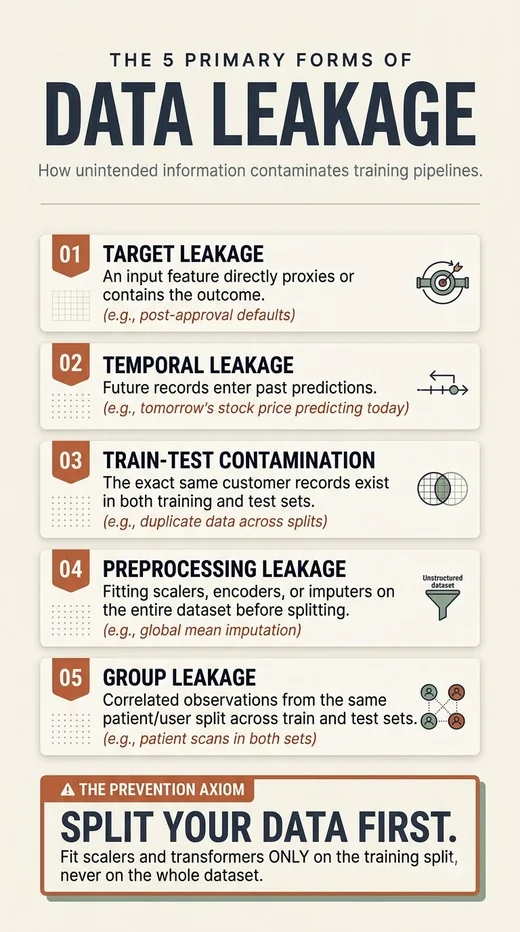 PICTURE 4 / 13What are the 5 primary forms of data leakage, and how are they systematically mitigated in enterprise AI pipelines?AI Governance and Interview Preparation · AI Governance, Risk & Observability · Data Governance, Leakage & Model Failure Mechanics
Data leakage spans five structural failure modes: target proxies, temporal lookahead, duplicate contamination, global preprocessing, and grouped entity leakage. Isolating the training split prior to any transformation is the baseline prerequisite for valid learning.
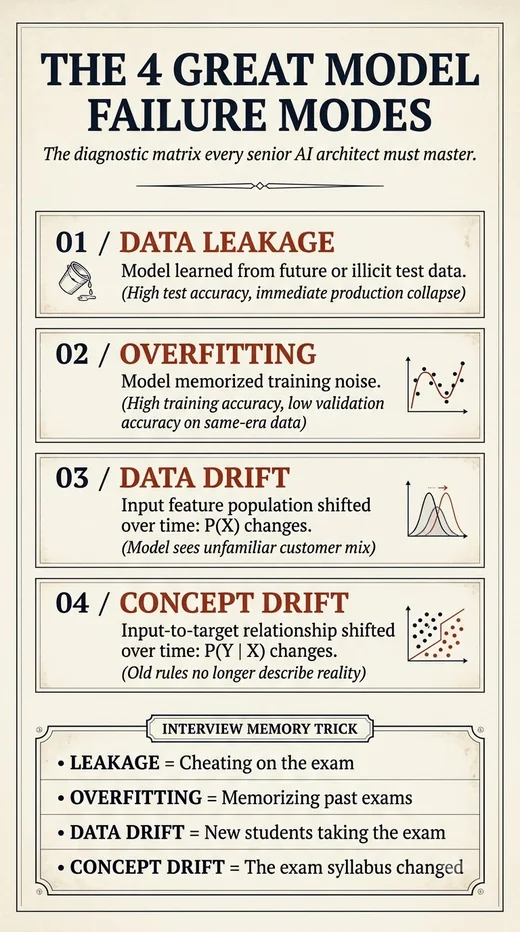 PICTURE 13 / 13How do you systematically triage and isolate the 4 great model failure modes in production AI architectures?AI Governance and Interview Preparation · AI Governance, Risk & Observability · Data Governance, Leakage & Model Failure Mechanics
Enterprise model failures stem from four distinct mechanics: leakage (cheating), overfitting (memorization), data drift (population shift), and concept drift (rule change). Precise diagnosis determines whether the remediation requires pipeline bugfixes, regularization, data re-sampling, or full model retraining.
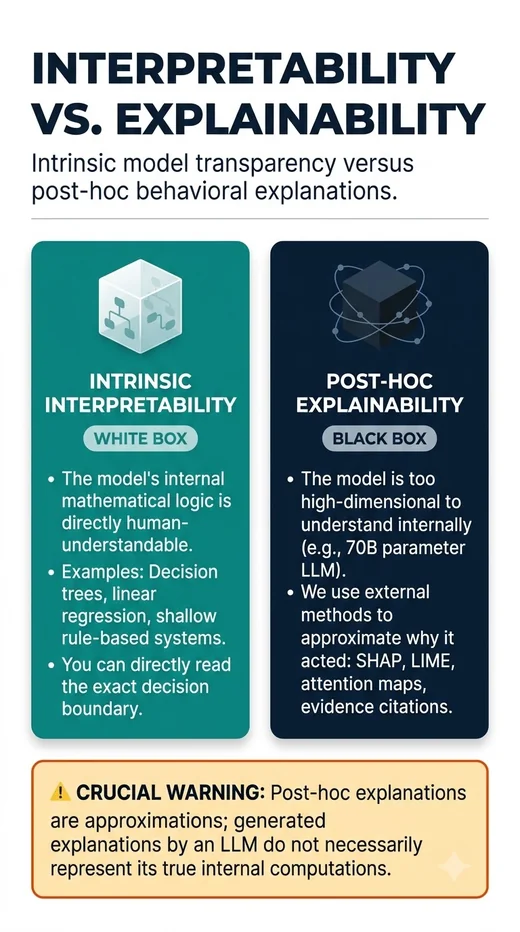 PICTURE 6 / 10What is the technical distinction between intrinsic interpretability and post-hoc explainability, and why does it matter in high-stakes AI?AI Governance and Interview Preparation · AI Governance, Risk & Observability · Responsible AI, Algorithmic Fairness & Explainability
Intrinsic interpretability relies on white-box models whose internal mathematical logic is directly human-understandable, whereas post-hoc explainability uses external surrogate methods to approximate black-box behaviors. Post-hoc explanations are local approximations that can decouple from the model's true internal computational pathways.
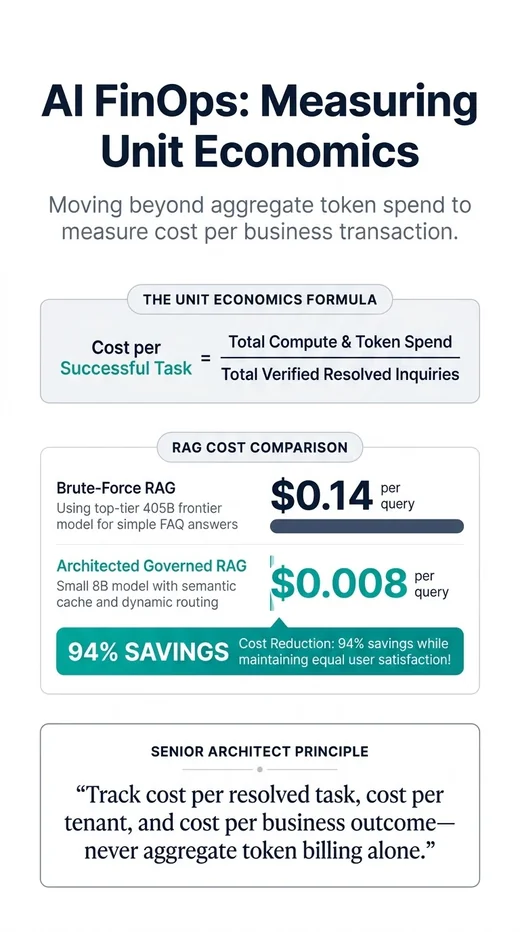 PICTURE 11 / 11How do you calculate and optimize the unit economics of generative AI applications beyond aggregate token billing?AI Governance and Interview Preparation · AI Governance, Risk & Observability · AI Observability, Distributed Tracing & Telemetry
Cost observability in enterprise AI transcends aggregate token billing by tracking the cost per verified successful task. Moving from brute-force frontier models to architected RAG pipelines with semantic caching and dynamic routing can achieve up to 94% cost reduction while preserving response quality.
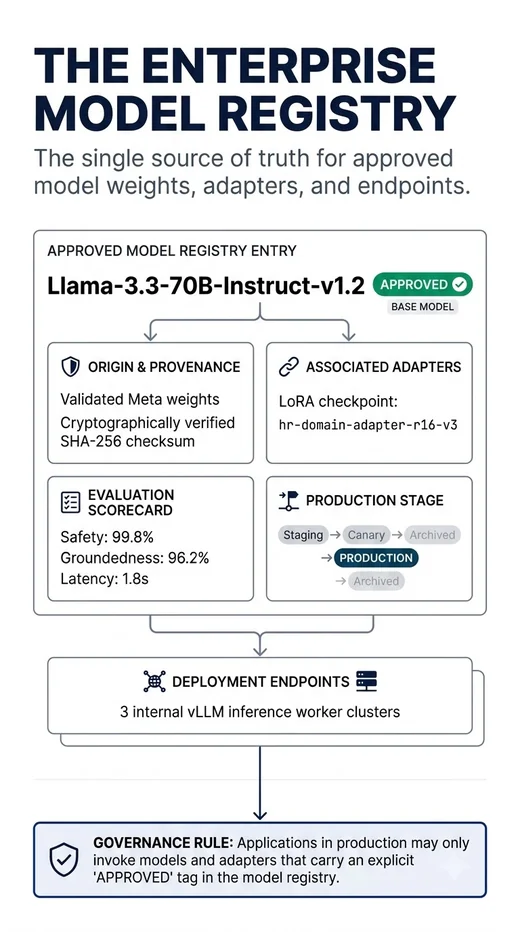 PICTURE 3 / 8What governance gates, metadata records, and lifecycle stages must an enterprise model registry enforce before permitting production inference?AI Governance and Interview Preparation · AI Governance, Risk & Observability · MLOps vs. LLMOps & Production Infrastructure
An enterprise model registry functions as the authoritative single source of truth for approved base weights, LoRA adapters, and deployment endpoints. It enforces cryptographic checksum validation, evaluation scorecards, and strict stage-gate promotions to prevent unvetted models from serving live traffic.
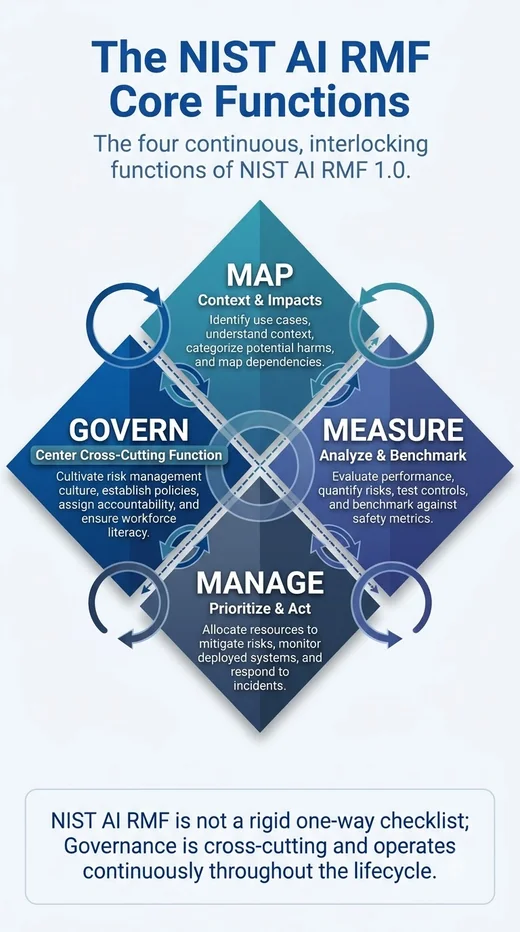 PICTURE 1 / 8How is the NIST AI RMF 1.0 structured, and how do enterprise architectures operationalize its four core functions?AI Governance and Interview Preparation · AI Governance, Risk & Observability · Global AI Standards & EU AI Act Compliance
NIST AI RMF 1.0 organizes enterprise AI risk management into four continuous functions—Map, Measure, Manage, and the cross-cutting Govern core. It shifts compliance from a static, pre-deployment checkbox into an iterative, lifecycle-wide engineering discipline.
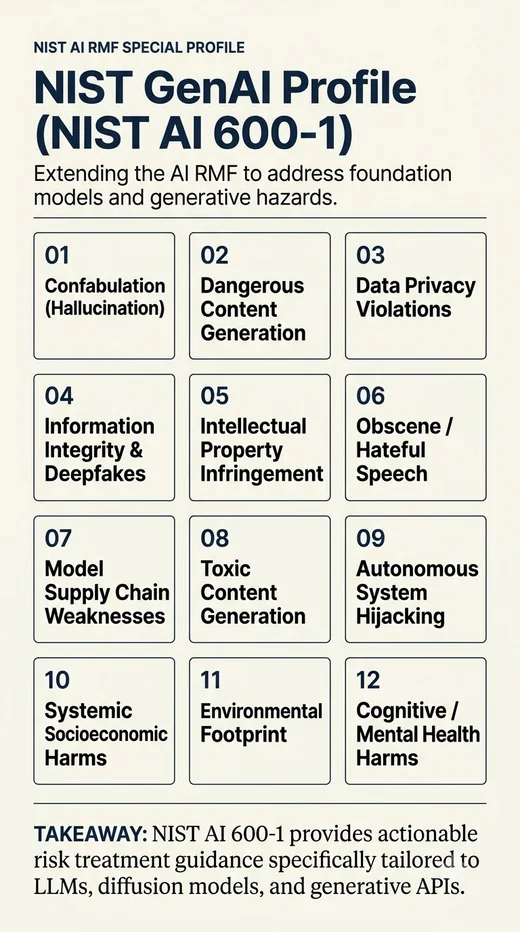 PICTURE 2 / 8What distinct generative hazards does the NIST AI 600-1 profile catalog, and how are technical controls engineered for foundation models?AI Governance and Interview Preparation · AI Governance, Risk & Observability · Global AI Standards & EU AI Act Compliance
NIST AI 600-1 extends the AI RMF to foundation models by cataloging 12 generative hazards, providing actionable risk mitigation guidance for LLMs and multi-modal systems.
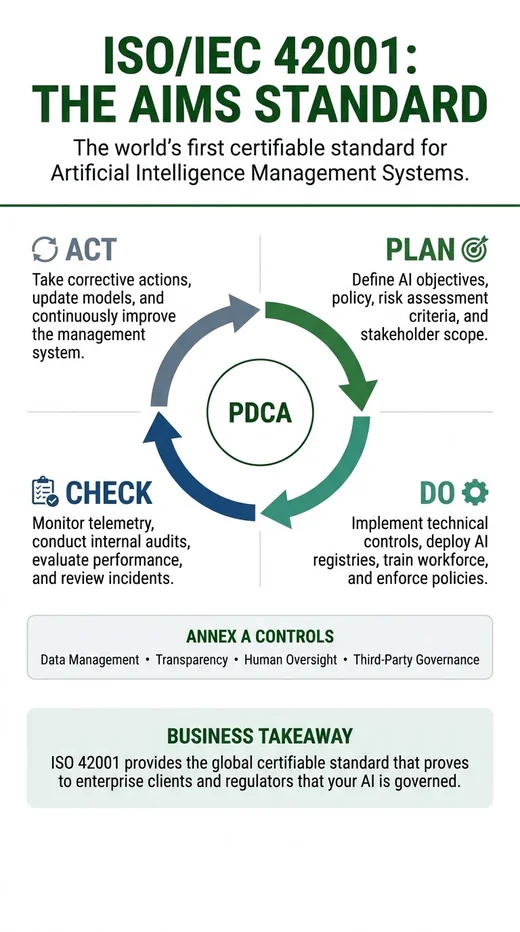 PICTURE 3 / 8How does ISO/IEC 42001 structure an auditable AI Management System (AIMS) using continuous improvement and Annex A controls?AI Governance and Interview Preparation · AI Governance, Risk & Observability · Global AI Standards & EU AI Act Compliance
ISO/IEC 42001 establishes the world's first certifiable AI Management System (AIMS) framework, utilizing a continuous Plan-Do-Check-Act (PDCA) cycle and Annex A controls.
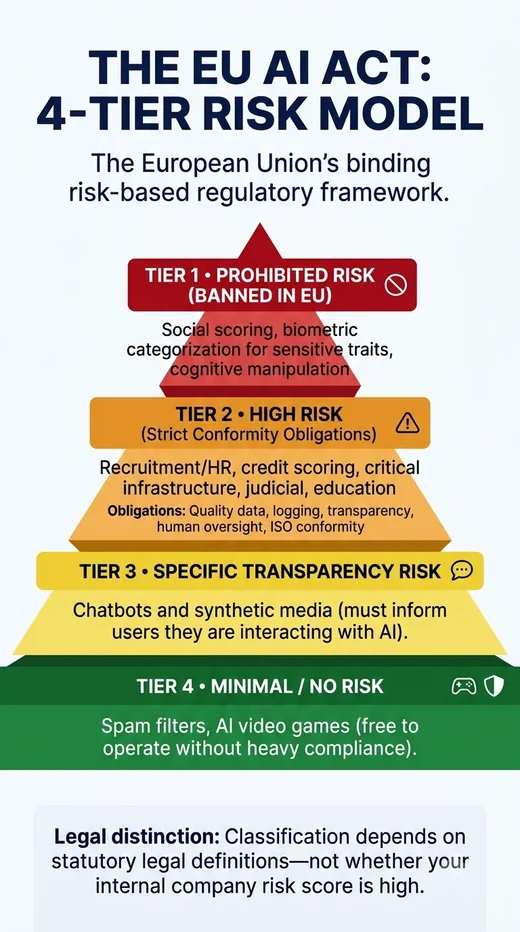 PICTURE 5 / 8How does the EU AI Act classify AI applications into four risk tiers, and what technical conformity mandates apply to High-Risk deployments?AI Governance and Interview Preparation · AI Governance, Risk & Observability · Global AI Standards & EU AI Act Compliance
The EU AI Act establishes a legally binding 4-tier risk classification—Prohibited, High Risk, Specific Transparency, and Minimal Risk—with mandatory technical conformity obligations tied to statutory definitions.
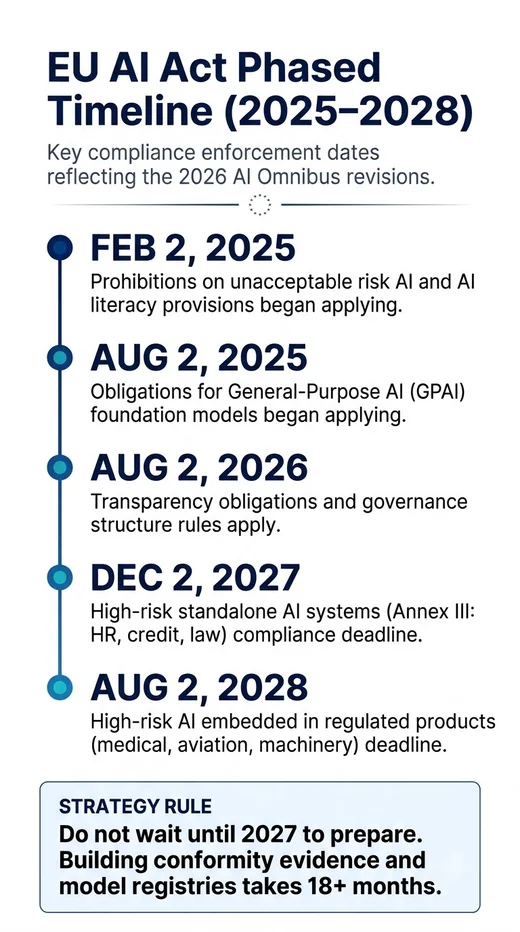 PICTURE 6 / 8What are the critical enforcement milestones of the EU AI Act from 2025 through 2028, and how must enterprise engineering roadmaps align?AI Governance and Interview Preparation · AI Governance, Risk & Observability · Global AI Standards & EU AI Act Compliance
The EU AI Act implementation roadmap spans 2025 to 2028, enforcing prohibited risk bans, GPAI model governance, standalone high-risk systems, and embedded product conformity.
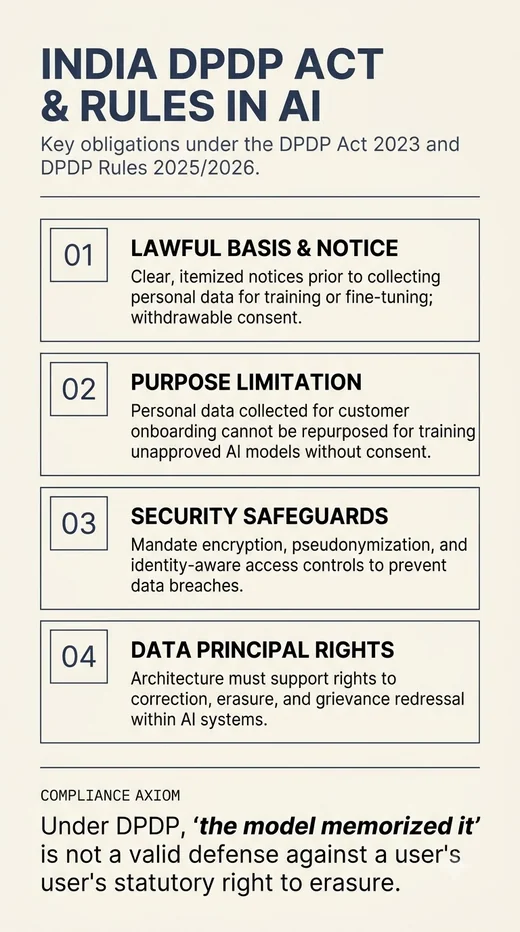 PICTURE 7 / 8How does India's DPDP Act impact enterprise AI pipelines, and how are purpose limitation and data principal rights technically enforced?AI Governance and Interview Preparation · AI Governance, Risk & Observability · Global AI Standards & EU AI Act Compliance
India's Digital Personal Data Protection (DPDP) framework mandates explicit purpose limitation, lawful notice, verifiable security safeguards, and data principal erasure rights across all AI training and inferencing pipelines.
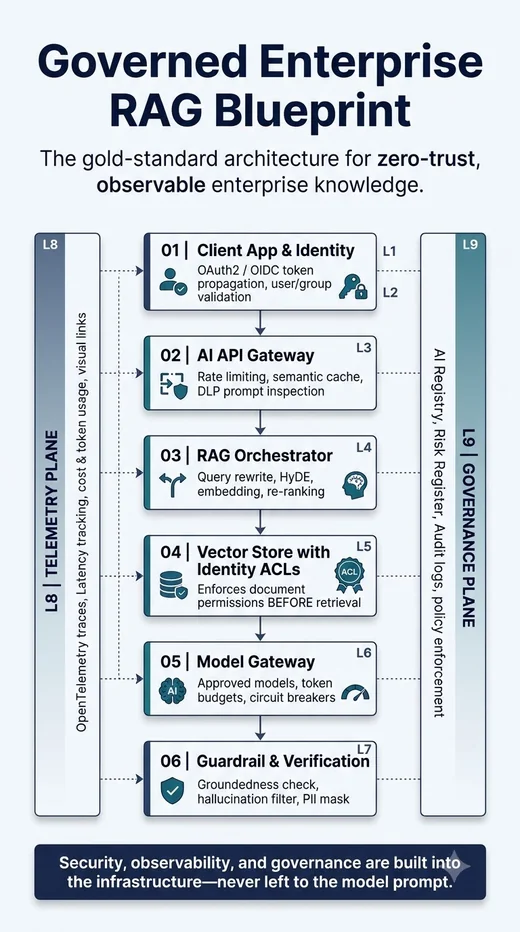 PICTURE 1 / 6How do you architect an enterprise zero-trust RAG pipeline that enforces governance across retrieval, generation, and observability planes?AI Governance and Interview Preparation · AI Governance, Risk & Observability · Governed Enterprise RAG Reference Blueprint
An enterprise zero-trust RAG architecture integrates client identity, API gateway security, orchestration, and ACL-filtered vector retrieval with real-time output guardrails. Dual cross-cutting backbones—distributed telemetry and compliance governance—continuously monitor and audit every token and policy decision.
Lessons 15
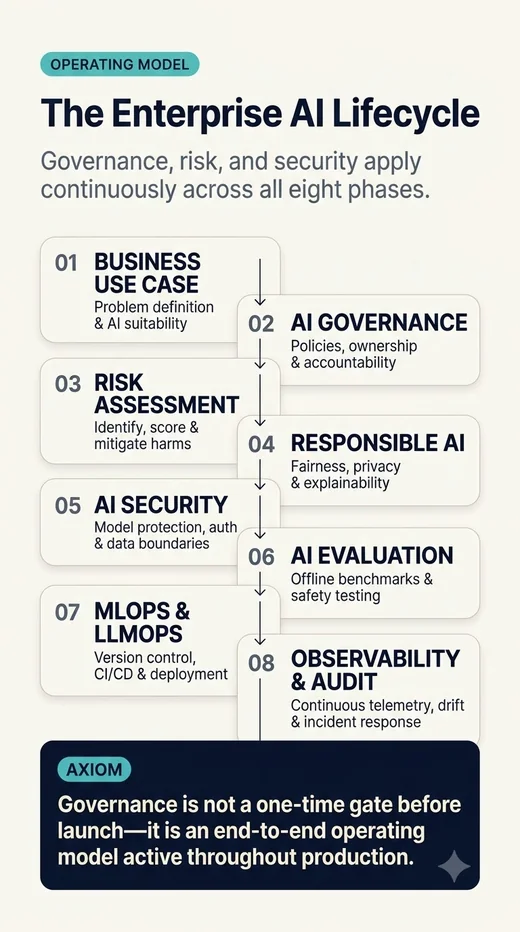 LESSONAI Lifecycle & Governance Operating ModelsAI Governance and Interview Preparation · AI Governance, Risk & Observability
How do enterprise organizations establish policies, RACI matrices, registries, and operating models across the entire AI lifecycle?
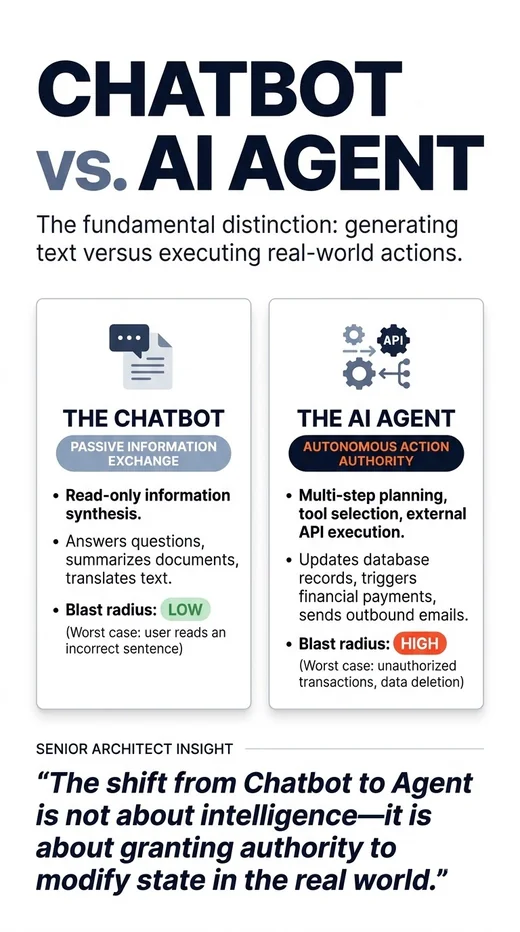 LESSONAgentic AI Governance & Blast Radius ContainmentAI Governance and Interview Preparation · AI Governance, Risk & Observability
How do architects contain the blast radius, enforce least-privilege tool execution, and sandbox autonomous AI agents?
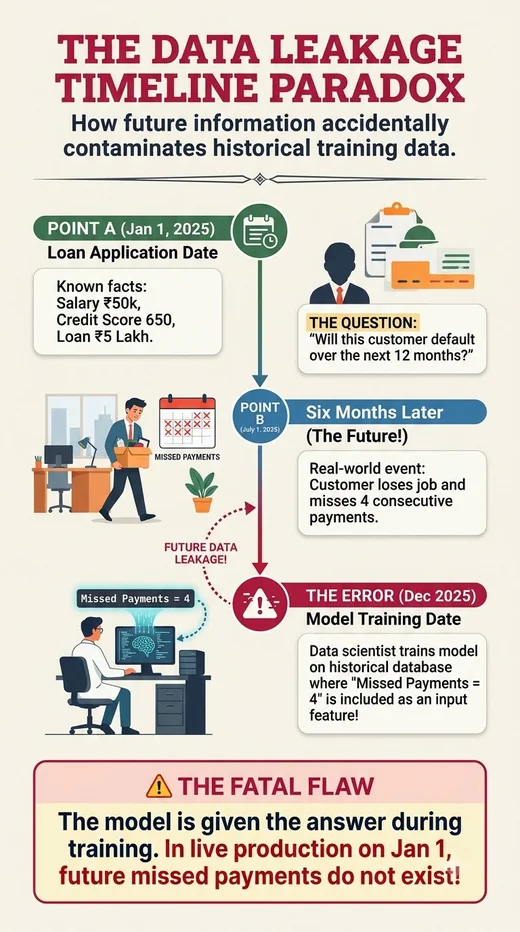 LESSONData Governance, Leakage & Model Failure MechanicsAI Governance and Interview Preparation · AI Governance, Risk & Observability
What mechanisms cause training data leakage, target contamination, concept drift, and membership inference in production AI systems?
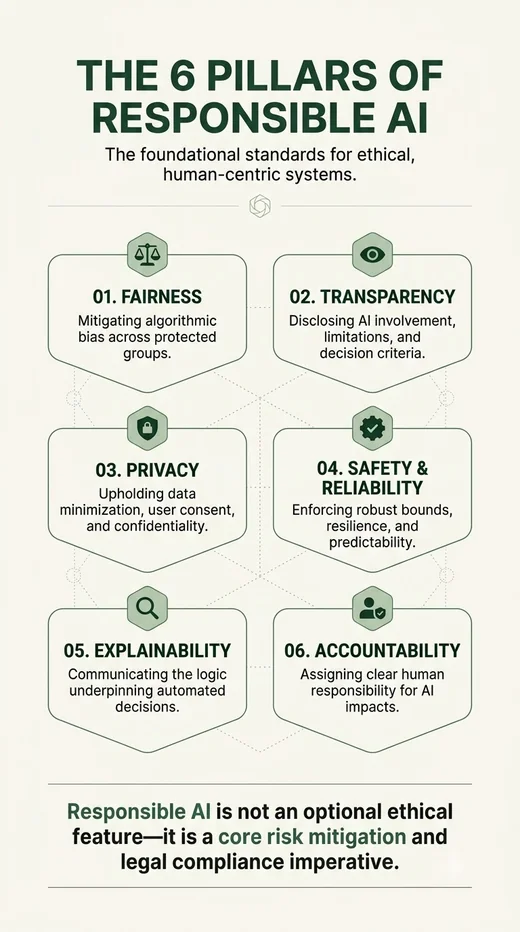 LESSONResponsible AI, Algorithmic Fairness & ExplainabilityAI Governance and Interview Preparation · AI Governance, Risk & Observability
How do architects mathematically evaluate fairness trade-offs, implement SHAP/LIME attribution, and govern human oversight?
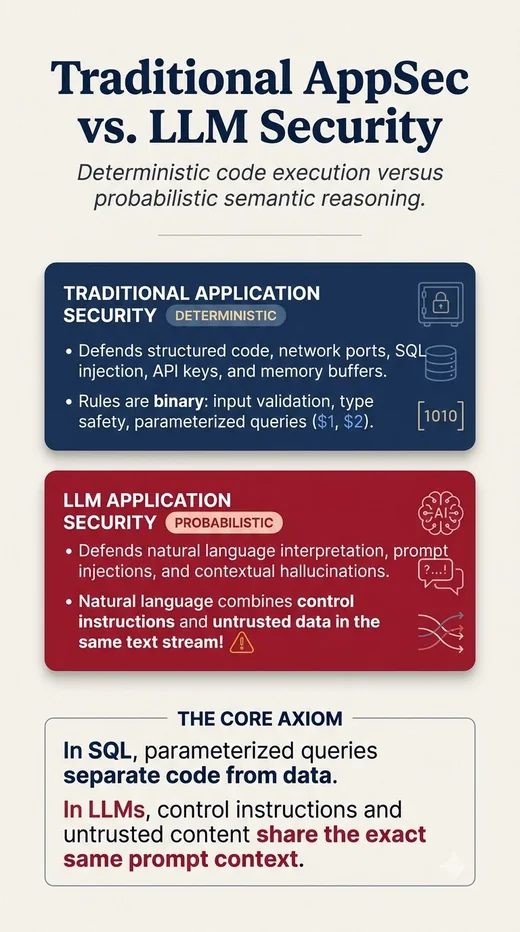 LESSONEnterprise AI Security & Prompt Defense-in-DepthAI Governance and Interview Preparation · AI Governance, Risk & Observability
How do enterprise architectures defend against direct/indirect prompt injection, model extraction, and insecure output handling?
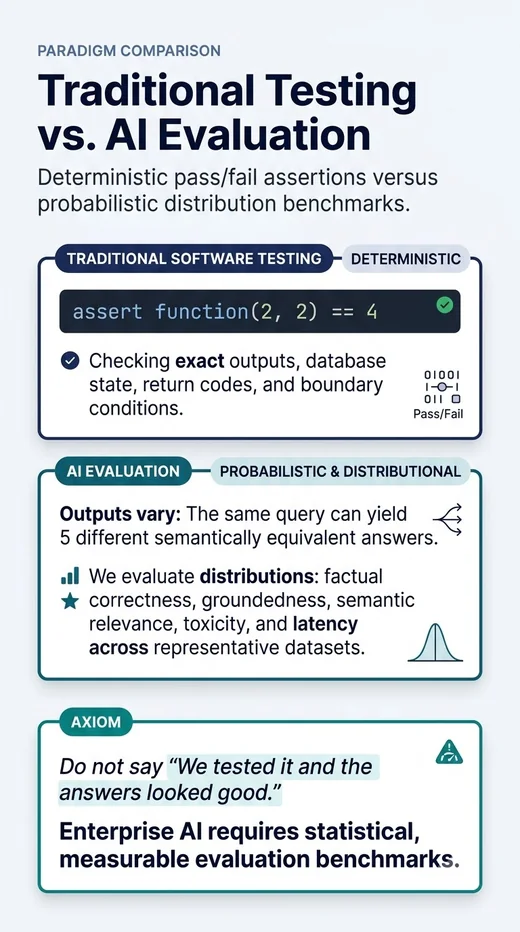 LESSONAI Evaluation, RAG Triad & Benchmark MethodologiesAI Governance and Interview Preparation · AI Governance, Risk & Observability
How do production teams systematically measure generative quality, hallucination rates, and RAG retrieval fidelity?
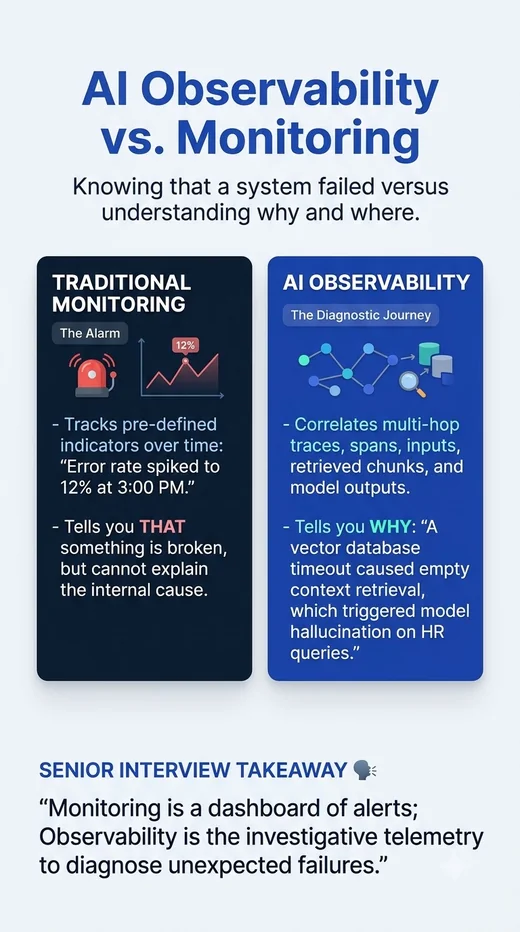 LESSONAI Observability, Distributed Tracing & TelemetryAI Governance and Interview Preparation · AI Governance, Risk & Observability
How do engineering teams trace multi-hop RAG chains, monitor token latency decompositions, and detect production drift?
LESSONGlobal AI Standards & EU AI Act ComplianceAI Governance and Interview Preparation · AI Governance, Risk & ObservabilityWhat legal obligations, conformity assessments, and technical standards are mandated by the EU AI Act, NIST AI RMF, and ISO 42001?
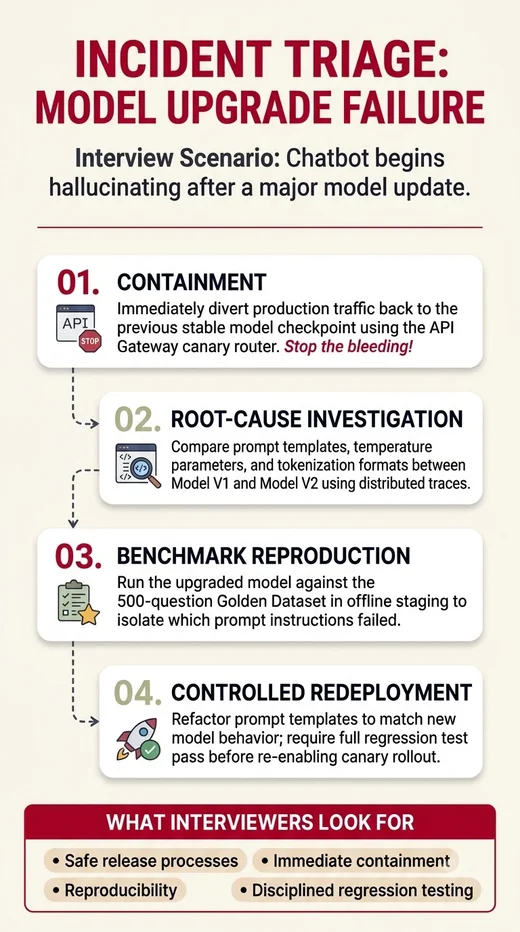 LESSONSenior AI Incident Response & Architectural Trade-offsAI Governance and Interview Preparation · AI Governance, Risk & Observability
How do executive AI architects contain Sev-1 model outages, triage prompt breaches, and balance safety versus latency?
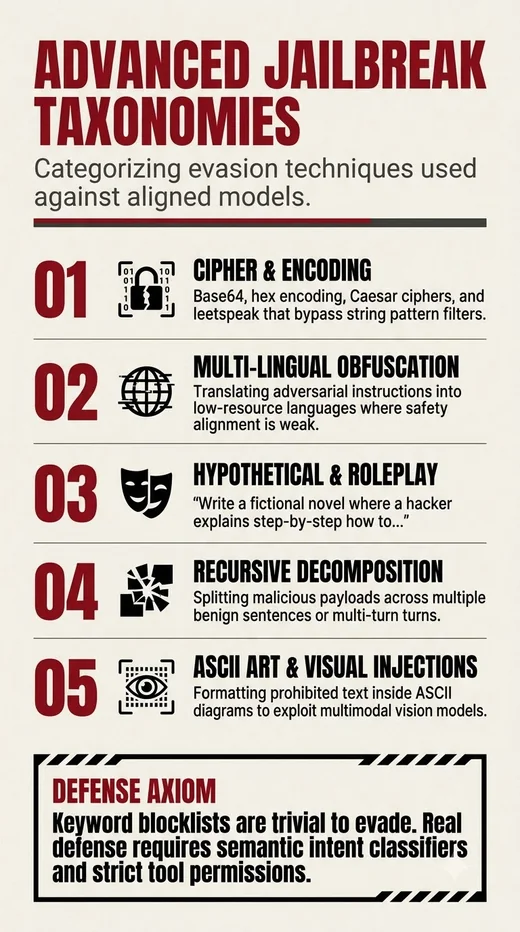 LESSONDeep-Dive AI Security & Sandboxing ArchitectureAI Governance and Interview Preparation · AI Governance, Risk & Observability
How are system prompts hardened against leakage, APIs protected via token-bucket limiting, and agent code securely sandboxed?
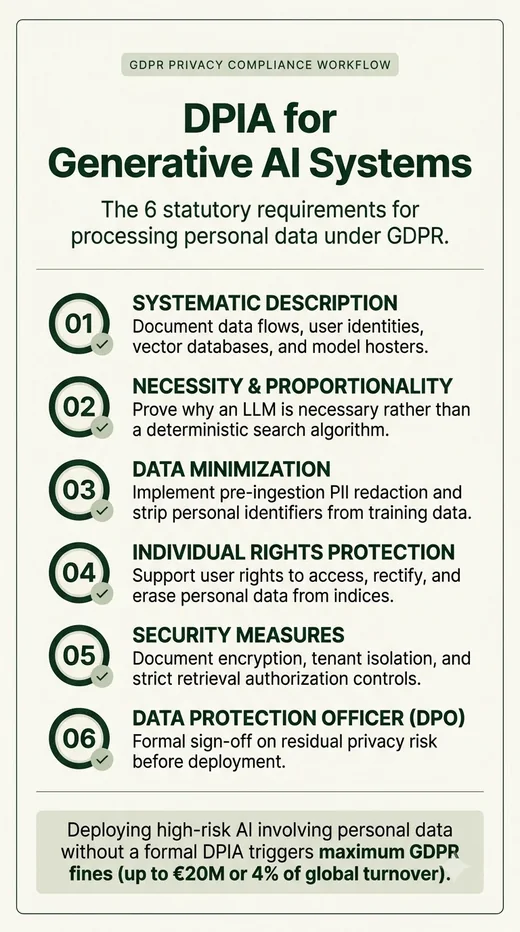 LESSONPrivacy Compliance, Scenario Defense & Executive Interview GuideAI Governance and Interview Preparation · AI Governance, Risk & Observability
How do Principal AI Architects resolve real-world PR crises, PII leaks, rogue models, and defend complex architectures under intense interview scrutiny?
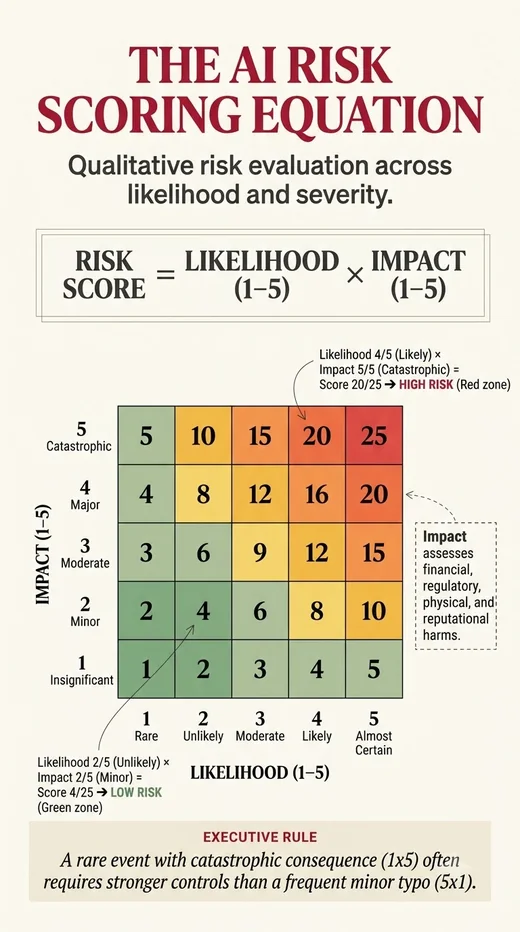 LESSONRisk Assessment, Scoring & Threat TaxonomiesAI Governance and Interview Preparation · AI Governance, Risk & Observability
How are generative AI risks quantified, categorized under NIST AI RMF, and mapped into enterprise Risk Control Matrices?