Foundations & Discrete Mathematics
Build the language of numbers, sets, theorems and counting before the formulas become dense.
Core prerequisites for computer science, data science, AI and machine learning.
- 13
- lessons
- 78
- visual explanations
- 2
- chapters
Mathematical Language
Numbers, variables, sets, functions and theorems form a reusable mathematical vocabulary.
 LESSONA Map of Theorems
How do major theorems answer different questions, and where do their assumptions limit the answer?
17 pictures · Open →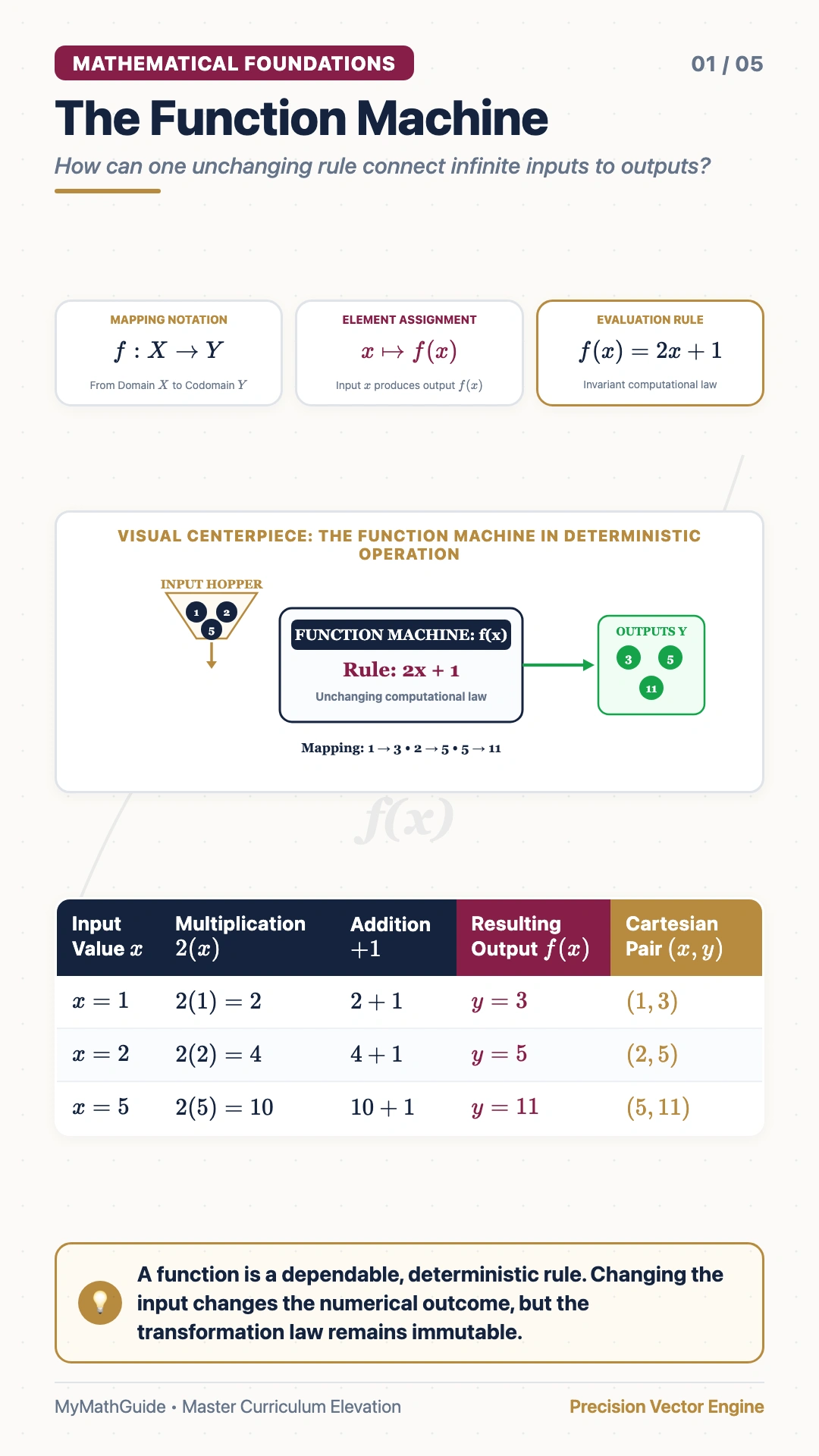 LESSONFunctions: Inputs, Outputs, and Graphs
How can one mathematical rule connect input values to outputs, tables, and graphs?
5 pictures · Open → LESSONNumber Line
What is the mathematical foundation of number line?
3 pictures · Open →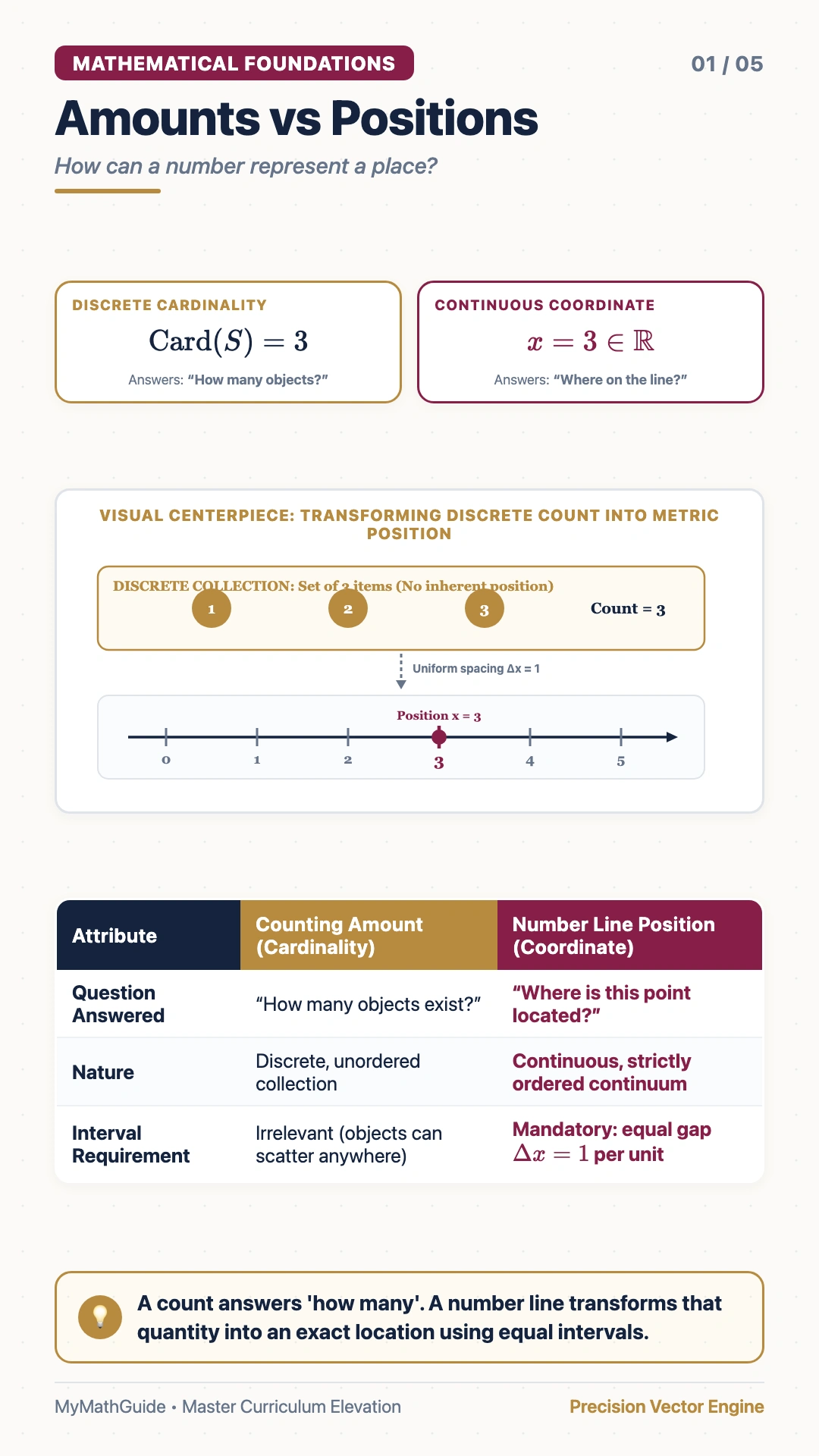 LESSONNumbers and Number Lines
How can a number show a place?
5 pictures · Open → LESSONSets and Logic: From Grouping to Probability
How do grouping rules become a language for logic, counting, and probability?
5 pictures · Open → LESSONStarting Point Of Sigma
What is the mathematical foundation of starting point of sigma?
2 pictures · Open → LESSONThree Mathematical Meanings of Pi
How can the same Greek letter represent different mathematical objects?
1 pictures · Open → LESSONVariables, Constants, and Expressions
How do symbols turn a numerical pattern into an expression, equation, and function rule?
5 pictures · Open →Counting & Combinatorics
Count arrangements by exposing structure instead of listing every possibility.
 LESSONArrange 1 to 9 on Four Lines
How can counting repeated positions solve a number-wheel puzzle without guessing?
9 pictures · Open → LESSONCounting Using Sets
What is the mathematical foundation of counting using sets?
6 pictures · Open → LESSONDecode Counting Identity
What is the mathematical foundation of decode counting identity?
4 pictures · Open → LESSONSpecial Permutation
What is the mathematical foundation of special permutation?
12 pictures · Open → LESSONWhat Remains After Two Things Are Fixed?
When should both the available population and the remaining choices decrease by two?
4 pictures · Open →